When skin feels persistently dry, reactive, or depleted, the most valuable ingredients are often those that support the barrier rather than overwhelm it. Beta-glucan is a scientifically studied polysaccharide found in sources including cereal grains, yeast, fungi, algae, and bacteria. Its skincare potential reflects both its structure and its interaction with the skin's natural defense systems.
Beta glucan for skin is a barrier-supportive, hydrating ingredient with documented antioxidant and anti-inflammatory activity. Its performance depends on its source, molecular structure, and physicochemical properties, so a well-designed formula matters as much as the ingredient name. Explore BABOR's beta-glucan ingredient approach.
Understanding where beta-glucan comes from helps explain why different preparations can behave differently on the skin. The next step is to examine its molecular architecture and how it communicates with the mechanisms responsible for resilience, hydration, and visible comfort.
How Does Beta Glucan Work in Skincare?
Beta-glucan is a naturally occurring polysaccharide, a complex carbohydrate found in the cell walls of oats, barley, yeast, fungi such as mushrooms, bacteria, and algae. In skincare, its value lies not only in its ability to support hydration, but also in how it communicates with the skin's own protective systems. Research describes beta-glucan as an immunomodulator, meaning it can help regulate biological signals involved in the skin's natural defense response. Academic research on beta-glucan supports its relevance for advanced skin care.
Rather than acting as a simple surface emollient, beta-glucan interacts with the skin environment through its polysaccharide structure. It can help create a supportive film while influencing pathways associated with immune regulation and skin resilience. This does not mean that every beta-glucan product behaves identically. The ingredient's performance depends on its source, molecular structure, molecular weight, branching pattern, and other physicochemical properties. These variables influence solubility, skin compatibility, and biological activity.
How do oat, yeast, and mushroom beta-glucans differ?
Oat beta-glucan is commonly associated with moisture support and barrier-focused care. Yeast-derived beta-glucan is valued for its interaction with immune-related signaling and its potential to support the skin's defensive functions. Mushroom beta-glucans are also studied for their immunomodulatory activity. Barley and other cereal grains provide additional source options, although the final cosmetic behavior depends on how the material is purified, processed, and incorporated into a formula.
For this reason, the phrase beta-glucan describes a family of related molecules rather than one uniform ingredient. A formula's source and technical specification matter when assessing its intended role. BABOR provides further ingredient information on its beta-glucan ingredient page, helping readers understand the active within a professional skincare context.
- Key Takeaways: Beta-glucan is a natural polysaccharide sourced from cereals, yeast, fungi, and other organisms.
- Its immunomodulatory properties help support the skin's natural defense systems.
- Source and molecular structure strongly influence beta-glucan's bioactivity and cosmetic performance.
Key Benefits of Beta Glucan for Skin Barrier Health and Hydration
Beta glucan supports skin resilience through a combination of barrier, hydration, antioxidant, and calming properties. Its benefits are especially relevant when the complexion feels tight, reactive, or depleted, although the precise activity depends on the beta-glucan source and molecular structure.
Supports epidermal barrier repair
Healthy barrier function depends on well-organized epidermal cells, strong cell-to-cell junctions, and a balanced lipid matrix. Research on oat beta-glucan found that it supports epidermal differentiation, cell-cell junctions, and lipid production, all of which contribute to a more resilient surface. This makes it a valuable ingredient for routines focused on restoring comfort and reducing moisture loss. Read the research summary in PubMed.
Improves hydration and moisture retention
One of the most recognized benefits of beta glucan for skin is its moisturizing effect. It can help attract and retain water at the skin's surface while supporting the barrier that helps keep hydration from escaping. The result is skin that feels more supple and comfortable, rather than temporarily coated. A 2025 review also identifies moisturizing, barrier-repair, antioxidant, and anti-inflammatory activity among beta-glucan's relevant skincare properties (PMC12023766).
Helps address visible signs of aging and environmental stress
Beta-glucan has been studied for topical anti-aging and anti-wrinkle properties, as well as wound-healing activity. Its antioxidant profile may help the skin manage oxidative stress associated with environmental exposure. A review in the Journal of Cosmetic Dermatology also discusses beta-glucan's anti-ultraviolet activity. This does not replace broad-spectrum sunscreen, but it adds useful support to a complete daytime regimen.
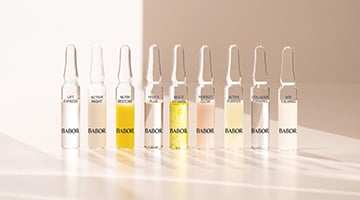
For sensitive or redness-prone complexions, beta-glucan's anti-inflammatory and soothing potential can help make a treatment routine feel more comfortable. BABOR's soothing ampoule concentrates offer a focused way to layer professional care when the skin needs calm, concentrated support.
Key Takeaways
- Beta-glucan supports epidermal differentiation, cell junctions, and lipid production.
- It helps maintain hydration and moisture retention while supporting barrier comfort.
- Research describes anti-wrinkle, antioxidant, anti-inflammatory, and anti-ultraviolet properties.
- Use beta-glucan as supportive skincare, not as a substitute for sunscreen or medical treatment.
Beta Glucan vs. Hyaluronic Acid: How Do They Compare for Skin?
Both ingredients support a more comfortable, hydrated complexion, but they do not perform the same role. Hyaluronic acid is primarily a water-binding humectant, while beta-glucan for skin combines hydration support with activity relevant to calming and barrier function. The most appropriate choice depends on whether the immediate priority is surface moisture, barrier resilience, or both.
| Attribute | Beta-glucan | Hyaluronic acid |
|---|---|---|
| Source | A natural polysaccharide found in sources including cereal grains, yeast, fungi, algae, and bacteria. | A naturally occurring glycosaminoglycan found throughout connective tissues, including skin. |
| Molecular weight | Varies substantially by source and structure, from lower-molecular-weight fractions to larger polymeric forms. | Also varies widely, from low-molecular-weight fractions to high-molecular-weight polymers. |
| Primary mechanism | Supports immunomodulatory activity, barrier function, and moisture retention. | Binds water within the skin's surface layers to improve hydration and skin feel. |
| Key differentiator | Offers a broader barrier-focused profile, including anti-inflammatory and moisturizing potential. | Delivers focused hydration, without the same established immunomodulatory emphasis. |
| Skin types | Especially relevant for sensitive, dry, reactive, or barrier-stressed skin, subject to the complete formula. | Useful for dehydrated skin across many skin types, including oily skin that lacks water. |
| Price positioning | Typically positioned in premium barrier-support formulas when carefully sourced and formulated. | Available across a broad range of formulas, from basic hydration products to advanced professional treatments. |
For simple dehydration, hyaluronic acid may be sufficient. When dryness is accompanied by visible sensitivity or a compromised-feeling barrier, beta-glucan may offer a more complete support profile. The two ingredients can also complement one another in a well-designed formula. Research indicates that beta-glucan activity depends on its source, molecular structure, and physicochemical properties, so ingredient quality and the finished formulation matter as much as the label name. Read the research on beta-glucan's skin-care potential.
- Hyaluronic acid focuses primarily on water binding and hydration.
- Beta-glucan combines moisture support with barrier and inflammation-focused benefits.
- Molecular weight and source influence how either ingredient performs in a finished formula.
How to Incorporate Beta Glucan Into Your Daily Skincare Routine
A well-ordered routine allows a beta-glucan formula to sit close to freshly cleansed skin, then be supported by moisture and daily photoprotection. The sequence is straightforward, but consistency and thoughtful active-ingredient pairing matter more than applying multiple layers.
1. Cleanse without compromising the skin barrier
Begin with a gentle cleanser suited to your skin's needs. Use lukewarm water, massage without vigorous friction, and pat the skin dry. Leaving the complexion slightly comfortable and hydrated, rather than tight or stripped, creates a better foundation for the steps that follow. In the morning, a light cleanse or water rinse may be sufficient if your evening routine was thorough and your skin does not feel congested.
2. Apply a beta-glucan serum or ampoule
Apply your beta-glucan product after cleansing and before moisturizer, while the skin is clean and lightly damp. A serum can be used in a measured layer, while an ampoule offers a concentrated treatment format. Explore BABOR's ampoule concentrates for professional, single-dose options, or see the power serum ampoules for targeted serum care. Press the formula into the skin rather than rubbing aggressively, then allow a moment for it to settle.
Beta glucan for skin can generally be used in the morning and evening when the product directions support twice-daily application. If you are introducing it alongside stronger actives, begin with one application a day for several days. Introduce only one new product at a time, and alternate beta glucan with retinoids or exfoliating acids initially if your complexion is sensitive. Once tolerance is established, a barrier-supportive beta-glucan layer can complement many active routines.
3. Follow with moisturizer
Seal the serum or ampoule beneath a moisturizer selected for your skin type. This step helps reduce moisture loss and provides the emollient or lipid support that a concentrated serum alone may not supply. Use a lighter lotion in the morning or on oilier areas and a richer cream at night when the skin requires more comfort.
4. Finish with SPF in the morning
In the AM, apply a broad-spectrum sunscreen as the final skincare step, using the amount recommended on the product label and reapplying as directed. Beta glucan supports the skin's care routine, but it does not replace sunscreen. In the evening, omit SPF and allow the cleanse, treatment, and moisturizer sequence to remain your complete routine.
Key Takeaways
- Layer from thinnest to richest: cleanse, beta-glucan serum or ampoule, moisturizer, then SPF in the morning.
- Use AM and PM when tolerated, introducing the treatment gradually if your skin is reactive.
- Pair beta glucan thoughtfully with other actives and avoid adding several new products at once.
What Skin Types Benefit Most From Beta Glucan?
Beta glucan for skin is especially valuable when the complexion needs calm, hydration, or barrier support. Because its benefits are not limited to one concern, it can be integrated into routines for sensitive. Dry, mature, and post-procedure skin, while remaining suitable for oily and acne-prone complexions.
Sensitive and redness-prone skin
Beta-glucan's soothing and anti-inflammatory profile makes it a thoughtful choice for skin that feels reactive, tight, or visibly flushed. It supports a more comfortable complexion without relying on an aggressive treatment approach. For targeted guidance, explore BABOR's soothing ampoule concentrates for redness and sensitivity.
Dry or dehydrated skin
Dehydrated skin needs more than surface softness. Beta-glucan contributes moisturizing support and helps the skin retain a supple, cushioned feel. In a concentrated formula, it can complement a barrier-focused routine by delivering deep hydration while helping reduce the discomfort associated with moisture loss.
Aging and mature skin
Mature skin may benefit from ingredients that address both visible texture and environmental stress. Research identifies topical beta-glucan activity associated with anti-wrinkle, antioxidant, and wound-healing properties. The ingredient is suited to routines focused on refined-looking texture, resilience, and collagen support, alongside a high-performance moisturizer and daily UV protection.
Post-procedure and barrier-compromised skin
When the epidermal barrier is under strain, replenishing comfort and hydration becomes a priority. Oat beta-glucan has been studied for supporting barrier repair through cell-cell junctions and lipid production. It is therefore well suited to a recovery-focused regimen. For professional, clinical-grade care, consider the DOCTOR BABOR line, particularly when skin requires a more deliberate post-procedure approach.
Beta-glucan is generally well tolerated across skin types, including oily and acne-prone skin. The best choice depends on the formula, concentration, and the rest of the routine. So introduce new products gradually and follow professional guidance when skin is recovering from a procedure.
Key Takeaways
- It can help calm sensitive, redness-prone skin and support a more comfortable feel.
- It provides moisturizing and barrier-focused support for dry or dehydrated skin.
- Anti-wrinkle and antioxidant properties address mature-skin concerns including visible wrinkles and collagen support.
- Barrier-supporting properties make it appropriate for recovery-focused routines after professional procedures.
- It is generally suitable for all skin types, including oily and acne-prone skin.
Frequently Asked Questions
Can beta glucan be used on sensitive or reactive skin?
Yes. Its soothing, moisturizing, and barrier-supportive profile makes it suitable for sensitive, dry, and reactive skin when used in a well-tolerated formula. Introduce any new product gradually and discontinue use if irritation develops.
Can beta glucan be used with hyaluronic acid or ceramides?
Yes. These ingredients can complement one another. Beta glucan supports hydration and forms a protective film, while ceramides replenish barrier lipids. The combination can be especially useful when dehydration and barrier weakness occur together.
Is beta glucan suitable for oily or blemish-prone skin?
It can be. Beta glucan is generally considered non-comedogenic and is reported to be well tolerated by oily or acne-prone skin types. Choose a lightweight serum or ampoule, and assess the complete formula rather than judging the ingredient in isolation.
Can beta glucan replace treatment for eczema or another skin condition?
No. It may provide supportive hydration and barrier care, but it should not replace treatment prescribed by a dermatologist. For persistent inflammation, cracking, or discomfort, consult a qualified medical professional and follow the recommended care plan.
Does the source of beta glucan affect how it works?
Yes. Beta glucans can come from sources such as oats, yeast, fungi, algae, and grains. Their biological activity depends on the source, molecular structure, and physicochemical properties, so the finished formula and its quality standards matter. Academic research on beta glucan structure and activity explains why different forms should not be treated as identical.
Ready to Explore Professional Beta-Glucan Skincare?
Professional ampoule concentrates can provide a precise way to incorporate targeted active ingredients into a considered skincare routine. Explore BABOR's professional beta-glucan skincare and select an ampoule concentrate that complements your skin's needs. Use the product guidance provided to support a consistent, results-focused approach.