Collagen is often discussed as though every product or supplement works in the same way. In reality, its role depends on the form used, the skin process being targeted, and the strength of the available evidence. Collagen is a structural protein that helps support the skin's framework, while the body's production gradually slows with age, as summarized by the Cleveland Clinic.
The most relevant collagen benefits for skin include supporting firmness, elasticity, density. And the appearance of wrinkles, but topical skincare and oral supplements should not be treated as interchangeable. Evidence for topical collagen-derived peptides is promising, while oral collagen research remains developing and depends on digestion and systemic availability.
- Collagen provides structural support within the skin.
- Age-related changes can reduce collagen production and renewal.
- Topical peptides deliver targeted support at the skin surface.
To evaluate these claims clearly, it helps to begin with what collagen is and which functions science can support.
Explore the BABOR Collagen Peptide Booster Cream for collagen-supporting skincare
What Are the Scientifically Supported Benefits of Collagen?
Collagen is a structural protein that gives the body's connective tissues their framework, resilience, and support. It accounts for approximately 30% of total body protein, making it the most abundant protein in the human body. At least 28 types have been identified, with different forms serving distinct structural roles throughout the body. Rather than functioning as a single cosmetic ingredient with one universal effect. Collagen is a sophisticated family of proteins involved in the architecture of skin, muscles, bones, tendons, ligaments, and other connective tissues.
In the skin, collagen helps provide the supportive structure associated with firmness and density. It is also present in organs, blood vessels, and the intestinal lining, which illustrates why collagen science extends well beyond the appearance of the complexion. Its broad distribution reflects its central role in maintaining the integrity of tissues that need strength while retaining a degree of flexibility. Cleveland Clinic's overview of collagen describes this protein as a primary building block for multiple systems in the body.
A precisely organised protein structure
Collagen's distinctive properties begin with its molecular organisation. The amino acids glycine, proline, and hydroxyproline group together to form protein fibrils arranged in a triple helix. This tightly organised structure helps collagen provide mechanical support within connective tissue. The body must assemble and maintain this structure through a sequence of biological processes, so collagen health depends on more than the presence of collagen alone. Adequate levels of vitamin C, zinc, copper, and manganese are also required for proper triple-helix formation.
This structure explains why collagen is so closely associated with the skin's physical qualities. When collagen networks are well supported, they contribute to the tissue's structural integrity. The result is not an instant surface effect, but a biological foundation for skin that appears resilient and well supported. For a closer look at the role of the ingredient in a topical routine, explore BABOR's guide to collagen skincare.
What the evidence means for skin
The most meaningful collagen benefits for skin relate to structure and support. Collagen provides the strength and framework of connective tissue, while the body continually produces, organises, and renews it. This process changes over time, and the skin's collagen supply is one part of that broader biology. A precise skincare discussion therefore distinguishes the protein's foundational role from claims that promise to restore every aspect of youthful skin.
Scientifically supported benefits should be interpreted in context: collagen is fundamental to skin structure. And research into topical collagen-derived ingredients has investigated measurable outcomes such as elasticity, density, and the appearance of wrinkles. Those findings are discussed in the following sections, alongside the factors that influence collagen as skin ages. This evidence-led perspective makes it possible to appreciate collagen's importance without reducing a complex structural protein to a marketing promise.
What Does Collagen Do in Your Skin?
Collagen functions as the primary structural framework of the skin. It helps provide the dermis with support, strength, and resilience, creating the matrix in which other skin components are organized. This framework contributes to the appearance of firmness and density, while also supporting the skin's ability to maintain its shape over time. As collagen becomes less abundant or more compromised, visible signs of aging can become more pronounced. Collagen's structural role extends throughout the body's connective tissues, but its behavior within the dermis is especially relevant to skin health.
Why collagen production changes with age
The body produces collagen naturally, yet this process slows with chronological age. The change is not simply a matter of having less collagen available. The skin's capacity to organize and maintain its extracellular matrix also becomes less efficient, which can affect the dermal support that contributes to a smooth, supple appearance. This gradual shift is one reason a well-designed skincare routine should address the condition of the skin over time rather than focus only on its immediate surface appearance.
Dermal fibroblasts are central to this process. These specialized cells produce important components of the dermal matrix, including type I and type III collagen. In laboratory studies, fibroblasts obtained from older donors produced lower amounts of these collagen types than cells from younger donors. Research also indicates that type I collagen messenger RNA levels decline as fibroblasts enter senescence. Suggesting that age-related collagen loss is connected to changes in cellular activity, not only to external damage. Studies of collagen biosynthesis in fibroblasts help explain why mature skin may require more targeted support.
The influence of connective tissue signals
Collagen maintenance is regulated by a network of cellular signals. One important factor is connective tissue growth factor, also known as CTGF or CCN2. Research on chronologically aged human skin found that reduced CTGF expression contributes to collagen loss. This finding illustrates the complexity of skin aging: changes in the dermal environment can influence how effectively fibroblasts sustain the structural matrix. Research on CTGF and collagen loss provides a closer look at this age-related mechanism.
How glycation can accelerate visible aging
Glycation adds another layer to the picture. During this process, sugars bind to proteins and form advanced glycation end products, or AGEs. In skin, AGEs can contribute to changes associated with aging, including the deterioration of collagen quality. Glycation is recognized as a factor that can accelerate signs of skin aging, particularly when environmental exposure such as ultraviolet radiation is involved. Protecting skin from ultraviolet radiation and choosing a routine designed to support its structural integrity are therefore important elements of long-term care.
Together, slower collagen synthesis, altered fibroblast function, reduced connective tissue signaling, and glycation help explain why firmness and elasticity can change over time. Understanding these mechanisms places the potential collagen benefits of a skincare routine in the right context: consistent, evidence-informed support for the skin's own structural environment.
How Does Topical Collagen Support Aging Skin?
Topically applied collagen tripeptides are being studied for their ability to support visible signs of skin aging through more than a surface-level moisturizing effect. In a primary study published in the International Journal of Molecular Sciences, a topical collagen tripeptide treatment produced measurable improvements in wrinkles, elasticity, and skin density by week four. The same study examined cellular mechanisms that help explain these observations, including collagen production, glycation, oxidative stress, and enzymes involved in the breakdown of the extracellular matrix.
Supporting collagen activity in dermal fibroblasts
Dermal fibroblasts are connective-tissue cells that help produce the collagen matrix supporting skin structure. Their activity changes with age, and research has found lower production of type I and type III collagen in fibroblasts from older donors. Type I collagen messenger RNA is also reduced as fibroblasts enter cellular senescence. This matters because the visible appearance of firmness and resilience depends partly on the quality and continuity of the dermal matrix.
In the topical collagen tripeptide study, treatment increased collagen 1 levels in dermal fibroblasts while decreasing the induction of matrix metalloproteinases. These enzymes participate in the breakdown and remodeling of matrix proteins. The finding does not mean that a topical product replaces the body's collagen or reverses chronological aging. It indicates that specific peptides may help create a more supportive environment for collagen-related activity in the skin.
Addressing glycation and oxidative stress
Skin aging is influenced by glycation, a process associated with the formation and accumulation of advanced glycation end products, or AGEs. Environmental exposure, including ultraviolet radiation, can contribute to processes that accelerate visible aging. The study found that topical collagen tripeptide prevented the accumulation of AGEs and denatured collagen in vitro. It also reduced reactive oxygen species in dermal fibroblasts, markers associated with oxidative stress and cellular aging.
Taken together, these findings suggest a multi-pathway approach: support collagen 1 levels, moderate matrix metalloproteinase activity, and help limit cellular stress linked to glycation and oxidation. The researchers concluded that these mechanisms may contribute to delaying cellular aging. Because the cellular findings were in vitro while the wrinkle, elasticity, and density findings came from a clinical assessment, the evidence should be understood precisely rather than overstated.
Explore the BABOR Collagen Peptide Booster Cream
A well-tolerated topical approach
The reported clinical improvements were observed without adverse effects in the study. Individual tolerance can still vary with any skincare product, so introduce a new treatment according to its directions and consider professional guidance if your skin is reactive. Consistent use, daily broad-spectrum UV protection, and a well-structured routine remain important when the goal is to preserve the skin's collagen-rich support system over time.
Collagen Benefits in Skincare vs. Oral Supplements
Topical skincare and oral supplements approach collagen support from different directions. A topical formula is applied to the skin, where collagen-related peptides can interact with the surface and the upper dermal environment. An oral supplement is consumed, digested, and processed systemically before its constituent amino acids or peptides become available to the body. That distinction matters when evaluating claims about visible skin results.
Research on topical collagen tripeptide offers a defined skin-focused example. In a clinical study, topical application was associated with improvements in wrinkles, elasticity, and skin density after four weeks, alongside reduced accumulation of advanced glycation end products (AGEs). Laboratory findings also indicated increased collagen 1 levels in dermal fibroblasts and lower induction of matrix metalloproteinases. These findings support a targeted skincare role, while they do not establish that every collagen-containing product will produce the same outcome.
| Mechanism | What the science shows | Best role in skincare |
|---|---|---|
| Topical collagen skincare | Collagen tripeptide is delivered directly to the skin. A clinical study reported improvements in wrinkles, elasticity, and density at week four, with no adverse effects observed in that study. In vitro work also found effects involving collagen 1, AGEs, oxidative stress, and matrix metalloproteinases. Review the published study. | A focused part of a topical routine for supporting the appearance and structural qualities of aging skin. Explore marine collagen and the collagen peptide booster cream. |
| Oral supplements | After ingestion, collagen is subject to digestion and systemic processing. Oral collagen is widely marketed for age-related concerns, but research on the efficacy of most supplements remains ongoing, so results should not be assumed from topical evidence. | An optional nutritional consideration to discuss with a qualified healthcare professional. It should not be treated as a direct substitute for a well-designed topical routine or as a guaranteed route to visible skin change. |
A balanced diet also supports the body's normal collagen production by supplying nutrients involved in collagen formation, including vitamin C, zinc, copper, and manganese. That nutritional foundation is distinct from applying a peptide formula to the skin, and the two approaches should not be evaluated as interchangeable.
The most responsible interpretation of current evidence is therefore complementary rather than competitive. Topical collagen peptides have skin-specific clinical and laboratory data behind them, whereas oral supplementation remains a systemic approach with an evolving evidence base. Look for clearly identified ingredients, realistic claims, and a consistent routine. This keeps the potential collagen benefits of skincare grounded in what has actually been studied.
How to Support Your Skin's Collagen With a Professional Routine
Collagen health is influenced by what happens consistently at the skin's surface and by the conditions that surround it. A considered routine cannot stop chronological change, but it can help maintain a resilient, well-supported complexion. The following sequence combines daily topical care, environmental protection, and the nutritional foundations required for collagen formation.
Begin with consistent daily topical care
Apply a well-designed collagen-supporting serum or cream to freshly cleansed, dry skin according to the product directions. Consistency matters more than constantly changing products: give a professional formula time to complement the skin's natural renewal processes. Research on topical collagen tripeptide has reported improvements in the appearance of wrinkles, elasticity, and skin density after four weeks, without adverse effects in the study population. These findings support a measured, sustained approach rather than occasional intensive use. For a targeted cream step, explore the collagen peptide booster cream.
Protect collagen from daily UV exposure
Use broad-spectrum sun protection every morning and reapply as appropriate for your environment and activities. Ultraviolet radiation is an important environmental factor in the glycation process, which is recognised as contributing to accelerated signs of skin aging. Limiting unprotected exposure helps reduce avoidable stress on the structures that support skin firmness. Add practical protection, such as shade and a hat, when sunlight is prolonged, while keeping sunscreen as the dependable final step of your morning routine.
Support collagen formation with adequate nutrients
Skin is one part of a larger biological system. The body requires sufficient vitamin C, zinc, copper, and manganese to form collagen's characteristic triple-helix structure. Prioritise a varied, balanced diet that supplies these nutrients, and discuss supplementation with a qualified healthcare professional if you have a diagnosed deficiency or specific dietary concern. Skincare works most intelligently when it complements, rather than attempts to replace, sound nutritional care.
Select professionally developed, tested formulas
Choose products with clearly presented ingredient information, responsible usage guidance, and dermatological testing appropriate to the product. Professional-grade skincare should feel precise in both its composition and its purpose, with textures that encourage regular application. Introduce one new active product at a time, follow its directions, and patch test when advised. If your skin is sensitive, reactive, or undergoing treatment, consult a dermatologist before adding a concentrated collagen-supporting product.
The strongest routine is the one that is thoughtfully chosen and followed over time: topical support. Daily UV protection, and nutritional adequacy working together to preserve the appearance of supple, well-conditioned skin.
Why BABOR's German Skincare Science Supports Collagen Health
For more than seven decades, BABOR has approached skincare through the lens of German scientific precision. Founded in 1956, the family-owned brand has built its reputation by combining advanced skin biology with sensorial, highly considered care. That heritage informs a measured approach to collagen support: topical skincare cannot replace the body's deeper structural processes. But it can help create a more supportive environment at the skin surface and address visible signs associated with collagen decline.
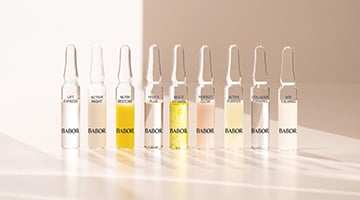
This distinction matters when evaluating collagen benefits. Professional-grade skincare is designed around the way ingredients interact with the epidermis and the skin's surface ecosystem. Concentrated formulas can help improve the appearance of firmness, elasticity, texture, and fine lines when used consistently. While a carefully developed routine helps maintain the skin's barrier and overall resilience. BABOR's high-concentration ampoule technology is especially suited to this approach, delivering targeted care in precise, single-dose formats.
BABOR's scientific positioning is reinforced by its standing as the #1 professional skincare brand in the EU, according to the Kline study conducted in 2024. Its professional expertise extends into the DOCTOR BABOR line, which is developed for medical-grade efficacy and focused skin concerns. Across the portfolio, dermatological testing supports a disciplined standard for product evaluation, while German manufacturing provides close oversight of production quality.
For collagen-focused care, the objective is not a dramatic overnight transformation. It is to use well-designed topical products that complement the skin's natural renewal processes and support a refined, consistent regimen. This is where concentrated treatments can add value: they allow a routine to be tailored to the skin's needs without losing the elegance or simplicity expected from luxury skincare.
BABOR's sustainability commitments also extend beyond the treatment experience. Climate-neutral production reflects an effort to pair scientific progress with responsible manufacturing, giving consumers a broader view of what professional skincare quality can encompass.
Explore BABOR ampoule concentrates for targeted collagen-supporting care
Frequently Asked Questions
What does collagen actually do for your body?
Collagen provides structure, support, and strength throughout the body. It is a major component of skin, bones, tendons, ligaments, muscles, blood vessels, organs, and the intestinal lining. In skin, collagen forms part of the connective-tissue framework that helps maintain firmness and resilience. Cleveland Clinic explains collagen's structural role.
What are the signs that collagen-focused skincare is working?
Look for gradual changes in the qualities the routine is designed to support, including a smoother appearance, improved-feeling elasticity, and a more supple surface. One clinical study of topical collagen tripeptide reported improvements in wrinkles, elasticity, and skin density after four weeks. But individual results vary and a single product cannot reverse every cause of visible aging. Read the published study.
Is it worth taking collagen every day?
That depends on your health needs, diet, and expectations. Oral supplements are digested and used systemically, while topical products act directly within a skincare routine. Research on the effectiveness of many oral collagen supplements remains ongoing. So discuss regular supplementation with a qualified healthcare professional, especially if you have medical conditions, allergies, or take medication. Review the current overview.
What nutrients support the body's collagen production?
A balanced diet supplies amino acids and other nutrients involved in collagen formation. The body also requires adequate vitamin C, zinc, copper, and manganese to form collagen's triple-helix structure. Food choices, supplementation, and individual nutrient requirements are personal health considerations, so seek professional guidance before making significant dietary changes.
Ready to Support Your Skin's Collagen Health?
A considered topical routine can help you care for skin that looks resilient, smooth, and well supported over time. Explore BABOR's professional, science-backed ampoule technology to find a focused step that complements your skincare ritual.


