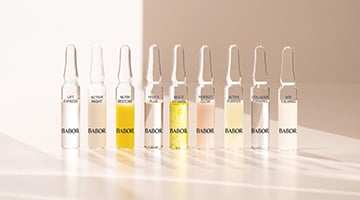
Choosing a retinol product is less about pursuing the highest number on the label and more about finding a formula your skin can tolerate consistently. Skin concern, concentration, texture, and the rest of your routine all shape the experience.
Explore the DOCTOR BABOR line for professional skincare options
The right starting point depends on what you want to address and how your skin responds. Understanding retinol's role makes it easier to choose an appropriate format and build a routine that supports its benefits without unnecessary irritation.
What Does Retinol Cream Do for Skin?
Retinol cream is a topical vitamin A derivative designed to support smoother-looking texture, more even tone, and the visible signs of photodamage over time. Because retinol is converted in the skin before it affects cellular activity, gradual use, moisturization, and daily sun protection are essential parts of a considered routine.
Retinol cream is a topical skincare product containing retinol, a vitamin A derivative. On the skin, retinol is converted through metabolic steps into retinoic acid, the form that can influence cellular activity. That process helps explain why retinol is used in routines focused on the visible effects of photodamage, uneven texture, and the look of fine lines. The result is not an overnight change. With consistent, well-tolerated use, retinol may help skin appear smoother and more refined over time.
One important benefit is its relationship with cell turnover. As older surface cells are shed and newer cells reach the surface, the skin can take on a more even, polished appearance. Research on topical retinoids has examined their role in photoaged skin, including changes associated with long-term environmental exposure. You can review the scientific background in this peer-reviewed review of topical retinoids and photoaging. Cosmetic retinol should be understood as a gradual appearance-focused skincare ingredient, not as a promise to treat a medical condition.
The vehicle matters, too. A cream surrounds the retinol in a richer texture that may suit a routine designed around comfort and moisture. A serum or ampoule offers a different sensory experience and delivery format. These formats are not interchangeable simply because they contain the same ingredient. The most appropriate choice depends on your skin's tolerance, the rest of your routine, and whether you can use the product consistently without persistent irritation.
This guide takes a practical route that differs from BABOR's stable-retinol ingredient explainer. That resource focuses on the ingredient itself and its stabilization. Here, the emphasis is on selecting a retinol cream by skin concern, understanding texture and strength, introducing it carefully, and supporting it with sensible routine steps. In practice, a thoughtful, sustainable routine is more useful than choosing the most intensive-feeling product and using it inconsistently.
How Do You Choose Retinol Cream by Skin Concern?
The best choice starts with the result you want and the level of tolerance your skin can support. A formula selected for fine lines may also refine the look of uneven tone or texture, but your introduction should still be personal and gradual. Clinical success depends on matching concentration to skin type and concern, rather than treating strength as the only measure of performance. Retinol refining serum is one option to consider when your primary focus is a smoother, more refined appearance.
Fine lines and visible signs of photodamage
If fine lines, loss of smoothness, or a weathered-looking surface are your priorities. Look for a retinol product designed for consistent use and a texture you will enjoy applying. Retinoids are among the most studied topical ingredients for photoaging, and their activity can support smoother-looking skin over time. Begin with a lower strength if you are new to retinol, and use it less frequently at first if your skin needs more time to adjust. A comfortable, repeatable routine is more useful than starting with an intensity that causes persistent discomfort.
Uneven tone and the appearance of discoloration
Retinoid treatment has been shown to reduce hyperpigmentation and improve the appearance of overall skin tone in photodamaged skin. If uneven tone is your concern, choose a product you can introduce without creating unnecessary irritation. Strength and the vehicle, or the formula carrying the retinol, both influence how intense side effects may feel. Keep expectations measured and allow time for a consistent routine rather than layering multiple strong products immediately.
Rough texture and visible congestion
For rough-feeling skin or visible congestion, consider how the formula fits your existing routine as well as its retinol content. Retinoids support cell turnover, which can help improve the look of skin texture. However, a stronger product is not automatically the better choice for every person. Starting at a lower concentration and building frequency gradually can be a sensible way to assess tolerance. If you experience persistent redness, scaling, or dryness, reduce use and reassess the routine instead of pushing through irritation.
Sensitive or dry skin
Sensitive or dry skin calls for a particularly cautious starting point. Choose a lower strength, apply it less often initially, and pay attention to how your skin responds between applications. Because irritation varies with both concentration and vehicle, the most suitable retinol cream is the one that balances your concern with your skin's ability to tolerate it. If significant irritation continues, pause use and seek professional advice. For pregnancy or breastfeeding, consult a clinician before considering topical retinoid products.

How Should You Start a Retinol Cream Routine?
A retinol cream works best as part of a measured evening routine, rather than as an intensive treatment used all at once. Introducing it gradually gives your skin time to adjust while you learn how the product feels and how your complexion responds.
- Begin with freshly washed, dry skin. Use a gentle cleanser and pat your face dry. Allowing the skin to dry fully can help limit unnecessary stinging.
- Apply a small amount. Use only the quantity recommended on the product packaging, spreading it in a thin, even layer over the face. Avoid the immediate eye area, corners of the nose, and lips unless the product directions say otherwise.
- Keep the first applications infrequent. Start with one evening per week. If your skin remains comfortable, move to two evenings per week after several applications.
- Follow with moisturizer. Apply a nourishing moisturizer after the retinol cream to support comfort. If your skin is particularly reactive, moisturizer can be applied first, followed by retinol, if the product instructions permit.
- Keep the rest of the evening routine simple. On retinol nights, avoid introducing several other potentially irritating active ingredients at the same time. A simpler routine makes it easier to identify what your skin tolerates.
- Use sun protection the next day. Apply broad-spectrum sunscreen every morning and reapply as directed. Sun protection is essential because retinol may increase sensitivity to sunlight, as noted by the Mayo Clinic.
How do you increase frequency?
Progress should be based on tolerance, not a fixed calendar. After your skin is comfortable with one or two weekly applications, you may gradually add another evening. Some people ultimately use a retinol cream every other night, while others achieve a better routine at a lower frequency. More frequent application is not automatically better if it repeatedly disrupts comfort.
Retinoid-related irritation may appear as redness, scaling, dryness, tightness, or persistent stinging. Mild, temporary dryness can occur during acclimatization, but increasing discomfort is a signal to pause, simplify the routine, and focus on moisturizer until the skin settles. Resume less often only when comfortable. If irritation is pronounced, persistent, painful, or accompanied by swelling, stop using the product and seek professional guidance. Retinol products are generally not recommended during pregnancy or breastfeeding without advice from a qualified clinician.
Compare retinol-supporting formats in the DOCTOR BABOR line
What Strength and Texture Should You Look For?
Choosing a retinol product is not simply a matter of selecting the highest strength available. The concentration, vehicle, and delivery format work together to shape how the formula feels. How easily it fits into an evening routine, and how well your skin tolerates continued use. Research indicates that the intensity of retinoid-related side effects depends on both retinoid strength and vehicle design. A carefully chosen formula can be more useful than an ambitious starting point. Clinical guidance on retinoid tolerability supports this strength-and-texture approach.
| Option | What it may suit | Texture and tolerability considerations |
|---|---|---|
| Lower-strength beginner use | Those new to retinol or concerned about initial sensitivity | A measured starting point helps skin acclimatize. Introduce it gradually instead of judging performance after one application. |
| More advanced use | Those whose skin has already established tolerance | Higher intensity is not automatically better. Progress should remain guided by comfort, routine consistency, and the skin's response. |
| Cream texture | Those who prefer a cushioned, comforting application | A cream vehicle can feel supportive when skin leans dry or when a richer evening finish is preferred. The vehicle still influences tolerability. |
| Serum texture | Those who prefer a lighter, fluid layer | Serums can sit lightly within a layered routine. Their feel does not determine strength, so assess the complete formula rather than texture alone. |
| Ampoule format | Those seeking a precise, concentrated treatment format | Single-dose presentation can make an ampoule feel deliberate and treatment-focused. Follow the product directions and introduce it with the same attention to tolerance. |
Why the vehicle deserves equal attention
A well-designed vehicle can affect spreadability, contact with the skin, and the overall sensory experience. This matters because irritation may present as redness, scaling, or dryness, and a formula that feels comfortable is easier to use consistently. Evidence also suggests that beginning with a lower concentration may reduce initial sensitivity while the skin acclimatizes. Do not treat concentration as the only measure of sophistication. Stabilization is another important area of cosmetic science, helping maintain retinol potency throughout a product's lifespan.
For a concentrated format, explore the retinol power serum ampoule. To compare the broader professional collection and its treatment formats, visit the DOCTOR BABOR line. BABOR's German skincare heritage informs a professional approach designed around precision, sensorial quality, and disciplined use.
What Should You Pair With Retinol Cream?
A supportive routine helps retinol cream remain effective and comfortable over time. Retinoid irritation may appear as redness, scaling, or dryness, but careful application and regular moisturization can help minimize these effects. Clinical guidance supports keeping the surrounding routine simple while your skin adapts.
Begin with a gentle cleanser in the evening. Remove makeup, sunscreen, and daily residue without scrubbing or leaving the skin tight. Pat dry, then allow the skin to become fully dry before applying retinol. This approach reduces unnecessary irritation and gives you a consistent starting point for each application.
Follow with a moisturizer selected for your skin's needs. A well-formulated cream or lotion supplies barrier support without adding another strong treatment step. If your skin is easily reactive, apply moisturizer before retinol or use a moisturizer again afterward. This buffering approach can make the routine easier to tolerate while maintaining consistency.
Keep the evening routine focused rather than layering multiple resurfacing products at once. If you want to add another product from the same professional skincare approach, introduce it separately and monitor how your skin responds. For example, the renewal toner may fit into a broader routine, but it should not turn every evening into an intensive treatment session.
- Evening: Use a gentle cleanser, let skin dry, apply retinol as directed, and finish with moisturizer.
- Morning: Cleanse gently if needed, moisturize, and apply broad-spectrum sunscreen.
- Adjustment: If dryness or redness develops, reduce application frequency and emphasize moisturizer until comfort returns.
Daytime sun protection is essential because retinol may increase sun sensitivity, and ultraviolet exposure can undermine efforts to improve the appearance of photodamaged skin. Apply broad-spectrum SPF every morning, reapplying as appropriate for time outdoors. The Mayo Clinic explains why evening use and daily sun protection belong together in a retinol routine.
For a more concentrated resurfacing format, the renewal ampoule serum concentrate should be treated as a separate product choice, not an automatic addition to retinol cream. Introduce one change at a time so you can assess tolerance and keep the routine purposeful.
When Should You Expect Results and Seek Guidance?
Retinol rewards consistency rather than impatience. Early use may be more about helping your skin adjust than about seeing a dramatic visible change. With regular application and a routine your skin can tolerate, improvements in the appearance of fine lines and texture generally take several months to become meaningful. Clinical reviews likewise note that significant anti-aging benefits often require months of consistent topical retinoid use, not a few applications or a single intensive treatment. Read the clinical review on topical retinoids and photoaging.
Think in terms of steady progress. Keep the rest of your routine supportive, introduce changes one at a time, and assess your skin over a longer interval. Temporary dryness or sensitivity can make it tempting to stop and restart repeatedly, which makes it difficult to judge how your retinol cream is working. Persistent discomfort is different from a normal adjustment period. If irritation is significant, pause and seek qualified advice rather than trying to push through it.
Cosmetic retinol and prescription retinoids are not the same
Cosmetic retinol is formulated for use in an over-the-counter skincare routine. Prescription retinoids are clinician-directed treatments with different active ingredients, strengths, indications, and monitoring considerations. A retinol cream should not be treated as a substitute for a prescription. And a prescription retinoid should not be added to an existing routine without advice from the clinician who prescribed it. If your goal requires medical assessment, or if you are managing a diagnosed skin condition, ask a dermatologist or other qualified healthcare professional which approach is appropriate.
When to ask a clinician
Pregnancy and breastfeeding are important reasons to seek professional guidance before using a topical retinoid. A dermatology review notes that topical retinoid use is generally contraindicated during pregnancy and breastfeeding because of potential risks. Do not rely on a product label or online routine alone in these circumstances. Discuss your skincare plan with your obstetric or primary care clinician.
Long-term topical retinoid research supports generally favorable safety and tolerability when these products are used appropriately, but that evidence does not remove the need for individualized advice. Seek guidance for marked redness, swelling, burning, cracking, or irritation that does not settle. With the right boundaries, a measured routine gives retinol cream time to perform without asking your skin to do more than it can comfortably manage. Review the evidence on long-term topical retinoid safety and tolerability.
Explore the DOCTOR BABOR line for a retinol-supporting routine
Frequently Asked Questions
How often should you use retinol cream?
Begin with one or two evening applications per week, then increase gradually as your skin develops tolerance. Follow the product directions and reduce frequency if persistent redness, scaling, or discomfort appears.
Can retinol cream be used on sensitive skin?
It can, provided you choose a suitable formula and introduce it slowly. Apply a small amount to freshly cleansed, fully dry skin, support the barrier with moisturizer, and consider professional guidance if sensitivity is significant or ongoing.
Should you apply retinol cream before or after moisturizer?
Apply retinol to freshly cleansed, dry skin, then follow with moisturizer. If your skin is particularly reactive, applying moisturizer first can create a gentler introduction, although it may change how intensely the product feels.
Does retinol cream cause dryness?
Dryness, scaling, and redness can occur while skin adjusts, especially when use is too frequent or the formula is not well matched to your tolerance. Gentle cleansing, gradual use, and moisturizer can help minimize unnecessary irritation. See this clinical review of retinoid tolerability for additional context.
When should you expect results from retinol cream?
Visible improvement is gradual rather than immediate. Consistent use over several months is commonly needed before meaningful changes in the appearance of fine lines and texture become noticeable. Use daytime sun protection throughout the routine. This clinical review of topical retinoids discusses the longer timeline.
Ready to Explore a Retinol-Supporting Routine?
Choosing a retinol cream is one part of a thoughtful skincare routine. The right texture, strength, and supporting steps can make consistent use feel more comfortable and practical. Explore BABOR's professional skincare options to compare formats and find a routine that fits your skin's needs.