Vitamin C is one of skincare's most studied antioxidant ingredients. Its value depends on more than adding a brightening step. Ingredient stability and consistent use influence what you can expect to see.
Explore BABOR's vitamin C ingredient expertise
So, what does vitamin c do for skin? Topical vitamin C may help brighten the appearance of the complexion and reduce the look of dark spots. It may also support collagen production and help defend against oxidative stress associated with environmental exposure. It is not a sunscreen or a treatment for skin disease. These benefits are discussed by Harvard Health and supported by a peer-reviewed skin health review.
The most useful way to evaluate vitamin C is to look closely at how it works on the skin. Product design matters, as does introducing the ingredient with appropriate care. Start with the science behind its antioxidant role and its visible effects. This guide focuses on what the ingredient can contribute to a routine, not on ranking products.
What Does Vitamin C Do for Skin? The Short Answer
Vitamin C helps skin defend itself against oxidative stress while supporting a brighter, more even-looking complexion. In topical skincare, it is valued for antioxidant activity, support for collagen synthesis, and the potential to soften the visible appearance of dark spots and uneven texture. These are appearance-focused benefits, not a substitute for medical care or daily sun protection.
Oxidative stress occurs when reactive molecules called free radicals place pressure on cells. Sun exposure and environmental pollution can contribute to this process. As an antioxidant, vitamin C can help neutralize free radicals at the skin's surface, supporting the skin as it responds to everyday environmental stressors. Harvard Health explains that topical vitamin C may combat free radicals from external sources and improve the skin's overall appearance. Read the Harvard Health overview of topical vitamin C.
Vitamin C is also associated with the skin's natural collagen processes. Collagen helps provide the structure associated with resilient, firm-looking skin, and a scientific review describes vitamin C as supporting collagen synthesis and antioxidant protection against UV-related photodamage. Review the evidence on vitamin C and skin health in PMC. The wording matters: a topical product may support these processes, but it does not replace a broad-spectrum sunscreen or guarantee a particular result.
There is an important distinction between dietary and topical vitamin C. The body does not produce vitamin C, so food and supplements provide it for whole-body functions. A topical product, by contrast, is applied directly to the skin to deliver an ingredient where a skincare benefit is intended. One route does not simply stand in for the other. A well-designed routine considers nutrition, sun protection, product quality, and consistent application together.
For a science-led look at the ingredient and its role in radiance-focused skincare, explore BABOR's vitamin C expertise.
What Does Vitamin C Do for a Brighter, More Even-Looking Complexion?
Topical vitamin C is valued in professional skincare for its support of a more even-looking tone. When skin looks dull or uneven, the goal is not to erase its natural character. It is to support a clearer, more balanced appearance over time through antioxidant care and consistent routine use.
Vitamin C may help reduce the appearance of dark spots by interfering with pigment production in the skin. This can be relevant when areas of discoloration make the complexion appear less uniform. The effect is cosmetic and appearance-focused: topical vitamin C is not a treatment for a diagnosed pigmentation disorder. And visible results depend on the formula, application pattern, and individual skin. Harvard Health explains that topical vitamin C may improve overall appearance and reduce the appearance of dark spots by blocking pigment production. Read the Harvard Health overview of topical vitamin C.
Environmental oxidative stress is another part of the picture. Sun exposure and air pollution can contribute to free-radical activity at the skin's surface. As an antioxidant, vitamin C helps counter these molecules, supporting the skin's defenses against environmental stressors. Research also describes vitamin C as contributing to antioxidant protection against UV-induced photodamage. It should not be treated as a sunscreen, however. Daily broad-spectrum sunscreen remains essential for helping protect the skin from ultraviolet exposure.
Product design matters because the ingredient must be delivered in a way that supports regular use. BABOR describes vitamin C as offering antioxidant protection, a more even complexion, and visible radiance. Explore BABOR's vitamin C expertise to see how this ingredient is positioned within a science-led skincare approach.
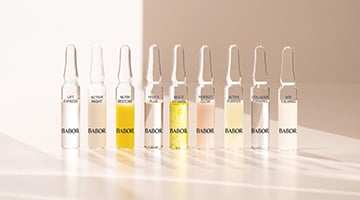
For a more concentrated format, single-use ampoules can make a targeted treatment easy to incorporate into a considered routine. The measured format supports freshness and a focused application across the face, neck, and decollete.
Explore targeted ampoule treatments for a concentrated radiance boost
Consistency is the practical link between the ingredient's potential and the complexion's appearance. Apply vitamin C as directed, protect the skin from daily sun exposure, and give the routine time to support a more even-looking, radiant finish.
Can Vitamin C Support Collagen and Visible Signs of Aging?
Collagen forms part of the dermal structure that gives skin strength, resilience, and a firmer-looking appearance. Vitamin C supports collagen synthesis, which is one reason it has a considered place in an evidence-led skincare routine. A review in the National Center for Biotechnology Information describes vitamin C as supporting collagen synthesis and antioxidant protection against UV-related photodamage in skin.
That mechanism does not mean a topical product can reverse every change associated with age. Collagen production, skin elasticity, and surface texture are influenced by intrinsic aging, cumulative environmental exposure, genetics, and daily care. The more accurate question is whether a well-formulated product may support the visible condition of the skin over time. Vitamin C is not a medical treatment.
What collagen support may look like on the skin
When collagen synthesis is supported, the potential benefit is gradual and appearance-focused. Skin may look smoother, more resilient, or more even in texture. Fine lines can appear less noticeable when the surface looks refined and the skin maintains a healthy-looking degree of firmness. These changes should be understood as possible improvements in visible appearance, not a guarantee of a specific result.
Harvard Health reports that one study found daily use of a topical vitamin C product for at least three months improved the appearance of fine and coarse wrinkles on the face and neck. The study also found better overall skin texture and appearance. The timeframe matters. Skin does not remodel visibly after a single application, and consistency is more meaningful than sporadic use. Read the finding as evidence of a possible cosmetic benefit, not as a promise that every formula or routine will produce the same outcome.
Protection and prevention are not the same as treatment
Environmental stressors, including UV exposure, can contribute to oxidative stress that affects the skin's structural integrity. Vitamin C's antioxidant role may help support the skin's defenses, particularly as part of a broader routine that includes daily broad-spectrum sunscreen. It is not sunscreen, and it should not be used as a substitute for sun protection or professional care.
For readers primarily concerned with uneven-looking tone alongside texture, our guide to vitamin C ampoules for hyperpigmentation explores that related concern separately. A thoughtful routine can address several visible priorities, but persistent, sudden, or concerning skin changes warrant advice from a qualified healthcare professional.
Why Stability Matters in a Vitamin C Formula
Vitamin C is valued for its antioxidant role, but its presence on an ingredient label does not tell the whole story. Light and air can affect vitamin C over time. The ingredient must be protected within a thoughtfully designed product. A review of topical vitamin C discusses these stability challenges in detail.
This is why packaging is more than a visual choice. A container that limits unnecessary exposure to light and air can help support the condition of the product during normal use. The closure, material, size, and dispensing method all influence how often the contents are exposed to the surrounding environment. A product that is opened repeatedly may face different conditions from a single-use format, even when both display vitamin C on the label.
Look beyond the ingredient name
| Formula consideration | Why it matters |
|---|---|
| Vitamin C form | Different forms can have different stability and skin-compatibility profiles. |
| Packaging | Limiting light and air exposure helps protect the product during normal use. |
| Directions | Clear storage and application guidance supports consistent use. |
Evaluating a vitamin C product starts with identifying the form of vitamin C it contains. L-ascorbic acid is one recognized form, while other products use vitamin C derivatives. These names should not be treated as interchangeable proof of identical performance. The form, the rest of the ingredient blend, the product's pH, and the packaging work together to shape the user experience and the ingredient's stability.
At the same time, an ingredient list cannot reveal every aspect of product quality. It does not show how the product was protected during filling, how it is intended to be stored, or how quickly it should be used after opening. Nor does it establish a specific visible result for every person. A complete evaluation considers the entire product system, including the ingredient choice, supporting ingredients, packaging, directions, and the evidence available for the finished product.
Single-use ampoules offer one practical approach to this question. Their format is designed for a targeted application rather than prolonged repeated opening. BABOR's targeted ampoule treatments use concentrated, single-use formats for treatment-focused skincare. The format does not replace careful product evaluation, but it illustrates why packaging and application design belong in the conversation alongside the ingredient label.
When asking what does vitamin c do for skin, it is useful to ask a second question: how is the product designed to preserve the ingredient until application? That broader view keeps expectations grounded and places stability, packaging, and consistent use at the center of a science-led skincare decision.
How to Add Vitamin C to Your Skincare Routine
A well-planned vitamin C routine is less about adding multiple products and more about applying one thoughtfully, consistently, and in the right order. The goal is to support a brighter, more even-looking complexion while keeping the rest of your regimen comfortable and balanced.
- Begin with freshly cleansed, dry skin. Use a gentle cleanser suited to your skin, then pat dry rather than rubbing. Applying vitamin C to dry skin can help keep the experience more predictable, especially if you are new to the active. BABOR's vitamin C expertise includes products designed around radiance and antioxidant support.
- Patch test and introduce it gradually. Apply a small amount to a discreet area first and observe how your skin responds. If there is no persistent discomfort, begin every other day or a few times per week before considering more frequent use. Sensitivity varies, and gradual introduction gives you time to assess the product without changing several variables at once.
- Apply vitamin C before heavier leave-on products. After cleansing, smooth on your vitamin C product according to its directions. Allow it to settle, then follow with hydrating layers and moisturizer. There is no advantage to applying more than directed. Consistency and an appropriate product for your skin matter more than an overloaded routine.
- Choose morning use when it suits your routine. Vitamin C can be used in the morning as part of an antioxidant-focused regimen, although a consistent evening application may also be practical. If you use exfoliating acids, retinoids, or other potent actives, consider alternating them or using them at separate times until you understand how your skin responds. Sensible spacing can reduce the chance of unnecessary irritation.
- Finish with moisturizer and broad-spectrum sunscreen in the morning. Sunscreen is the essential companion for daytime skincare. Research discussed by Harvard Health notes that topical vitamin C may complement broad-spectrum sunscreen, but vitamin C is not sunscreen and cannot replace it. Apply sunscreen as the final morning skincare step, then reapply as directed for your activities and exposure.
Keep the routine steady long enough to evaluate how your complexion looks and feels, rather than introducing several new actives at once. For a more targeted approach, explore BABOR's targeted ampoule treatments, which BABOR describes as concentrated skincare in single-use glass vials for focused skincare use. If marked or ongoing irritation develops, stop the new product and seek guidance from a qualified skincare professional.
Who Should Use Vitamin C, and What Should You Watch For?
Vitamin C can be a thoughtful addition to many routines, especially when the goal is a brighter, more even-looking complexion or visible support for signs of environmental stress. The right product, however, depends on skin tolerance, the formula, and the rest of your routine. An ingredient can be well studied and still require a measured introduction.
If your skin is sensitive, begin with a product designed for daily comfort and use it less frequently at first. Apply a small amount to freshly cleansed, dry skin, then observe how your skin responds over the next several applications. Mild tingling can occur with some products. Persistent stinging, redness, itching, or discomfort is a reason to stop and seek advice from a qualified skincare professional. The American Academy of Dermatology notes that vitamin C may help improve the appearance of dark spots and signs of aging. It also emphasizes that products can vary in tolerability.
Introduce one change at a time
Routine complexity makes it difficult to identify the source of irritation. When adding vitamin C, avoid changing several products at once. This is particularly useful if your routine already contains exfoliating acids or a retinoid. Combining potent active ingredients may increase the chance of sensitivity for some people. Consider alternating evenings or asking a skincare professional to help sequence the products.
Vitamin C should complement, not replace, daily broad-spectrum sunscreen. Antioxidant support does not turn a serum into sun protection. Use sunscreen as directed and reapply when appropriate for your environment and activity. If you are managing a persistent skin concern, taking medication, pregnant or breastfeeding, or experiencing a reaction, speak with a clinician before making significant changes.
A professional approach is less about choosing the strongest product and more about choosing a stable formula that suits your skin and using it consistently. That balance allows the potential benefits of vitamin C to fit comfortably into a considered skincare ritual.
Explore BABOR's vitamin C ingredient expertise before choosing a routine
Frequently Asked Questions About Vitamin C for Skin
What does vitamin C do for your skin?
Topical vitamin C supports antioxidant defense, brightening, and a more even-looking tone. It may also support collagen synthesis, helping skin look firmer and smoother over time. Results depend on the vitamin C form, formula stability, regular use, and individual response. Vitamin C does not replace sunscreen or medical care.
Can you use vitamin C every day?
Many people can use a well-tolerated vitamin C product daily, but frequency should match the formula and your skin's tolerance. Start gradually if you are new to the ingredient or have sensitive skin. Use it on freshly cleansed, dry skin, follow with moisturizer as needed, and apply broad-spectrum sunscreen in the morning. If your routine includes retinoids or exfoliating acids, introduce changes one at a time or alternate products to reduce the chance of irritation.
Does vitamin C help with dark spots?
Vitamin C may help improve the appearance of dark spots by influencing pigment production in the skin. It is not an instant correction, and visible improvement requires consistent use and appropriate sun protection. A qualified skincare professional or clinician can help assess persistent or changing pigmentation, particularly when a concern does not respond to a gentle routine.
Does vitamin C support collagen and skin aging concerns?
Vitamin C supports the biological process of collagen synthesis. Topical use may therefore help improve the appearance of texture, fine lines, and overall radiance over time. Research cited by Harvard Health describes improvement in the appearance of wrinkles and texture after regular use in one study. Broader skin-health research also explains vitamin C's role in collagen and antioxidant protection. Choose a stable, well-tolerated formula and evaluate progress over time rather than expecting an overnight change.
Explore Vitamin C Through a Professional Lens
Vitamin C is most useful when the ingredient, formula, packaging, and routine are considered together. BABOR brings a professional, science-led perspective to targeted skincare, with