Hydrolyzed collagen is a skincare ingredient made by breaking collagen into smaller peptide fragments. In a topical formula, its most credible role is to help condition the skin and support a hydrated, smoother-looking surface. That is different from claiming that a cream rebuilds the collagen framework deep within the skin.
The distinction matters because the word collagen can describe several very different approaches to skin care. A formula may use hydrolyzed collagen for its conditioning properties, while retinol or selected peptides are chosen to support processes associated with the skin's own collagen production. Neither label tells you everything about performance. The formula, delivery system, use instructions, and evidence behind the claim all deserve attention.
This guide keeps the focus on topical skincare. It explains what hydrolyzed collagen means and what it can reasonably contribute to a routine.
It also explains how the ingredient differs from collagen-supporting actives. Finally, it shows how to read claims with a more discerning eye.
What Is Hydrolyzed Collagen in Skincare?
Hydrolyzed collagen is collagen that has been processed into smaller peptide fragments. In ingredient discussions, it may also be called collagen hydrolysate. The word hydrolyzed describes the way the larger protein material has been broken down. It is not a promise that the ingredient will behave like the collagen naturally present in the deeper layers of skin.
This processing matters because peptide size can influence practical properties such as solubility and how an ingredient behaves in a finished formula. A research review defines hydrolyzed collagen as collagen broken into smaller peptides, a change associated with increased solubility and absorption potential (read the scientific overview). For a topical product, however, potential is not the same as a guaranteed delivery route or a specific visible result.
Why molecular size appears in the conversation
Skincare formulas must balance ingredient performance, stability, texture, preservation, and the experience of applying the product. Molecular weight is one quality attribute that can influence the biological activity of collagen materials used in skin care applications. It is therefore useful context when a brand explains a collagen peptide, but it is not enough to evaluate a product on its own.
A smaller peptide may be easier to dissolve or distribute than an intact collagen protein. That does not mean every fragment reaches the same skin layer, remains intact after application, or produces the same effect. The vehicle, formula design, concentration, packaging, and skin condition all shape what happens after a product is applied.
What to look for on an ingredient list
Read hydrolyzed collagen as one component of a complete formula. Check the exact ingredient name, then look for the product's stated cosmetic purpose. If the claim focuses on moisturization, conditioning, softness, or a smoother-looking surface, it is describing a topical role that can be assessed through regular use. If the language implies that a cream directly replaces deep structural collagen, ask for evidence specific to that claim.
For additional context, explore BABOR's collagen skincare ingredients. The distinction between an ingredient definition and a finished-product claim is essential. It lets you appreciate the science without asking a topical formula to do something the label has not demonstrated.
What Does Hydrolyzed Collagen Do for Skin?
In a topical formula, hydrolyzed collagen is best understood as a conditioning ingredient. By helping the surface feel more comfortable and hydrated, it can contribute to skin that looks smoother and more supple. That surface effect can make the complexion appear more refined, but it should not be confused with replacing collagen in the deeper dermal structure.
Hydration is central to this distinction. When the outer layers of skin hold water effectively, fine surface texture may look softer and skin can feel more flexible. A well-designed formula may also support the feel of the skin barrier by reducing the sensation of dryness and roughness. These are meaningful cosmetic benefits, especially for skin that feels tight after cleansing or exposure to dry air.
What it can and cannot promise
A responsible description might say that hydrolyzed collagen helps moisturize, condition, or improve the feel of the skin. It may also support a smoother, firmer-looking appearance through surface hydration. A responsible description should not promise that a topical product rebuilds lost dermal collagen, reverses aging, or produces a medical result.
That measured language reflects how topical collagen peptides have been investigated. Research has considered their potential cosmetic and anti-aging applications, while the mechanism remains distinct from oral collagen supplementation (review the topical collagen peptide research). Results depend on the complete formula, not the ingredient name in isolation.
Why the full formula matters
Hydrolyzed collagen works within a system that includes humectants, emollients, film-forming materials, preservatives, and the vehicle that carries each ingredient. Texture and finish also affect whether a product is pleasant enough to use consistently. BABOR's approach combines scientific efficacy with a luxury, spa-like experience, so sensory quality and performance are considered together.
For ingredient context, explore BABOR's information on marine-derived collagen. The page can help you distinguish an ingredient discussion from a broad promise about every collagen product. The most useful question is not whether collagen appears on the label. It is what the finished formula is designed to do and whether that purpose fits your skin's current needs.
How Is It Different From Collagen-Supporting Actives?
Hydrolyzed collagen and collagen-supporting actives can appear in the same conversation, but they do not represent the same strategy. Hydrolyzed collagen is a collagen-derived material broken into smaller peptides. In a topical formula, it is commonly discussed in relation to conditioning, hydration, and the feel of the skin's surface.
Other actives are selected because they may support processes associated with the skin's own collagen maintenance. Retinol and certain signaling peptides are examples of ingredients studied for different pathways and purposes. Research has investigated topical collagen peptides for anti-aging applications, while also emphasizing that their mechanisms differ from oral supplementation (read the topical collagen peptide research). The useful distinction is not that one category is automatically superior. It is that each needs to be evaluated against its intended benefit and evidence.
Conditioning versus signaling
Think of conditioning as improving the environment at the skin's surface. A well-formulated collagen-derived ingredient may help skin feel softer, more comfortable, and better hydrated. Think of signaling as an attempt to influence a biological process through a specific active and its formulation. These concepts overlap in an advanced routine, but they are not interchangeable claims.
That difference also changes how you judge results. With a conditioning ingredient, you might assess softness, comfort, suppleness, and the appearance of surface texture. With a collagen-supporting active, you would look for evidence tied to the specific active, its stability, its concentration or delivery system, and the way the product was studied. A label that says firming cannot answer those questions by itself.
| Ingredient approach | Primary topical focus | What to evaluate |
|---|---|---|
| Hydrolyzed collagen. | Conditioning, hydration, and surface feel. | Formula design, texture, skin comfort, and realistic cosmetic claims. |
| Retinol. | Support for processes linked to skin renewal and collagen maintenance. | Strength, stability, tolerance, directions, and evidence for the finished product. |
| Signaling peptides. | Ingredient-specific support for selected skin pathways. | Peptide identity, delivery system, claim language, and study design. |
How to compare formulas thoughtfully
Start with your primary concern. If dryness and a rough-feeling surface are the immediate issues, a conditioning and moisturizing formula may be the more relevant choice. If your goal is to introduce a retinoid or peptide-focused routine, tolerance, frequency, and compatibility deserve equal attention. Avoid stacking multiple high-impact changes at once, because it becomes difficult to identify what your skin is responding to.
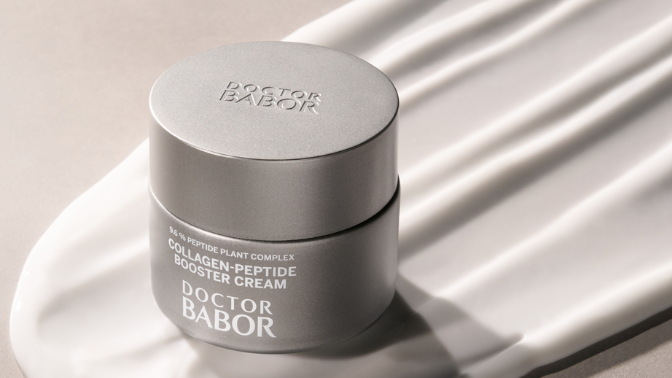
Product pages should clarify the role of their featured ingredients. For a concrete example of how a collagen-focused product is presented, see BABOR's collagen peptide booster cream. Treat that page as product context, then assess the claims, directions, texture, and complete ingredient list together.
Ultimately, hydrolyzed collagen is not a substitute term for retinol, signaling peptides, or every other firming active. It is one ingredient approach within topical skincare. The most credible routine matches the ingredient's demonstrated role to a clearly stated cosmetic goal.
Can Hydrolyzed Collagen Penetrate the Skin?
The short answer is that hydrolysis can change how a collagen-derived ingredient behaves in a formula. It does not turn a topical product into a guaranteed deep-delivery treatment. Hydrolyzed collagen is collagen that has been broken down into smaller peptides. This process increases solubility and may improve its potential to interact with the skin's surface, but ingredient size is only one part of the delivery question.
Solubility is not the same as deep penetration
An ingredient that dissolves readily may be easier to distribute through a cosmetic formula. That does not automatically mean that it passes through every layer of the skin or reaches the dermis in the same form. The outer barrier is selective. It limits movement according to factors such as molecular size, charge, polarity, the condition of the skin, and the vehicle surrounding the ingredient.
For that reason, a smaller peptide should be discussed with precision. Research on skincare applications identifies molecular weight as an important quality attribute that can influence biological activity. A molecular-weight value alone cannot prove a finished product's performance (see the study on collagen quality attributes). Formula design, concentration, stability, packaging, and application instructions all shape the result a user experiences.
What topical collagen is doing at the surface
Many topical collagen products are designed to moisturize and condition the outer layers of skin. That can improve softness and the look of surface texture. It is a more accurate expectation than assuming that hydrolyzed collagen directly replaces structural collagen that has been lost deeper in the skin.
Consider the word penetrate in context. A product may spread well, form a comfortable film, and help support a hydrated surface without making a claim about dermal rebuilding. Those benefits are not lesser simply because they are cosmetic and surface-focused. They are also easier to evaluate. Notice how the skin feels, how the formula layers with the rest of the routine, and whether the appearance of dryness or rough texture improves with consistent use.
Look for claims that match the evidence available for the complete formula. A well-made product should explain its intended benefit clearly instead of using molecular language as a substitute for proof.
How Should You Evaluate Hydrolyzed Collagen Claims?
A sophisticated ingredient conversation starts with the finished formula, not a single word on the label. Use the following framework to separate a useful topical claim from language that reaches beyond the available evidence.
- Start with the ingredient list. Confirm that the product identifies its collagen-derived ingredient clearly. Hydrolyzed collagen is a collagen material broken into smaller peptides, not a synonym for every peptide, firming ingredient, or collagen-supporting active.
- Ask what benefit is actually promised. Hydration, conditioning, softness, and a smoother-looking surface are topical benefits that can be assessed in a routine. A statement that a cream replaces or rebuilds the skin's deep collagen structure requires a much higher level of proof and should not be assumed from the ingredient name.
- Consider molecular and formula context. Molecular weight can influence how a collagen peptide behaves, but it is not a performance guarantee. Look for information about the vehicle, stability, packaging, texture, and directions. These details show whether the brand is discussing a coherent formula rather than using technical vocabulary as decoration.
- Separate topical research from oral research. A meta-analysis of hydrolyzed collagen supplementation reported improvements in hydration and elasticity, but those findings concern ingestion, not a topical cream (read the supplementation review). The same review reported oral study dosages ranging from 2.5 to 10 grams per day. Do not transfer that number to a topical routine or treat it as a topical concentration.
- Look for evidence that matches the product. A study of a supplement, an isolated ingredient, or a different collagen peptide does not automatically validate every finished skincare product. Stronger support comes from evidence that identifies the ingredient, formula, intended use, and measured outcome with enough detail to evaluate the connection.
- Read the directions and observe your skin. Use the product as directed and introduce one meaningful change at a time when possible. Consider comfort, hydration, texture, and compatibility with the rest of your routine. If persistent irritation occurs, stop using the product and seek advice from a qualified professional.
This evidence-led approach aligns with BABOR's focus on high-performance skincare and a refined user experience. The goal is not to dismiss hydrolyzed collagen. It is to give the ingredient an accurate role within a thoughtful formula.
Is Hydrolyzed Collagen Right for Your Routine?
Hydrolyzed collagen may be a considered choice when your priority is a comfortable, hydrated, conditioned skin surface and a smoother-looking finish. It can fit especially well in a routine designed around suppleness and barrier comfort. The right decision depends less on the ingredient's prestige than on the relationship between your skin concern, the complete formula, and the product's directions.
Match the formula to your goal
- For a dry or tight-feeling surface: prioritize a formula that leaves skin comfortable and supported, then assess whether hydration and softness improve with consistent use.
- For visible texture concerns: consider whether you need surface conditioning, a collagen-supporting active, or a routine that uses both approaches at different times.
- For a refined ritual: choose a texture and application experience you will use consistently. Sensory quality can support adherence without replacing evidence of performance.
Introduce new products thoughtfully. Follow the directions, avoid changing several active products at once, and pay attention to signs of discomfort. If your skin is reactive or you are already using retinoids, acids, or other intensive actives, a qualified skincare professional can help you organize the routine.
Where concentrated skincare can fit
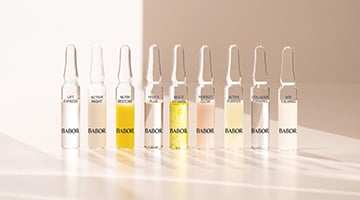
BABOR is known for targeted ampoule technology, which delivers highly concentrated, single-dose skincare treatments. Concentration alone does not guarantee a result, so evaluate the purpose, formula, and instructions together. Explore the BABOR ampoule concentrates range when you want to understand how a professional skincare ritual can be structured around focused treatments.
Choose hydrolyzed collagen for the role it can reasonably play: conditioning and supporting the appearance of hydrated, supple skin. Keep expectations precise, and let the quality of the finished formula guide your decision.
Frequently Asked Questions About Hydrolyzed Collagen
What is hydrolyzed collagen in skincare?
Hydrolyzed collagen is collagen that has been broken into smaller peptide fragments. In topical skincare, it is generally discussed as a conditioning ingredient that can support a hydrated, supple-feeling surface. The term describes how the ingredient was processed. It does not by itself prove a specific depth of delivery or visible result.
Does topical hydrolyzed collagen build collagen in the skin?
Do not assume that a topical hydrolyzed collagen product directly rebuilds the skin's deeper collagen structure. Its more supportable cosmetic roles involve hydration, conditioning, and the appearance of smoother skin. Retinol and certain signaling peptides are different active approaches that may be selected for processes associated with the skin's own collagen maintenance.
Is topical hydrolyzed collagen the same as oral collagen?
No. Topical and oral products use different delivery routes and should not be evaluated with the same evidence. Studies of oral hydrolyzed collagen supplementation cannot automatically establish what a cream or serum will do when applied to the skin. Look for evidence that matches the topical ingredient, finished formula, intended use, and measured outcome.
Does a smaller collagen peptide always penetrate more deeply?
No. Hydrolysis can increase solubility and change peptide size, but smaller size alone is not a guarantee of deep penetration or performance. The vehicle, formula design, stability, packaging, skin condition, and application instructions also matter. Molecular-weight information is useful context, not a promise.
Who may want to consider a hydrolyzed collagen formula?
It may suit someone looking for a moisturizing, conditioning product that supports a smoother and more supple-looking surface. Choose the complete formula according to your skin's needs, follow directions, and introduce new products carefully. If you have persistent irritation or a complex routine, seek advice from a qualified skincare professional.
Build a More Informed Skincare Ritual
Hydrolyzed collagen has a clear place in topical skincare when its role is described precisely: conditioning the skin, supporting hydration, and contributing to a smoother, more supple-looking surface. Pair that understanding with careful attention to the finished formula, evidence, and directions. BABOR brings a professional, science-led approach to concentrated skincare, designed to make each step feel purposeful as well as luxurious.
Explore the range of targeted treatments and consider which format best supports your personal ritual. For individualized guidance, consult a qualified skincare professional who can help you select and sequence products for your skin's needs.