Vitamin C can be a valuable part of a considered skincare routine, but the ingredient name alone does not tell you how a product will perform. Its form, concentration, pH, stabilizing system, packaging, and vehicle all influence stability and skin delivery.
So, what is vitamin c good for? Topical vitamin C may help improve the appearance of dullness and uneven tone while supporting antioxidant care and the look of firmer, more resilient skin. Research also examines its relationship with collagen synthesis and visible photodamage, but a cosmetic product is not a treatment for disease and never replaces daily sunscreen. A recent review summarizes these established areas of topical vitamin C research.
The most useful way to assess vitamin C is therefore to connect its intended cosmetic benefit with the specific formula and your skin's tolerance. That distinction helps clarify where it belongs in a professional routine and what expectations are realistic.
What Is Vitamin C Good For in Skincare?
Topical vitamin C may help improve the appearance of dullness, uneven tone, and visible signs associated with environmental exposure. As an antioxidant, it can help neutralize free radicals, while research also explores its relationship with collagen synthesis and pigmentation. Results depend on the specific formula, stability, skin tolerance, and consistent use.
Vitamin C is not one single cosmetic experience. It is a family of topical ingredients used in serums, creams, lotions, and concentrated treatments. Reviews describe antioxidant activity, support for collagen synthesis, and an appearance-focused brightening or tone-evening role among its principal areas of interest. These findings help explain why vitamin C appears in routines designed to promote a more radiant, even-looking complexion. They do not mean every formula produces the same result.
As an antioxidant, topical vitamin C may help address the effects of free radicals generated by ultraviolet exposure and the natural aging process. The mechanism is often described as binding free radicals, which may contribute to less visible cell damage and better-looking skin. This is supportive skincare, not a substitute for daily sunscreen or a claim that a cosmetic product prevents skin disease. The underlying review literature describes vitamin C as a popular ingredient in preparations intended to address photodamage, while also emphasizing the limits of topical delivery. Read the dermatology review on topical vitamin C.
For uneven tone, the language matters. Research has examined vitamin C in relation to hyperpigmentation and UV-simulated pigmentation. But evidence does not justify promising that a serum will erase discoloration or treat a diagnosed condition. A meta-analysis found an antipigmenting quality in the studied context rather than an added depigmenting effect during the lightening phase. In practical terms, a well-formulated product may support a more even-looking complexion over time, with outcomes shaped by the formula and the individual.
Vitamin C is also discussed in connection with collagen synthesis and the appearance of firmness. That research describes a biological pathway, not an assurance that topical skincare will reverse established changes. If you are choosing among products, the useful question is not simply what vitamin C is good for, but which form, concentration, vehicle, and packaging suit your routine. Those formulation details determine the next step in evaluating a product, and they are more informative than a broad promise of radiance.
Why Does the Vitamin C Formula Matter?
The ingredient name alone does not describe how a topical vitamin C product will behave. Formula design influences stability, delivery through the skin's outer barrier, cosmetic performance, and tolerance. This matters because topical vitamin C has both low stability and limited penetration, making the finished formula as important as the label claim. A review of topical vitamin C identifies concentration, pH, formulation, stabilizing substances, derivatives, excipients, and processing methods as relevant factors. Read the formulation review.
L-ascorbic acid is the most biologically active and best-studied form of vitamin C, but it is hydrophilic, unstable, and charged. Those characteristics can make movement through the skin's more hydrophobic outer layer difficult. Lowering its pH below 3.5 has been described as one way to improve stability and permeability, although a more acidic formula may not suit every complexion. Research on topical formulations remains limited, so study conditions should not be treated as universal instructions for daily use. Review the evidence on topical vitamin C forms.
| Consideration | L-ascorbic acid | Derivative or modified form | Why the whole formula matters |
|---|---|---|---|
| Evidence and identity | The most biologically active and best-studied form among vitamin C forms. | Examples include ascorbyl-6-palmitate and magnesium ascorbyl phosphate. They are not interchangeable by default. | The specific form, supporting ingredients, and delivery system determine what can reasonably be expected. |
| Stability | Described as unstable, so preservation and packaging are important parts of the design. | Ascorbyl-6-palmitate and magnesium ascorbyl phosphate are reported as stable at neutral pH. | Stabilizing substances and technological processes may be used to address degradation. |
| pH and penetration | It is hydrophilic and charged; a pH below 3.5 may improve stability and permeability. | Different chemistry can change how a derivative is incorporated into a formula. | pH, vehicle, and the skin's outer barrier influence delivery and tolerance. |
| Practical interpretation | A well-designed formula still requires attention to individual tolerance. | A derivative should be assessed on its own evidence, not assumed to perform like L-ascorbic acid. | Concentration alone cannot predict the experience or cosmetic result. |
In practical terms, a vitamin C product is a system rather than a single ingredient. Packaging, vehicle, pH, supporting stabilizers, and the selected form work together. A derivative may offer a different stability profile, but that does not make every derivative equivalent or guarantee the same outcome. For this reason, formulation literacy is more useful than comparing percentages in isolation. It also keeps the question of what is vitamin C good for in perspective: the potential cosmetic benefit depends on a product's composition, evidence, and your skin's response.
How Should Vitamin C Fit Into a Skincare Routine?
Vitamin C can fit into a routine in more than one format. It is commonly found in serums, but creams and lotions are also used, so the most suitable placement depends on the product's texture, concentration, and formula design. Cleveland Clinic notes that topical vitamin C is available in all three formats, with serum being the most familiar option.
For a serum, the usual sequence is cleansing, toner if you use one, vitamin C, and then the remaining moisturizing steps. Apply it to freshly cleansed, dry skin and allow the formula to settle before layering cream or lotion. A lightweight serum generally belongs before a richer moisturizer. Always follow the product directions, especially when using a concentrated professional formula.
Morning use and sunscreen
Vitamin C may be used overnight, but morning application is often recommended because its antioxidant role can complement a daytime routine. This does not make it a sunscreen and does not replace broad-spectrum sun protection. Apply sunscreen as the final daytime skincare step, according to its label directions. Cleveland Clinic discusses this morning placement and the need to use vitamin C alongside, rather than instead of, sunscreen: vitamin C serum guidance.
Start with tolerance in mind
Individual tolerance matters more than a rigid schedule. People with sensitive skin may wish to begin with a lower concentration of L-ascorbic acid and use it less frequently while observing how their skin responds. Dryness, itching, or redness can occur in rare cases. If discomfort persists, stop using the product and seek advice from a qualified healthcare professional rather than adding more active products.
Packaging and storage also affect routine reliability. Vitamin C is sensitive to light, heat, and sun, so choose protective dark or tinted packaging, keep the product closed, and store it as directed. Visible cosmetic changes are not usually immediate; Cleveland Clinic suggests that it can take about three months to assess the effect. For a format-specific example, explore the BABOR Vitamin C-20 Serum and follow its product instructions.
What Can a Professional Skincare Routine Add?
A professional skincare consultation adds context that an ingredient list cannot provide on its own. Rather than asking only what is vitamin C good for, a trained skincare professional can consider your current routine, visible skin concerns, comfort level, and cosmetic goals together. That helps place a vitamin C product where it supports the rest of your regimen instead of treating it as an isolated step.
Guidance can begin with practical questions: Is the formula compatible with the products you already use? Does its texture suit your preferred routine? Would a serum, cream, or concentrated ampoule be easier to use consistently? A professional can also help you assess whether your skin appears comfortable with the formula and suggest a more gradual approach when needed. This is routine personalization, not a medical diagnosis or a promise of a particular result.
From ingredient interest to routine fit
Professional advice is especially useful when several products appear to offer similar benefits but differ in format or formulation. BABOR's professional-beauty heritage includes product education, trained cosmetic institutes, and spa professionals who work with skincare routines in a more considered way. The aim is to connect product selection with application habits and the appearance you want to support. That may mean a more luminous-looking complexion or a simpler, more coherent regimen.
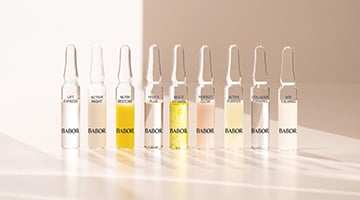
For example, a professional may help you decide whether a dedicated serum or a concentrated radiance format makes sense within your existing steps. BABOR's Vitamin C-20 Serum and radiance ampoule serum illustrate different product formats to discuss. Their suitability still depends on the individual product directions, your routine, and your skin's tolerance. A professional should not replace medical care when irritation is persistent or a skin concern requires clinical assessment.
Explore BABOR Vitamin C skincare and find the format that fits your routine.
What Are Vitamin C's Limits and Expectations?
Topical vitamin C can be a valuable cosmetic active, but its results depend on more than the ingredient name on the label. Clinical studies of topical formulations remain limited, and researchers continue to examine how stability, permeability, concentration, and formulation affect outcomes. In other words, evidence for one form or formula should not automatically be treated as proof that every vitamin C product will perform identically. A review of topical vitamin C research describes this formulation challenge clearly.
Expect gradual, appearance-focused changes rather than an overnight transformation. Cleveland Clinic notes that visible effects may take about three months, so consistent use and careful observation are more useful than judging a product after several applications. The response can also vary with the formula, your skin's tolerance, and the concern you are addressing. A product may help improve the appearance of dullness or uneven tone without producing the same result for every person.
Antipigmenting research is not the same as a treatment claim
Vitamin C has been studied in relation to UV-induced pigmentation. However, a meta-analysis found that its observed lightening properties were antipigmenting rather than depigmenting. Meaning the research does not support presenting topical vitamin C as a guaranteed treatment for established pigmentation. This distinction matters when considering what is vitamin C good for: cosmetic support for a more even-looking complexion is a more accurate expectation than a promise to remove a medical or persistent pigment concern. Read the pigmentation meta-analysis for the study context.
Vitamin C also does not replace sunscreen. Research has explored antioxidant and photoprotection-related effects, while clinical guidance recommends morning use alongside sunscreen rather than instead of it. If a formula causes dryness, itching, or redness, reduce use or stop and reassess. People with sensitive skin may prefer beginning with a lower concentration. Persistent irritation, a changing pigment spot, or any medical skin concern should be discussed with a qualified healthcare professional rather than managed through cosmetic experimentation alone.
Frequently Asked Questions
Is vitamin C good for your skin?
Topical vitamin C may help improve the appearance of radiance, uneven tone, and early visible signs of photodamage. Its antioxidant activity, collagen-related research, and potential effect on pigmentation are documented in topical skincare reviews, but results depend on the formula and consistent use. It is a cosmetic ingredient, not a treatment for a medical skin condition. Read the topical vitamin C review.
Is vitamin C serum good for acne?
A vitamin C serum may support a more even-looking complexion, but it should not be presented as an acne treatment. Persistent breakouts, painful lesions, or scarring concerns call for advice from a qualified healthcare professional. Choose a formula based on tolerance and your broader routine rather than assuming that a higher concentration is appropriate.
Is it good to use topical vitamin C every day?
Daily use can suit some people, but frequency should follow the product directions and your skin's tolerance. If you have sensitive skin, beginning with a lower concentration may be prudent. Dryness, itching, and redness are possible in rare cases. Apply the product after cleansing, and use broad-spectrum sunscreen in the morning because vitamin C does not replace sun protection. See routine guidance from Cleveland Clinic.
Does the type of vitamin C matter?
Yes. L-ascorbic acid is well studied, yet it is unstable and its performance is affected by factors such as concentration, pH, packaging, and the delivery vehicle. Derivatives such as magnesium ascorbyl phosphate may offer different stability characteristics. A professional can help match the format and formula to your routine, sensitivity, and appearance goals. Review the formulation evidence.
Ready to explore a professional vitamin C option?
Understanding the formula and its place in your routine can make topical vitamin C easier to evaluate with realistic cosmetic expectations. Explore the product details to continue learning about how this professionally positioned option may fit into a considered skincare routine.