Clinical skincare ingredients are easiest to evaluate when you connect three things: the skin concern, the ingredientâs intended role, and the quality of evidence for the finished product. A familiar active ingredient alone does not establish that a particular formula will produce a specific result.
What does evidence for a skincare ingredient actually tell you?
Evidence is not a single stamp that makes every product containing an ingredient equally effective. It is a body of information that can help answer narrower questions: What does the ingredient do in a formula? For which skin concern has it been studied? Under what conditions? How strong is the research, and does it apply to the product you are considering?
Start by separating three kinds of statements:
- Ingredient information: what an ingredient is used for, how it functions in a formula, or what research has explored.
- Finished-product evidence: observations or testing on the actual product, with its particular formula and directions.
- Marketing language: a concise description of the productâs intended benefit. It may be useful, but it does not replace the underlying evidence.
These statements are related, but they are not interchangeable. Research on an ingredient in one formula cannot automatically establish the performance of every other product containing it. A study may use a different concentration, delivery system, routine, duration, or group of participants. A careful reader looks for those details before drawing a conclusion.
Imagine that a source discusses an ingredientâs potential role in supporting the appearance of smoother skin. That may help explain why the ingredient is used, but it does not answer whether a particular serum was tested, what participants noticed, or how long they used it. A separate product description might state that the formula is intended to improve the look of texture. The claim becomes easier to evaluate when you can trace it to testing of that formula and see how texture was assessed. If the source only addresses the ingredient generally, keep your conclusion at that level: it offers context, not a product-specific promise.
This distinction is helpful when product pages use several kinds of language together. One sentence may describe a formulaâs ingredients, another may explain its intended use, and a third may refer to research. Read each statement on its own. Then ask whether the research actually connects the named ingredient or product with the stated outcome. That small step can prevent an interesting scientific detail from being mistaken for proof of a personal result.
For example, a product page might mention a peptide complex or an exfoliating acid. That tells you what the formula is designed around. To assess a claim about a visible skin change, ask whether evidence relates to the ingredient generally or to the finished formula, and whether the outcome studied matches the outcome you want. The distinction keeps an ingredient list from being mistaken for a guarantee.
Research reviews can be a useful starting point, but their scope matters. A review of bioactive ingredients used in Korean cosmeceuticals, for example, discusses research evidence for ingredients in that context; it is not evidence about every product or every claim. Read the scope and limitations of a source before applying it to a purchase (review of bioactive ingredients in Korean cosmeceuticals).
How do you begin with your skin concern?
Define the concern in plain language before looking for an ingredient. âI want a smoother-looking textureâ is more useful than âI need the strongest active.â So is âmy skin feels dry after cleansingâ or âI want to support a more even-looking complexion.â A focused goal makes it easier to compare products by purpose instead of by the number of actives on the label.
Then consider the context in which the concern appears. Think about your current routine, how your skin tends to respond to new products, and whether the issue is persistent, sudden, or accompanied by discomfort. These details affect whether a cosmetic product is an appropriate next step. Skincare products are not a substitute for diagnosis or treatment of a medical condition.
- Choose one priority: hydration, the look of uneven tone, visible texture, or another specific cosmetic goal.
- Note your routine: list the products you already use and how often you use them.
- Record sensitivities: include ingredients or product types that have caused an unwanted response, if known.
- Set a realistic evaluation window: follow the product directions and evaluate consistently rather than changing several products at once.
This process also helps identify when a professional conversation is more suitable than self-selection. If a concern is painful, rapidly changing, persistent, or worrying, seek advice from a qualified healthcare professional. For general product matching, BABORâs Skincare Advisor can be one point of reference; it is not a medical assessment.
What should you look for in an ingredient claim?
Look for a clear connection between the ingredient, its role, and the stated cosmetic goal. A useful product description should help you understand why an ingredient appears in the formula and how the product is meant to fit into a routine. Broad wording can be a prompt to ask more questions, not proof by itself.
When you see a named active, consider these questions:
- What is the intended role? Is the ingredient included for hydration, exfoliation, conditioning, or another stated purpose?
- What is the claim actually promising? Does it describe the ingredientâs role, the product experience, or a particular visible outcome?
- What is the evidence attached to the claim? Is there a cited source, a description of product testing, or only a general statement?
- Does the evidence match the product? Is it about the same ingredient form and finished formula, or is it broader background research?
- Are the directions and cautions clear? A useful product page should explain how to use the product and identify relevant precautions.
For a broader look at ingredient terminology, BABOR provides an ingredient information page. Use it to orient yourself to names and roles, then check the individual product information for its intended use and directions. Ingredient definitions are educational context; they do not prove a result for an individual person.
Consensus recommendations can help readers understand which ingredients are commonly discussed for particular concerns, while still leaving the product-specific question open. A 2025 abstract in the Journal of the American Academy of Dermatology reports consensus on a set of skincare ingredients and their associated concerns. Treat that as a reference point for ingredient selection, not a conclusion about a given productâs performance (abstract on consensus skincare ingredient recommendations).
How can you judge the strength of the evidence?
Evidence becomes more useful when the source, method, and limits are visible. A scientific-sounding phrase is not enough. When a source is available, examine who conducted or published the work, what was tested, what outcome was measured, and whether the method is described well enough to understand what the result means.
Look for the study question and the tested product
First, identify what the research set out to examine. Was it a laboratory investigation of an ingredient, a study of a finished cosmetic product, or a review of prior publications? Each can contribute information, but each answers a different question. Laboratory research may explain a possible mechanism; it does not on its own establish what a person will see after using a retail product.
If a finished product was studied, check whether the study identifies the exact formula and how participants used it. A product-specific test is more directly relevant to that product than a general discussion of one ingredient, but it still needs context. Look for the length of use, the number and characteristics of participants, the comparison method, and the outcome measures. These details help you interpret how much weight to give the finding.
Separate measured outcomes from interpretation
Ask what was measured and how. A study may assess a participantâs perception, use instrumental measurements, or report an expert evaluation. Those approaches do not mean the same thing. The result should be interpreted in the terms actually assessed rather than expanded into a broader promise.
Also distinguish a change observed during a study from a proven cause. Without knowing the comparison conditions and other influences, it can be difficult to tell what produced an observed difference. Be wary of a claim that leaps from a limited observation to a certainty for all users. The more specific the promised result, the more important it is to locate evidence that directly supports that particular wording.
Check whether the source is relevant and transparent
Prefer sources that identify authors, methods, and limitations. A peer-reviewed article or a systematic review may provide useful background, but publication type does not make every conclusion final. Consider the sourceâs scope and whether the researchersâ question matches yours. A source about a class of ingredients may not evaluate a specific commercial formula.
When product descriptions cite research, see if the reference is accessible and if it actually supports the nearby claim. If the source cannot be located or its subject differs from the stated benefit, do not treat the citation as confirmation. A transparent explanation of what is known and what remains uncertain is more useful than a sweeping statement without context.
Why does the finished formula matter?
Products are not defined by an ingredient name alone. The full formula, ingredient form, concentration where disclosed, product texture, directions, and place in a routine all shape how a product is intended to be used. Two formulas that list a familiar active may not have the same purpose or user experience. Nor does a higher number on a label by itself tell you which product is a better fit.
Formulation context can also affect how a product fits with other steps. An exfoliating product, for instance, may have different directions from a moisturizer or a serum intended for routine use. Consider the complete instructions rather than building a regimen from ingredient names in isolation. If you are already using multiple products with active ingredients, adding another one without a plan can make it harder to understand how your skin responds.
Use the productâs own directions as the practical guide. Introduce a new product cautiously, follow any stated precautions, and avoid changing several steps at the same time. If irritation or another unwanted reaction occurs, stop use and seek appropriate advice. Do not interpret discomfort as evidence that a product is working.
BABORâs skincare routine guidance offers context for considering how products can fit into a regimen. Product selection should still account for your own preferences, current routine, and the instructions for each formula.
How can you compare options before choosing?
A simple comparison keeps attention on evidence and practical fit rather than a productâs most prominent claim. Use the same questions for each option. If a detail is not provided, mark it as unknown instead of assuming an answer. The table below is a framework, not a ranking of products.
| What to compare | Ingredient-level information | Finished-product information | What to ask before choosing |
|---|---|---|---|
| Purpose | Ingredient role or research area | Stated goal of the specific formula | Does the goal match my priority? |
| Evidence | General studies or review literature | Testing or research on the product itself | What exactly was tested and measured? |
| Formula context | May not describe a retail formula | Product details, directions, and disclosed ingredients | Do I understand how to use it? |
| Routine fit | Does not set a personal schedule | Directions may explain frequency and order | Can it fit with what I already use? |
| Limits | May not predict individual response | Study scope and product directions still matter | What remains unknown for my situation? |
To make the comparison actionable, write down the answers for two or three products rather than trying to remember details across multiple pages. Include the productâs intended goal, how the evidence is described, how it is used, and any caution that matters to you. A blank space is information: it shows where you need clarification before deciding.
Price, packaging, and sensory preferences can be part of a personal decision, but they do not establish evidence quality. Likewise, an ingredient list can help you understand a formula without providing a complete measure of performance. Keep those criteria separate. First decide whether a product is relevant to the goal and whether its directions make sense for your routine; then consider the experience and practical details.
How do BABOR products fit into an evidence-led search?
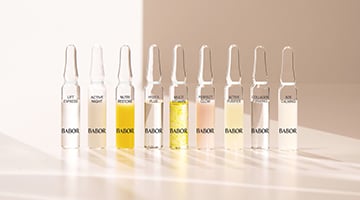
BABOR offers skincare across several product collections and formats, including DOCTOR BABOR, SKINOVAGE, and Ampoule Concentrates. A collection name can help you navigate the range, but it is not a substitute for reading the specific productâs description, ingredient information, and use instructions. Match the product to the concern and routine rather than assuming one line suits every person or goal.
For example, readers exploring exfoliating ingredients can review the product details for AHA Peel Pads, including the current directions and cautions. That page is a product reference, not evidence that an exfoliating product is suitable for every skin type. Readers comparing broader daily-care options can also review the SKINOVAGE range and examine individual product information.
For any BABOR option, use a consistent checklist: the specific goal, the productâs intended role, the available evidence, the directions, and compatibility with your existing routine. If you need help navigating products, consider using the digital product advisor. It can help with product discovery, but it does not replace individualized medical advice or guarantee a particular outcome.
View DOCTOR BABOR product options
What should you do when the evidence is incomplete?
Incomplete information is common. It does not automatically mean a product is unsuitable, but it does mean you should avoid treating a broad ingredient claim as settled proof. Decide whether the information available is enough for your own choice. If the productâs purpose, instructions, or relevant cautions are unclear, pause and look for a reliable answer before adding it to your regimen.
Use these steps when a claim leaves questions:
- Return to the stated goal. Is it a cosmetic concern you want to address, and is the product described for that purpose?
- Find the source behind the claim. Check whether it concerns an ingredient, a formula, or a general category.
- Read the product directions. Confirm use, frequency, and cautions from the product information.
- Keep your routine stable. Introduce one new item at a time so you can more clearly observe your experience.
- Ask for appropriate guidance. Consult a qualified professional if the concern is medical, persistent, or difficult to assess.
Be especially careful with claims that promise certainty, imply that one ingredient solves many different concerns, or use technical language without explaining what was measured. A measured approach does not require rejecting every claim; it means asking what the claim can reasonably support.
Explore skincare for your routine
Frequently asked questions
Does a well-studied ingredient prove a product will work?
No. Research on an ingredient can provide useful background, but it does not automatically establish the effect of every finished formula that contains it. Check whether the evidence is about the specific product, whether the measured outcome matches the claim, and how the product is meant to be used.
Is a clinical-sounding claim the same as product testing?
No. Wording alone does not tell you what testing took place. Look for clear details about the product, method, duration, participants, outcome, and limitations. If those details are not available, treat the statement as a claim to investigate rather than a complete account of the evidence.
Should I choose a product based on a single active ingredient?
Usually, it is more useful to assess the complete formula and its directions. Consider the ingredientâs stated role, the productâs intended goal, your existing routine, and relevant cautions. A single ingredient name cannot tell you whether a particular formula is the right fit for you.
How should I introduce a new product?
Follow the productâs directions and precautions, and avoid starting several new products at once. This makes it easier to understand your experience. If you notice an unwanted reaction, stop using the product and seek appropriate advice; do not assume that irritation is a desired result.
When should I ask a healthcare professional?
Seek guidance when a skin concern is painful, persistent, rapidly changing, or otherwise worrying, or when you are unsure whether a cosmetic product is appropriate. Product information and online tools can support shopping decisions, but they cannot diagnose a condition or replace professional care.
Choose by evidence, purpose, and routine fit
A thoughtful evaluation connects a specific skin goal to the productâs stated purpose, the kind of evidence available, and the formulaâs directions. Ingredient research can inform the decision, while product-specific information helps clarify what is actually being offered. Compare the same details across options, acknowledge what remains uncertain, and choose a routine you can use as directed.