
When considering beta glucan vs hyaluronic acid for dehydrated skin, the key distinction is their role in a formula: hyaluronic acid is a water-binding humectant, while beta glucan is a polysaccharide used for moisturizing and skin-conditioning properties. Neither is a universal winner, and the finished product, directions, and your skin’s response matter as much as the ingredient name.
Find skincare guidance for your needs
What is the difference between beta glucan and hyaluronic acid?
Hyaluronic acid and beta glucan are distinct ingredients that can both appear in topical products focused on moisture. Hyaluronic acid is a glycosaminoglycan that can bind water. In skincare, it is commonly used as a humectant to support hydration at the skin’s surface. Beta glucan is a type of polysaccharide. Topical formulas use it for moisturizing and skin-conditioning properties.
That difference describes the ingredients in broad terms; it does not predict how any individual product will feel or perform. The surrounding formula, concentration, ingredient form, texture, and directions all shape the finished experience. A serum containing hyaluronic acid may feel light, while another formula with the same headline ingredient may have a richer base. The same applies to beta glucan products.
It is also useful to distinguish dehydration from a skin type. Dehydration refers to a lack of water, while skin type generally describes enduring characteristics such as oiliness or dryness. Someone with oily-feeling skin can still experience tightness or temporary surface dryness. That feeling alone does not identify which ingredient would be the best fit.
| Comparison point | Hyaluronic acid | Beta glucan | How to use this information |
|---|---|---|---|
| Ingredient type | A glycosaminoglycan | A polysaccharide family | They are different materials, not interchangeable labels. |
| Common topical role | Humectant that binds water | Moisturizing and skin-conditioning | Consider the role alongside the whole formula. |
| Possible product formats | Serums, ampoules, creams | Serums, creams, and other leave-on products | Read the product description and directions. |
| Choice factors | Texture, formula, routine fit, tolerance | Texture, formula, routine fit, tolerance | Let your needs and response guide your choice. |
What can hyaluronic acid contribute to a hydration routine?
Hyaluronic acid is used in topical skincare because of its ability to bind water. A product containing it may be considered when the goal is a humectant-focused step in a routine. The effect you notice depends on the finished formula and how you use it. The ingredient name alone cannot promise a particular look, sensation, or duration of hydration.
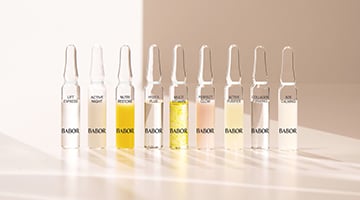
Products may use different forms of hyaluronic acid or combine more than one form. BABOR’s portfolio includes 10D Hyaluronic Acid technology, described as using ten molecular weights. This is a formulation feature, not a guarantee that one product suits every person or addresses every concern. To understand any specific item, look at its current product details and directions rather than extrapolating from the ingredient name.
When reviewing a hyaluronic acid product, ask what step it is meant to provide. Is it a lightweight serum, an ampoule, or a moisturizer? Does the label give a particular application order? Is it designed to be used alone or as one layer in a broader routine? Answering these questions is more practical than assuming all hyaluronic acid products work in the same way.
For context on BABOR’s range and its ingredient language, you can consult the BABOR ingredient glossary and the current ingredient information pages. Product formulations and descriptions can change, so refer to the individual product listing for details relevant to a purchase.
What does beta glucan contribute to skincare?
Beta glucan refers to a family of polysaccharides that can come from different sources. In topical skincare, it is used for moisturizing and skin-conditioning properties. This makes it relevant to a routine built around comfort and moisture, but does not mean every product containing beta glucan has the same composition, texture, or expected outcome.
Research should be interpreted in context. The type of beta glucan, the method of use, and whether a study examines an ingredient or a finished topical product all matter. A review of natural beta glucans discusses moisturizing properties among its areas of skin-health research; it does not establish that every product with beta glucan produces a particular result. Read the review of natural beta-glucan and skin-health research with that distinction in mind.
When looking at a beta glucan product, check its full ingredient list and instructions. Consider whether it is a serum, cream, or another type of leave-on product, and what else is in the formula. The presence of beta glucan does not, on its own, establish clinical performance or tell you whether you will prefer the texture. Think of the ingredient as one part of a complete product decision.
The available customer information identifies BABOR’s 10D Hyaluronic Acid technology, but it does not identify a particular BABOR beta glucan product. Avoid assuming that a product contains beta glucan based only on a broad hydration description. If you are comparing BABOR items, check their current ingredient lists directly, or use the product advisor to explore the range by skincare needs.
Which ingredient should you choose for dehydrated-feeling skin?
There is no universal answer to the beta glucan vs hyaluronic acid question. Start by describing the experience you want to address: tightness after washing, a preference for a lighter serum, or a desire for a moisturizing layer that feels comfortable. Then compare formulas that fit that need. Do not treat a sensation as a diagnosis or expect an ingredient to solve a persistent skin concern by itself.
- Explore hyaluronic acid if you want to try a humectant-focused product and the available formula, texture, and use directions suit your routine.
- Consider beta glucan if you are interested in its moisturizing and skin-conditioning role and find a product whose full formula fits your preferences.
- Consider a formula with both only when the complete product makes sense to you. Combining two hydration-oriented ingredients is not automatically necessary or preferable.
- Reassess the routine if you remain uncomfortable. Cleansing habits, weather, indoor conditions, moisturizer use, and product tolerance can all affect how skin feels.
A helpful comparison is specific rather than abstract. Imagine two leave-on products: one is a thin serum featuring hyaluronic acid, and the other is a richer cream that includes beta glucan among several moisturizing ingredients. Choosing between them is not simply a vote for one molecule. The first may fit more easily into a routine that already includes a moisturizer; the second may be the texture you prefer as a moisturizing step. Your choice depends on the formula’s instructions and the rest of your routine.
Product pages can help you compare formats and current descriptions. Browse BABOR’s skincare selection, the bestselling skincare assortment, or skincare sets. These links are starting points for reviewing available products, not evidence that any one item contains a particular ingredient or is right for every skin concern.
Can you use beta glucan and hyaluronic acid together?
They can both be part of a routine when each product’s directions are compatible and your skin tolerates the combination. They do not have to be used together. If your routine is already comfortable, adding a second product just because it contains another hydration-oriented ingredient may add complexity without clarifying what your skin prefers.
If you decide to layer, follow the individual labels. A common approach is to apply lighter-feeling products before richer ones, but product directions take priority because textures and formulas differ. Use the stated amount, allow a layer to settle if the directions or texture call for it, and finish with other routine steps as appropriate. Do not apply extra product simply to try to intensify the effect.
When introducing the combination, keep the rest of your routine steady. For example, if you already use a familiar moisturizer and want to test a hyaluronic acid serum, change only that one step first. If it feels comfortable over a period of regular use, you can decide whether there is a reason to add a beta glucan product. If two products feel heavy or uncomfortable together, separate their use or return to the step that suits you better.
Introduce leave-on products one at a time, particularly if your skin is reactive or you are unsure how it will respond. Stop using a product if it causes irritation. Seek advice from a qualified health professional about persistent, worsening, or concerning skin symptoms rather than trying to address them through repeated product changes.
How should you compare finished formulas?
An ingredient list is an important source of information, but it does not describe the whole product experience. Compare the product’s intended role, texture, directions, other ingredients, and how it fits with products you already use. This process can make a decision clearer without relying on an unsupported promise about what a single ingredient will do.
- Identify the product step. Determine whether it is a serum, moisturizer, ampoule, or another format. A product that provides a moisturizing layer may fit differently from a concentrated-feeling serum.
- Read the instructions. Check the amount, frequency, and application sequence stated for that exact product. Do not transfer directions from a different formula with the same headline ingredient.
- Consider the rest of the ingredient list. The product is a complete formula, not an isolated molecule. Other ingredients and the product base help determine its texture and practical role.
- Think about routine compatibility. Ask whether the product fills a real gap or duplicates a step you already like. Consider how it feels with moisturizer and daytime sun protection.
- Assess your own tolerance. Add one change at a time and observe comfort. A gradual approach makes it easier to tell which product may be responsible for a change.
For a concrete comparison, write down two candidate products and answer the same questions for each. What does the product say it is for? Is it intended to be rinsed off or left on? What are its use instructions? How does its texture fit your routine? What ingredient information is actually listed? A short checklist reduces the chance of making a decision based only on a prominent front-label claim.
You can also compare product formats rather than ingredient headlines. A serum may be useful when you want a separate lightweight layer, while a cream may combine moisturizing roles in one step. A set may provide several coordinated items, but it is still worth reviewing every item’s directions and ingredients before use. Explore BABOR bundles or the latest product selection to see current formats and descriptions.
Explore personalized skincare guidance
How can you build a simple hydration routine?
A useful routine is one you can follow consistently and evaluate without too many changing factors. You do not need to use beta glucan and hyaluronic acid just because both are discussed as moisturizing ingredients. Begin with familiar steps, then decide whether one new product has a clear role.
- Wash gently. Choose a gentle washing step that leaves your skin comfortable. If your face feels tight immediately afterward, consider whether the product or washing habits may be contributing to that sensation.
- Choose one hydrating leave-on product. Select beta glucan, hyaluronic acid, or a formula featuring either or both, based on its full product information. Use it as directed.
- Apply moisturizer where it fits. A moisturizer may complement a serum, but whether you need it depends on your routine and the instructions for the products you use.
- Use daytime sun protection as directed. Follow the label for your sunscreen and include it in your daytime routine.
- Observe before adding more. Note how the product feels and whether the routine remains comfortable. Avoid changing multiple products at once.
Keep observations practical. You might note whether tightness appears after washing, whether a product feels comfortable under moisturizer, or whether the routine is easy to repeat. These details are more useful than trying to assign a precise cause to every short-term change. Weather, indoor heating, bathing habits, and other routine shifts can influence how skin feels.
If you want to browse before deciding, BABOR’s skincare stories and advice offer a place to explore further information. For individual products, use the current listing for the most relevant ingredient and use details. A general article or ingredient description cannot replace the instructions supplied with a specific item.
What should you remember when comparing these ingredients?
Hyaluronic acid and beta glucan are different ingredients that can serve moisturizing roles in topical skincare. Hyaluronic acid is commonly used as a humectant that binds water. Beta glucan is a polysaccharide used for moisturizing and skin-conditioning properties. These broad descriptions can orient your search, but they cannot tell you how a particular product will feel or whether it will suit your skin.
Look beyond the ingredient name. Compare the formula, format, directions, texture, and place in your routine. If one product meets your needs and feels comfortable, there may be no reason to add another. If you are testing a new formula, introduce it gradually, and keep expectations measured. For persistent or concerning symptoms, seek appropriate professional advice.
Frequently asked questions
Is beta glucan better than hyaluronic acid for dehydrated skin?
Neither is universally better. They are different ingredients, and finished products vary in formula and use. Choose based on the product’s role, directions, texture, and how your skin responds rather than relying on the ingredient name alone.
Can I layer beta glucan over hyaluronic acid?
You may use products containing both in one routine when their directions are compatible and your skin tolerates them. Follow each label, apply only the stated amount, and introduce new leave-on products one at a time.
Does beta glucan replace moisturizer?
Not necessarily. A product containing beta glucan may be a serum, cream, or another leave-on format. Whether you also use a moisturizer depends on the particular product, its directions, and what makes your routine comfortable.
How often should I use a hyaluronic acid product?
Follow the instructions for that specific product. Recommended frequency and application details can differ among serums, ampoules, and moisturizers, so one schedule should not be assumed for every formula.
A thoughtful comparison starts with the finished product and the routine you can maintain, not with a search for one ingredient that works for everyone.