A skincare batch code is a printed or stamped reference that can help identify a product's production group. If you are looking at babor ampoules or another skincare product, the code is useful information to record, but it should not be treated as a manufacture date, expiry date, or proof of authenticity by itself. The most helpful interpretation comes from considering the marking with the product label, packaging, condition, and purchase details.
Explore BABOR skincare products
What does a skincare batch code tell you?
A batch code, also called a lot code, is an identifier associated with a production batch. It gives a company a reference point when tracing a product through its own records. Depending on the company's processes and retained information, that reference may help support teams locate relevant production details or investigate a question about a particular group of products.
For a shopper, the code's primary value is practical: it gives the brand a specific marking to check. It is not normally a plain-language report of when every ingredient was made, where an item was stored, or how it moved through distribution. Nor does the code explain the formula or the product's suitability for an individual. For questions about product use or ingredient terminology, consult the package directions and the BABOR ingredient glossary.
Formats are not universal across the cosmetics industry. A code may include letters, numbers, or a combination, and the pattern may differ by company, product, or production location. Even if a string appears to resemble a date, reading it as one without confirmation can lead to a mistaken conclusion. The brand is the appropriate source for interpreting its own coding system.
What can't the marking confirm on its own?
A code alone does not establish when a product was first opened, how it was stored after purchase, or whether its condition remains as expected. It also cannot independently authenticate an item. A genuine-looking code can be copied, and a code that is difficult to read does not by itself show that a product is invalid. Treat it as one piece of context, not as a verdict.
Likewise, a batch identifier is not automatically an expiry date. Some packaging may have a date marking or a period-after-opening symbol, while other details depend on the product and applicable labeling rules. If a package has an explicit use instruction or date, follow the information provided for that item rather than substituting an estimate based on the batch code.
Condition matters too. A code cannot tell you whether a cap was left loose, whether a container was exposed to prolonged heat, or whether its seal was disturbed. If you notice an unexpected change in appearance, smell, or texture, pause use and ask the brand or retailer for guidance. Do not use the code as a reason to dismiss visible concerns or as reassurance that overrides product directions.
Where should you look for the batch code?
Start with the outer carton, especially its underside and narrow side panels. Then inspect the product container itself. On a tube, the marking may be near the crimped end or seam. On a bottle, jar, or ampoule carton, it may appear on the base, back, or a small panel. Placement varies, so check the whole package rather than relying on one expected location.
Some codes are stamped into the packaging and can be subtle; others use ink that contrasts with the surface. Rotate the container slowly under bright, indirect light. A phone camera can help magnify small characters, but avoid glare from a flash. If the marking is embossed, changing the angle of the light may make its outline easier to see.
- Set aside the carton and container together so you can inspect both.
- Check the full carton, including its base, seams, and side flaps.
- Look over the container base, back panel, cap area, and any sealed edge.
- Photograph the code and the complete product label in good light.
- Write down the characters exactly as printed, preserving letters, numbers, and spacing where visible.
Do not scrape, rub, or otherwise alter a marking to make it more legible. If the characters remain uncertain, record that uncertainty rather than guessing. For example, note that the second character could be an "8" or "B," then send a clear close-up. A support team can assess the image alongside the other product details.
How is a batch code different from a date or open-jar symbol?
Several markings may appear together on a skincare package, but they serve different purposes. The batch code is a production reference. A date marking, where provided, communicates a date in the format shown on the package. An open-jar symbol indicates a period of use after opening when that symbol is present. The package's product name and size identify which item the other markings belong to.
| Package detail | Usual role | Useful next step | What it does not establish alone |
|---|---|---|---|
| Batch or lot code | References a production group | Share it with the brand when asking a traceability question | An exact manufacture date, expiry date, or authenticity |
| Date marking | Displays a date when included | Read the date as printed and follow its directions | How the item was handled after purchase |
| Open-jar symbol | Shows a stated period after opening, if present | Record the day the product is first opened | The date you opened it or its storage history |
| Product name and size | Identifies the product presentation | Include both in a support inquiry | The history of an individual item or batch |
The label should be read as a whole. A batch code and an open-jar symbol can both be useful, but one cannot replace the other. If you open a product with a stated period after opening, you can make that information actionable by writing the opening date on a personal note or adding it to a routine tracker. Keep the carton or photograph its markings if you expect to need the details later.
For general information about U.S. cosmetics and agency resources, see the U.S. Food and Drug Administration. Product-specific questions about a BABOR marking should still be directed to BABOR, since a general agency resource does not decode a company's internal batch format.
How should you record a code before asking for help?
A short, orderly record makes it easier to describe the item without relying on memory. Keep the code exactly as it appears, even if its format seems unusual. Note whether it was printed on the carton, the product, or both, and take photographs that show the marking in context as well as close up. A close-up alone may not show which product or package it belongs to.
- Product identity: the product name and size or format, such as an ampoule set or a single container.
- Code: the complete legible batch marking, with uncertain characters identified rather than silently corrected.
- Packaging: clear images of the code, front label, and any relevant date or open-jar marking.
- Purchase context: where and approximately when you bought it, plus an order confirmation or receipt if available.
- Your question: one specific request, such as asking whether the marking can be traced or whether a label detail can be clarified.
Do not send payment card numbers, passwords, or unrelated personal information with a general product inquiry. A receipt or order record can help a retailer locate a transaction; it is not necessary to share sensitive account credentials. If you purchased through a retailer, retain its confirmation and check the retailer's customer-support or return process as well as contacting the brand when appropriate.
If the marking appears on both the carton and container, photograph both before separating or discarding either part. If the two markings differ or one is missing, describe that fact rather than assuming it is an error. The same applies if a package has been opened or its seal is damaged: state what you observed and when, without trying to infer the cause.
How can you ask BABOR to check a marking?
Use an official customer-support route and provide the product name, size, complete code, and useful package photographs. Add the purchase source and approximate purchase date if you have them. Keep the message concise and ask what you need to know. A focused inquiry is easier to assess than a request to certify every part of a product's history.
You might ask, "Can this code help identify the production batch for this product?" or "Can you clarify which date or use information on this package applies?" These questions avoid presuming that the code contains information it may not encode. The response depends on records available to the brand and on the details supplied; a support reply may clarify a marking without documenting every condition the item experienced after leaving production.
Third-party code-decoding sites should not be treated as definitive. A lookup tool may not cover the relevant brand, product, or current coding format, and a result that looks precise is not necessarily verified by the manufacturer. If you want to browse BABOR products while reviewing product labels and formats, the BABOR product collection provides a starting point. The product adviser can also help you explore options by preference, but it is not a batch-code verification service.
What should you do if the product or packaging seems unusual?
Set the product aside if its seal appears disturbed, the packaging seems altered, or the contents have an unexpected change in color, odor, or texture. Avoid making a decision based only on the presence or absence of a code. Preserve the container and carton, photograph the areas of concern, and contact the seller or brand for next steps. If there is an immediate concern about a reaction or health, seek advice from an appropriate healthcare professional.
For a purchase from a retailer, the retailer may be able to help confirm the order and explain its own policies. Keep the receipt or order email until the question is resolved. If you are trying to locate an authorized point of sale, BABOR's retailer search is a useful place to explore. The purchase channel is relevant context, but it cannot by itself tell you how a particular item was stored or handled.
When you contact support, separate what you observed from what you suspect. "The foil seal is lifted at one edge" is more useful than "the product must be counterfeit." Include a photograph and ask what action the company recommends. This precise approach helps the recipient assess the visible facts without treating the code as proof of an explanation.
How do these steps apply to BABOR ampoules?
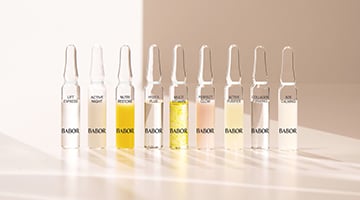
Ampoules can arrive in a carton containing several individual containers, so keep the outer packaging while the set is in use. Look for batch and product details on the carton as well as on any individual packaging. If a code is small or difficult to distinguish, photograph it next to the product name and the rest of the label. That context helps show exactly which set or presentation you mean.
Do not assume every ampoule or set uses the same placement or code format. Nor should a code be used to calculate a freshness date without confirmation from BABOR. Check the package directions for product-specific handling and use information. If a marking is missing, unreadable, or appears different across the carton and container, note that plainly in your inquiry and attach images of each surface.
For product discovery, you can browse BABOR skincare sets and BABOR bestsellers. These are shopping resources, not code lookup tools; review each product's own packaging and directions. If your question concerns terminology on a label, the ingredient glossary linked above may help with general definitions, while the manufacturer remains the source for its batch records.
How can you organize the information before deciding what to do?
When you have a question about an item, use a simple sequence rather than trying to decode every marking at once. First identify the product and its format. A set of ampoules, a bottle, and a jar may have different packaging surfaces, so an exact product name and size prevent confusion between related presentations. Next, record all visible codes and dates separately. Keeping each detail in its own line avoids accidentally treating a lot code as a date.
Then describe the package condition in neutral terms. Note whether the carton is present, whether the container is sealed, and whether anything looks different from what you expected. If the item has already been opened, record approximately when you opened it if you know. This information does not change the meaning of a batch code, but it helps support understand the context of your question. Photographs can show details that are hard to explain in writing.
Finally, choose a next step based on the question. If you need help reading a brand marking, contact BABOR with the code and images. If the issue is an order or transaction, contact the retailer and retain the order confirmation. If the package itself gives a use or storage direction, follow that direction while you wait for clarification. If the product has a noticeable change or damaged seal, pause use rather than relying on a code-based guess.
For example, imagine that the carton has an alphanumeric stamp, the individual container has no visible date, and you cannot tell whether the stamp includes a letter or number. A useful note would identify the product, transcribe the legible characters, mark the uncertain character, and include one photo of the complete carton plus a close-up. Asking, "Can you confirm what this marking identifies?" gives the support team a clear task. Writing "This expires next month, right?" assumes an interpretation that the visible code may not support.
This method also helps when you are comparing details across more than one item. Photograph each item separately, keep its packaging with it, and label your personal notes so that codes do not get mixed up. Do not infer that two products share a production history simply because their codes look alike. The manufacturer's records, not a visual resemblance between strings, are needed to establish what a code refers to.
Frequently asked questions
Does a skincare batch code show an exact expiry date?
Not necessarily. A batch code is a traceability reference and should not be read as an expiry date unless the brand confirms that interpretation. Check the package for a date or period-after-opening information and ask BABOR if you need help understanding a specific marking.
Can the code prove that a product is genuine?
No. A code by itself does not authenticate a product or provide a complete supply history. Share the code, packaging photographs, and purchase details with the brand or retailer for guidance.
Should I keep the carton after opening an ampoule set?
Keeping it is helpful while the products are in use. The carton may carry the code and other product details that are not repeated on each container. If you no longer have it, retain clear photographs of the markings you can access.
What if two characters in the marking are hard to read?
Do not guess. Photograph the code under good light from more than one angle, note which characters are uncertain, and send the images with the product name and package details.
Can a batch-code website confirm the product's age?
A third-party decoder may not use the manufacturer's current records or cover every product format. Treat any result as unverified and ask the brand to interpret its own code when the answer matters.
A batch code is most useful as a precise reference for a question, not as a complete account of a product's age, condition, or authenticity. Record it with the label and purchase details, then ask BABOR or the retailer to help interpret the information that applies to your item.