Peptides have become a defining focus of precision skincare because their small, specialized structures can communicate with the skin in ways that support its visible resilience. Understanding what they are and how they function makes it easier to choose concentrated products with a clear role in your routine.
Peptides in skincare are short chains of amino acids linked by peptide bonds. Depending on their structure and category, they can help signal processes associated with collagen and extracellular matrix support. Assist targeted delivery of minerals, or help address the appearance of expression lines. Their performance depends on peptide design, delivery, product composition, and consistent use.
Explore the DOCTOR BABOR peptide collection to discover clinically developed formulations featuring advanced peptide technology.
Not all peptides perform the same task, and they are not interchangeable with larger proteins. The distinctions begin at the molecular level, where the length of an amino acid chain helps determine how it is classified and how it may interact with skin.
What Are Peptides in Skincare?
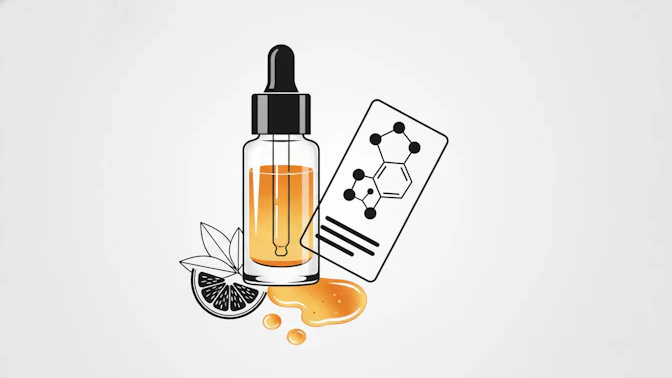
Peptides are short chains of amino acids joined by peptide bonds. Amino acids are the fundamental units used to build larger proteins, including collagen and elastin, which help give skin its structure, resilience, and visible firmness. In skincare, the term refers to carefully selected peptide molecules used to support specific skin functions, rather than to one single ingredient.
How Are Peptides Different From Proteins?
The distinction is primarily one of size and structure. Peptides contain relatively short amino acid sequences. Oligopeptides generally contain fewer than approximately 10 to 20 amino acids, while polypeptides contain more than 20. Proteins are typically larger molecules made up of more than 50 amino acids and may contain multiple peptide subunits. This difference influences how each molecule behaves in a cosmetic formula and how it is positioned for topical use. Scientific literature on peptide structure supports this size-based distinction.
What Is a Dipeptide?
A dipeptide is the simplest example: it contains exactly two amino acids connected by a peptide bond. Longer peptide sequences can be selected for different cosmetic purposes, depending on their structure and the skin process they are intended to support. This specificity is one reason peptide technology has become an important area of precision skincare.
Interest in peptides in skincare has grown as research has expanded into their potential role in supporting skin health. Peptides have also gained significant attention across the cosmetic industry because of their potential to support the appearance and function of skin. Their value is not defined by the word "peptide" alone, however. The sequence, concentration, delivery system, and surrounding skincare regimen all matter when evaluating a peptide product. A recent review of peptides in cosmetics provides further scientific context.
- Peptides are amino acid chains linked by peptide bonds.
- Proteins are larger structures, usually containing more than 50 amino acids.
- Dipeptides contain two amino acids, illustrating how precisely peptide structures can be defined.
How Do Peptides Work on the Skin?
Once applied, cosmetic peptides are intended to interact with the skin's surface and support specific biological processes. Their activity is often described in relation to the extracellular matrix, the network that helps give skin its structure, resilience, and firmness. In practice, peptides in skincare are selected for different functions rather than treated as one uniform ingredient category.
| Peptide Category | Primary Function | Intended Benefit |
|---|---|---|
| Signal peptides | Communicate with skin cells to encourage extracellular matrix synthesis | Firmer, more resilient appearance |
| Carrier peptides | Transport trace minerals like copper to the skin surface | Support for repair-related enzymatic activity |
| Neurotransmitter-inhibitor peptides | Moderate signals associated with facial muscle contraction | Softer appearance of expression lines |
| Enzyme-inhibitor peptides | Slow enzymes involved in collagen breakdown | Preservation of existing structural proteins |
Signal peptides support the skin's structural framework
Signal peptides act as messengers at the skin's surface. They can communicate with skin cells and encourage processes associated with the synthesis of extracellular-matrix components, including collagen and elastin. This signaling approach is why peptide technology is frequently associated with a firmer, more resilient appearance. The goal is not to add collagen directly to the skin, but to support the biological pathways involved in maintaining its structural framework.
Carrier peptides deliver trace minerals
Carrier peptides are designed to transport trace elements that support skin processes. Copper is a commonly discussed example because it is involved in repair-related enzymatic activity. By binding and carrying a mineral, this peptide category can help make that element available where it is needed at the skin's surface. The precise performance depends on the peptide, its concentration, the product vehicle, and the condition of the skin barrier.
Neurotransmitter-inhibitor peptides soften expression lines
Neurotransmitter-inhibitor peptides take a different route. Rather than primarily supporting the extracellular matrix, they are intended to moderate signals associated with repeated facial muscle contraction. With consistent topical use, this mechanism may help expression lines appear softer. Their action is cosmetic and topical, not equivalent to a clinical nerve-blocking procedure.
Enzyme-inhibitor peptides help preserve existing collagen
Enzyme-inhibitor peptides are studied for their potential to slow enzymes involved in the natural breakdown of collagen and other structural components. This preservation-oriented role complements signal peptides: one category supports the processes that maintain the matrix, while the other helps limit its degradation. Peptides are also being investigated in relation to pigmentation, innate immunity, and inflammation, reflecting the range of skin functions they may influence. Published dermatology research describes these signaling, carrier, structural, and neurotransmitter-modulating roles.
How transdermal delivery affects performance
A peptide must reach an appropriate level of the skin to interact with its intended target. This is challenging because many peptides have relatively large molecular structures, limited lipophilicity, or can bind to other ingredients before reaching the skin. Formulators and skincare researchers therefore explore penetration enhancers, chemical modification, and encapsulation to improve transdermal delivery. These delivery systems can help protect a peptide and support its passage through the outer barrier, although performance remains dependent on the specific peptide and finished product. Research on cosmetic peptides and delivery outlines these approaches and their limitations.
What Are the Key Benefits of Peptides for Your Skin?
Peptides are valued in modern skincare for their ability to support several visible dimensions of skin quality at once. Their potential is especially relevant as structural proteins naturally decline with age. Research indicates that adults lose approximately 1% of collagen and elastin each year, making collagen-supportive care an important part of a considered routine.
Support for firmness and elasticity
Some peptides function as signaling molecules that communicate with the skin's extracellular matrix. In cosmetic applications, this activity may help support the processes associated with collagen synthesis and matrix maintenance. The intended result is skin that appears firmer, more resilient, and better supported over time. Peptide research describes these ingredients as promising active agents for age-related skin concerns. Although the outcome depends on the peptide, its concentration, the delivery system, and the condition of the individual skin.
A smoother appearance of fine lines
As collagen and elastin diminish, fine lines and wrinkles can become more apparent, particularly where repeated facial movement places mechanical stress on the skin. By supporting the skin's structural environment, well-designed peptide products may help soften the look of these visible lines and improve the impression of surface smoothness. This is a gradual care benefit rather than an instant correction, and it should be evaluated through consistent use and realistic expectations.
Barrier support and a calmer-looking complexion
Healthy skin depends on a competent barrier that helps retain hydration and defend against environmental stressors. Peptides are also studied in relation to multiple physiological functions, including innate immunity and inflammation regulation. This broader activity may make peptide-based care useful when the complexion looks stressed, reactive, or depleted, particularly when the formula combines peptides with a thoughtful moisturizing system.
Why formulation and evidence matter
Not every peptide product delivers the same experience. Clinical evidence for cosmetic efficacy can vary, and topical absorption may be limited by factors such as molecular weight, low lipophilicity, or interactions with other ingredients. Delivery approaches including encapsulation and penetration-enhancing systems may improve performance, but they do not make every claim interchangeable. Peptides are promising because of their selectivity and involvement in several skin functions, not because they guarantee a uniform result for every user. Assess the formula as a whole, follow its directions, and give the skin sufficient time to respond.
- Key takeaways: Peptides may support collagen-related firmness, the appearance of fine lines, barrier resilience, and a calmer-looking complexion.
- Results depend on peptide type, delivery, formula design, and consistent use.
- Clinical evidence and absorption vary, so precise claims deserve careful evaluation.
How to Choose and Use Peptide Products in Your Skincare Routine
Peptide products are most effective when they remain on the skin long enough to support a consistent treatment routine. Choose a leave-on formula that suits your texture preferences, apply it after cleansing, and use it regularly rather than treating peptides as an occasional intensive step.
Choose a leave-on format that fits your routine
Peptides are used in several leave-on formats, including serums, moisturizers, eye creams, and sunscreens. A serum is a focused option when you want to layer peptide care beneath moisturizer. A cream can combine peptides with barrier-supportive emollients, while an eye cream allows targeted application to the delicate eye area. The right format is the one you will apply consistently and comfortably.
Peptides are generally suitable for all skin types, including sensitive and dry skin. Still, evaluate the complete formula rather than focusing on one featured ingredient. Fragrance, exfoliating acids, and the overall richness of a product can influence how well it suits your skin. If your routine is reactive, introduce one new product at a time and monitor your skin's response.
Layer peptides with complementary ingredients
Peptides can integrate smoothly into a broader precision skincare routine. Apply a peptide serum to clean, slightly damp skin, then follow with moisturizer and daytime sun protection. Hyaluronic acid can add hydration, while niacinamide supports a balanced, comfortable-feeling routine. Peptides also pair well with antioxidant formulas, including vitamin C, and with retinoids. If you use several active products, introduce them gradually and follow each product's directions to keep the routine well tolerated.
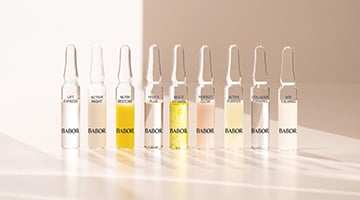
For a concentrated treatment step, explore BABOR's ampoule collections. Single-dose ampoules can add a precisely measured treatment to a considered skincare regimen, whether used as a targeted course or alongside daily essentials.
Make consistency the priority
Daily use is recommended because visible skincare results depend on regular application, not a single use. Follow the product instructions and allow time for the routine to work. Depending on the formula and your skin's condition, improvements may become more apparent over approximately 4 to 12 weeks. Maintain realistic expectations, protect your skin from environmental stressors, and assess progress under similar lighting rather than changing products too quickly.
- Choose: a leave-on serum, moisturizer, eye cream, or sunscreen with a texture you will use consistently.
- Layer: peptides with hyaluronic acid, niacinamide, vitamin C, and retinoids as your skin tolerates.
- Commit: to regular daily application and allow 4 to 12 weeks for results to develop.
Why BABOR's Peptide Technology Stands Apart
Peptide performance depends on more than including a peptide in an ingredient list. The concentration, peptide selection, delivery system, and surrounding formula all shape how a product supports the appearance of firmer, more resilient skin. BABOR brings that precision to its professional skincare development, drawing on 70 years of German scientific heritage since its founding in 1956.
A multi-peptide approach to visible firmness
The BABOR Collagen-Peptide Booster Cream is formulated with a 9.6% Peptide Plant Complex. Rather than relying on one peptide profile, the complex combines hexapeptides, polypeptides, tetrapeptide-72, and tripeptides. This multi-dimensional approach is designed to support the look of smoother, denser, more supple skin while complementing the needs of mature complexions.
The formula is part of the DOCTOR BABOR Lifting line, where concentrated active ingredients are selected for a professional, results-driven skincare experience. Its positioning reflects BABOR's broader philosophy: use sophisticated actives with a clear purpose, then deliver them in a sensorial formula suited to consistent use.
Clinical feedback that gives the technology context
In the product assessment, 90% of participants confirmed that their skin appeared firmer and that lines and wrinkles looked reduced. In addition, 86% described it as the best anti-aging cream they had ever used. The product holds a 4.7 out of 5 star rating from 134 reviews and is offered at $170 for 50 ml. These figures provide useful context for the technology, while individual results will naturally vary according to skin condition, routine, and continued use.
Peptide expertise across targeted BABOR lines
BABOR's peptide expertise extends beyond lifting care. The 10D Hyaluronic Acid line incorporates HY3 peptide alongside multi-weight hyaluronic acid technology, connecting peptide support with a hydration-focused approach. This allows consumers to select a peptide treatment according to their primary concern, whether that is visible loss of firmness or a need for replenishing moisture.
That combination of German research heritage, concentrated actives. And targeted product design has helped BABOR earn recognition as the #1 Professional Skincare Brand in the EU in the 2024 Kline study. Explore our peptide-infused skincare collections to compare the approaches across the BABOR portfolio.
- Key takeaway: BABOR pairs a 9.6% multi-peptide complex with professional skincare expertise to target the visible signs of firmness loss with precision.
Frequently Asked Questions
Are peptide products suitable for sensitive skin?
Peptides are generally suitable for all skin types, including sensitive skin, because they are used as targeted skin-supporting ingredients rather than exfoliating acids. Introduce one product at a time, follow its directions, and monitor your skin's response. If sensitivity persists, consult a qualified skincare professional.
Can I use peptides every day?
Yes. A peptide serum or moisturizer can usually be used in a morning or evening routine, depending on the product instructions. Consistent daily use is recommended, while visible results vary according to your skin's condition, the peptide system, and the rest of your regimen.
Can peptides be used with retinol and hyaluronic acid?
Peptides can be layered with hydrating ingredients such as hyaluronic acid and used alongside retinoids and antioxidants. Apply products from lighter to richer textures, then use sunscreen in the morning. If your routine is active or your skin is reactive, alternate stronger treatments until you know how your skin responds.
How long does it take to see results from peptides?
There is no universal timetable. Results depend on the peptide type, product delivery system, concentration, consistency, and individual skin needs. Peptide research also notes that topical absorption can be challenging, so a carefully designed product and regular use matter.
Are peptides better than retinol?
Neither ingredient is universally better. Peptides and retinoids work through different pathways and can serve complementary roles in a well-planned routine. Peptides are often selected for skin-supporting and firming care, while retinoids are chosen for their broader cell-renewal activity. Product choice should reflect your skin goals, tolerance, and professional guidance.
Ready to experience the transformative power of peptide science? Discover the DOCTOR BABOR Lifting collection, featuring the award-winning Collagen-Peptide Booster Cream with a clinically proven 9.6% Peptide Plant Complex. Formulated in Germany with 70 years of skincare expertise, each product delivers concentrated active ingredients designed to firm, smooth, and rejuvenate. Explore the DOCTOR BABOR peptide collection today.