Hyaluronic acid serum selection is most effective when it considers molecular weight, texture, supporting ingredients, and your skin's hydration needs together.
Choosing a hydrating serum is not simply a matter of selecting the highest concentration on a label. Skin comfort, texture, supporting ingredients, and the type of hyaluronic acid used all influence whether a product fits your routine. The strongest choice is the one that works with your skin's current needs and the habits you can maintain.
Explore BABOR's serum collection to compare hydration-focused formulas
The best hyaluronic acid serum matches your skin's hydration needs and uses a considered blend of molecular weights, humectants, and skin-conditioning ingredients. Hyaluronic acid attracts and holds water, while research indicates that molecular weight can influence how it behaves during topical application. The ingredient name alone does not determine the right product.
This guide explains what to look for in a daily serum, how molecular weight affects product behavior. How to assess your hydration needs, and how to apply a serum with professional precision. It also clarifies the difference between a daily serum and a concentrated ampoule treatment.
What Does a Hyaluronic Acid Serum Do for Skin?
A hyaluronic acid serum acts primarily as a humectant. It helps attract and bind water at the skin's surface, which can support a supple, comfortable appearance. Its effect depends on the complete formula, the surrounding routine, the skin barrier. And the environment, so it should be viewed as supportive skincare rather than a medical treatment.
It helps the skin retain moisture
Hyaluronic acid occurs naturally throughout the body, including the skin. In a topical serum, it functions as a humectant, or a water-attracting ingredient that helps bind moisture at the skin's surface. That water-retaining activity contributes to the immediate comfort and supple appearance associated with well-hydrated skin. The Cleveland Clinic explains hyaluronic acid's water-retention properties.
This effect can be useful when skin feels tight, looks dull, or shows fine dehydration lines. It does not mean that a serum supplies permanent moisture by itself. A moisturizer used according to its directions can help support comfort by reducing moisture loss. Especially when the air is dry or the skin feels under pressure from seasonal conditions.
It supports the skin's hydrated structure
Within the skin, hyaluronic acid is part of the extracellular matrix, the network that helps provide structure between cells. Research describes its hygroscopic, rheological, and viscoelastic properties as relevant to topical skincare. In practical terms, those properties help explain why it can contribute to a smoother-feeling, more flexible surface rather than acting only as a simple water additive. A published review discusses topical hyaluronic acid in cosmeceuticals.
The skin's natural hyaluronic acid content can also change with age. Published evidence describes topical products as generally well tolerated in cosmetic and dermatologic contexts, but individual responses vary. A serum can support a disciplined hydration routine, but it cannot diagnose or treat a medical condition. Persistent discomfort should be discussed with a qualified healthcare professional.
It has realistic limits
A serum works within the limits of its vehicle, concentration, application method, and molecular-weight profile. It does not replace daily sun protection, a complete routine, or professional advice for persistently reactive skin. When choosing a product, consider the complete composition and your hydration goals. Do not expect one ingredient to solve every visible concern.
How Molecular Weight Changes a Hyaluronic Acid Serum
Molecular weight describes the size of the hyaluronic acid polymers used in a serum. Larger, medium, and smaller polymers may behave differently in the formula and at the skin surface. Molecular weight is therefore a useful selection detail, but it is not a simple quality scale in which the smallest number is always best.
When a hyaluronic acid serum lists different molecular weights, the wording refers to the size of the polymers in the formula. It is not a ranking of good and bad ingredients. Molecular weight can influence how hyaluronic acid behaves in the product, how it forms a film, and how it interacts with the skin surface during application.
Researchers have observed differences in how topical hyaluronic acid with different molecular weights interacts with skin layers. One study used Raman micro-imaging to track the ingredient with high molecular specificity. The findings support molecular weight as a meaningful consideration, without proving that one size reaches a particular layer or guarantees an identical result for every person. Read the PubMed study on molecular-weight-dependent hyaluronic acid behavior.
What low, medium, and high molecular weight mean
High-molecular-weight hyaluronic acid generally consists of larger polymers. In a topical product, these structures can contribute to a comfortable hydrating film and a smoother sensory finish. Lower-molecular-weight forms contain smaller polymers and may behave differently in the product and at the skin surface. Medium-molecular-weight forms can provide another balance of texture and hydration behavior.
Ingredient lists do not always make bottle-to-bottle comparisons easy. Some brands disclose molecular-weight ranges, while others describe a multi-weight approach without listing exact values. A name such as sodium hyaluronate also does not reveal the complete molecular-weight profile. Concentration, supporting humectants, texture, packaging, and application directions shape the finished product.
Why a blend is not automatically superior
A blend of molecular weights may be thoughtfully designed to provide complementary behavior, but more types do not automatically mean better performance. A single well-balanced form may suit a lightweight daily serum, while a blend may support a particular texture or hydration experience. Ask whether the product communicates a clear purpose, feels comfortable, and fits the rest of your routine.
When comparing labels, look for meaningful ingredient information and realistic directions rather than selecting solely by a molecular-weight claim. Consider your skin's hydration needs, the serum's finish, and whether you will follow it with a moisturizer. Molecular weight is one part of professional product design, not a standalone promise.
How to Match a Serum to Your Skin's Hydration Needs
Match a hyaluronic acid serum to how your skin feels throughout the day, the finish you prefer, and the layers already in your routine. Tight or rough-feeling skin may prefer a cushiony texture, while combination skin may suit a lighter finish. Reactive-feeling skin benefits from gradual introduction and a straightforward routine.
Dry or visibly tight skin
If skin feels tight after cleansing, looks rough, or becomes uncomfortable in dry weather, consider a serum with a cushiony, water-rich finish. Hyaluronic acid attracts and holds moisture, which is why it appears frequently in hydration-focused skincare. Follow the serum with a moisturizer when appropriate, particularly during colder months or in low-humidity environments.
Dehydrated or combination skin
Skin can feel dehydrated without needing a rich finish everywhere. If the cheeks feel tight while the forehead or nose becomes shiny, look for a lightweight serum that layers comfortably under moisturizer and sunscreen. Apply it evenly, then adjust the amount or follow-up cream by zone if needed. A flexible finish is often easier to use consistently than a heavy layer.
Mature skin and changing hydration needs
With age, the skin's natural hyaluronic acid content can change. For mature skin, consider immediate comfort and the finish you want beneath makeup or other care. A silky, flexible texture can complement a routine focused on maintaining a supple appearance. Evaluate the serum alongside the rest of the regimen rather than treating it as a single answer for every visible concern.
Reactive-feeling skin
When skin feels unusually sensitive, choose a straightforward product and introduce it gradually. Patch testing can help you assess personal tolerance, but it cannot predict every response. Avoid changing several products at once, and pause if persistent discomfort develops. For pronounced symptoms, seek advice from a qualified healthcare professional.
When Should You Apply a Hyaluronic Acid Serum?
Apply a hyaluronic acid serum after cleansing and before moisturizer, following the product's directions. Many formulas are comfortable on slightly damp skin, but the face should not be dripping wet. Use a modest amount, allow it to settle, and finish a morning routine with broad-spectrum sunscreen when directed.
- Begin with freshly cleansed skin. Remove makeup, sunscreen, and surface residue with a cleanser suited to your needs. Pat gently rather than rubbing.
- Apply the serum as directed. Many hydrating products spread comfortably over slightly damp skin. Follow the label if it specifies application to dry skin.
- Use a modest amount. Smooth the serum over the face and neck with light, even movements. More product does not automatically mean more hydration, and excess can feel tacky.
- Follow with a moisturizer. A cream or gel-cream can add comfort and help complete the routine, especially when skin feels dry or tight.
- Repeat as directed. Some hydrating products suit morning, evening, or both routines. In the morning, finish with broad-spectrum sunscreen as the final skincare step.
How professional treatments change the timing
Topical hyaluronic acid is used in dermatology and cosmetic practice, and reviews describe it as an adjunct in some facial rejuvenation contexts. This does not make a cosmetic serum a medical treatment, nor does it mean every product is appropriate after a procedure. After an in-office treatment, follow the instructions provided by the treating clinician.
A new serum should be introduced carefully, especially if your skin is reactive. If burning, persistent redness, swelling, or unusual discomfort develops, discontinue use and seek professional guidance. A serum can support a disciplined hydration routine. A qualified clinician should address treatment-related concerns.
What Else Should You Look for in the Formula?
Molecular weight is only one part of a well-considered serum. Compare supporting ingredients, texture, ingredient transparency, packaging, and compatibility with moisturizer and sunscreen. A product that feels comfortable and layers well is more likely to become a consistent routine step than one selected only for a prominent percentage or technical claim.
| Consideration | What to look for | Why it matters |
|---|---|---|
| Supporting ingredients | Complementary humectants and skin-conditioning ingredients | They shape hydration and routine compatibility. |
| Texture | A fluid, gel, or richer texture suited to your preferences | A comfortable product is easier to use consistently. |
| Ingredient information | Clear ingredient details and meaningful directions | Context is more useful than one prominent claim. |
| Packaging | A well-sealed container with controlled dispensing | Thoughtful packaging supports precise daily use. |
| Compatibility | A serum that layers with cleanser, moisturizer, and sunscreen | Compatibility can reduce pilling and unnecessary complexity. |
Consider the complete sensory experience
Texture is more than a cosmetic preference. A lightweight serum may suit a layered morning routine, while a cushiony gel can feel comfortable when skin feels tight. Allow each layer to settle according to its directions. If a product leaves persistent tackiness, rolls beneath sunscreen, or causes discomfort, it may not fit your routine even when the ingredient list looks appealing.
Use transparent information to make a measured choice
A higher stated percentage does not automatically make a serum the right choice for every complexion. Consider the complete ingredient list, the form of hyaluronic acid, the supporting ingredients, and the application guidance. Introduce one new product at a time when your skin is reactive, and discontinue use if irritation develops. Persistent discomfort warrants advice from a qualified professional.
For a broader view of available textures and treatment goals, browse the BABOR serum collection. Compare the available formats without reducing the decision to one ingredient or one technical claim.

How BABOR Approaches Hyaluronic Acid Technology
BABOR distinguishes between a daily serum and a concentrated ampoule treatment by considering intended use, texture, and routine cadence. Its professional skincare heritage supports a product-selection approach grounded in formula design and application guidance. The right format is the one that aligns with your current hydration priorities and the routine you can follow.
A daily serum for consistent routine support
A serum is generally selected as a repeatable part of a structured routine. Within the DOCTOR BABOR line, hydration-focused products can be evaluated by their texture and intended role. A lightweight serum can sit beneath a moisturizer, while a gel-cream can provide a different finishing feel. Follow each product's directions and assess how it layers with the rest of your routine.
A concentrated ampoule for a focused treatment step
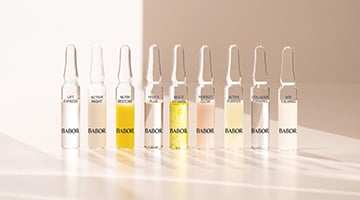
BABOR's 10D Hyaluronic Acid Ampoule Serum Concentrate uses 10 molecular weights of hyaluronic acid together with polyglutamic acid. This is a defined ampoule technology platform, not a reason to assume that one format is universally better. An ampoule may suit periodic concentrated applications, while a serum may be easier to maintain as a daily step. Explore BABOR's ampoule collection when comparing formats.
BABOR's Made in Germany heritage and professional positioning inform both kinds of product. For additional context, read about the power of concentrated skincare and the brand's sustainability and responsibility commitments. The practical question is which format fits your application habits and current hydration priorities.
Frequently Asked Questions
The most useful serum decision combines ingredient science with practical routine fit. Molecular weight, application timing, moisturizer use, and product format all matter. The answers below summarize the central guidance, while the product label and professional advice remain the authority for individual use.
Does molecular weight matter when choosing a hyaluronic acid serum?
Yes. Molecular weight can influence how hyaluronic acid behaves in a formula and at the skin surface, so it is a meaningful selection consideration. It is not a simple ranking in which the smallest number is always best. Look at the complete formula, texture, directions, and your skin's response. Read the published research.
Should you apply a hyaluronic acid serum to damp skin?
Follow the product's directions first. Many hydrating routines work well when the serum is applied after cleansing, before the skin has fully dried, and followed with the next appropriate skincare step. Do not apply to dripping-wet skin unless directed. The formula's texture and your skin's comfort matter more than a universal rule.
Do you need moisturizer after a hyaluronic acid serum?
A moisturizer can be a useful next step, especially when skin needs additional comfort or barrier support. A serum and moisturizer serve different roles, so choose the combination according to your skin's needs and preferred finish. If the routine leaves skin tight or uncomfortable, reassess the product, amount, and application order.
What is the difference between a hyaluronic acid serum and an ampoule?
A serum is generally designed to be a repeatable step in a daily routine. An ampoule is typically a more concentrated treatment used according to its specific directions. The distinction is based on format and intended use, not a universal claim that one is better. Select the format that fits your routine and hydration needs.
Ready to Explore Your Serum Options?
Choosing a hyaluronic acid serum becomes easier when you compare textures, supporting ingredients, molecular-weight information, and intended use in one decision. BABOR's professional skincare collection provides a starting point for exploring hydration-focused formats. Review the directions carefully and select the product that fits your skin and routine.