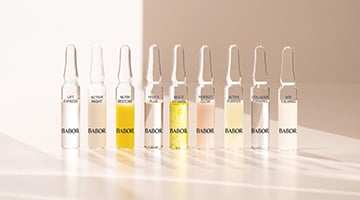
A vitamin C serum earns its place in a considered skincare ritual through more than a prominent percentage on the label. The vitamin C form, resistance to oxidation, protective packaging, and fit with your skin all influence the experience and the result.
Explore BABOR's professional vitamin C serum
The best vitamin c serum balances a well-supported vitamin C form and concentration with stability, skin compatibility, and practical daily use. L-ascorbic acid has the deepest direct research. One study found optimal absorption at 20% and a pH below 3.5 under specific conditions. Derivatives may be appropriate when stability and tolerance are higher priorities. Review the foundational research.
This guide uses a professional selection framework rather than naming one universal winner. It explains what to examine, how to compare direct vitamin C with derivatives, and how to place a serum in a consistent routine. The approach is aligned with BABOR's German skincare science heritage and its professional focus on precise, purposeful care.
How the best vitamin c serum balances performance and tolerance
The best vitamin c serum is not necessarily the product with the highest advertised concentration. It is a complete formula that provides an appropriate vitamin C form in a stable, well-protected vehicle, at a level your skin can use comfortably and consistently. That definition matters because a technically impressive product is less useful when its texture, intensity, or storage needs make regular application difficult.
Start with the vitamin C form
L-ascorbic acid is the direct form of vitamin C with the longest and strongest research history in topical skincare. It is also demanding to handle. It performs best in an acidic environment and is vulnerable to air, light, heat, and time. A derivative is a modified form selected by brands for different technical and sensory goals. Depending on the ingredient, it may offer a more stable or comfortable product experience. But evidence should be assessed for the specific derivative rather than assumed across the entire category.
Consider concentration in context
Concentration is meaningful only when read alongside the form, acidity, delivery system, and packaging. A 20% label does not communicate the same thing when it refers to L-ascorbic acid as when it refers to a derivative. The frequently cited 20% absorption finding applies to a particular study design and should not be treated as a universal instruction for every complexion. A lower concentration may be the more considered entry point for sensitive or inexperienced skin.
Choose consistency over intensity
A product that feels appropriate and remains stable is more likely to be used as directed. Introduce one active at a time, patch test according to the product instructions, and reduce frequency if persistent discomfort develops. A qualified skincare professional can help when skin is reactive or when several active treatments are already part of the routine.
Which vitamin C form should you choose?
Choose L-ascorbic acid when direct activity and the deepest research record are your primary priorities, and your skin is comfortable with an acidic treatment. Consider a specific vitamin C derivative when a gentler-feeling or more stable format better supports consistent use. Neither category is automatically superior in every formula, because performance depends on the finished product rather than the ingredient name alone.
| Consideration | L-Ascorbic Acid | Stable Derivatives |
|---|---|---|
| Activity | The direct form with the most established topical research. | Requires evaluation of the individual derivative and its evidence. |
| Stability | More vulnerable to air, light, heat, and time. | Often selected to support a more stable product experience, although the full formula still matters. |
| Skin feel | Acidic, higher-strength products may feel more intense. | May suit people who prefer a gentler-feeling starting point. |
| Selection priority | Look closely at pH, packaging, storage, and visible changes. | Look for the precise ingredient, concentration, supporting evidence, and finished formula. |
The comparison is a decision aid, not a promise of identical results. Research has found that some derivatives do not raise skin levels of L-ascorbic acid in the same way as the direct form. This is why a professional assessment considers the named ingredient and the complete product together. Read the product directions, check its storage requirements, and avoid treating a single technical specification as a guarantee.
When comparing products, ask four practical questions: Which vitamin C form is present? At what concentration? How is the formula protected from exposure? Can your skin tolerate the recommended use? These questions create a more reliable selection process than choosing by percentage or packaging appearance alone.
Explore BABOR's concentrated ampoule treatments

Why do stability and packaging matter?
Stability determines how well a vitamin C product retains its intended qualities during its useful life. L-ascorbic acid is particularly vulnerable to oxidation, so oxygen, light, heat, and repeated handling deserve attention. Packaging is therefore not a decorative afterthought. It is part of the product design and should be evaluated alongside the ingredient list and texture.
Look for protection from air and light
Opaque packaging can reduce light exposure compared with a clear container. An airless pump may limit repeated contact with oxygen compared with a dropper that is opened and handled frequently. These choices do not rescue an unsuitable formula, but they can support stability when paired with thoughtful product development. Read the package directions, because the manufacturer knows the intended storage and use conditions.
Understand visible changes
A serum may shift in color as it changes. A pronounced move from clear or pale straw toward a deeper yellow or brown can be a practical reason to stop and review the product's condition. Color alone cannot confirm effectiveness or safety, so do not use it as a laboratory test. Follow the brand's guidance and replace the product according to its instructions rather than a generic schedule.
Store the product thoughtfully
Keep the container tightly closed in a cool, dark place away from direct sunlight. Avoid leaving it in a hot car, beside a radiator, or in a humid area where temperature changes are frequent. These habits are especially relevant for direct L-ascorbic acid products. Current research reviews the challenges of incorporating ascorbic acid into topical products because of its instability. Read the stability review.
The strongest selection is often the one whose technical demands suit your real environment. If you travel frequently, prefer a simple application ritual, or tend to leave products open, a stable format with clear storage guidance may be more practical than a highly sensitive product that requires exceptional handling.
What concentration suits your skin?
The appropriate concentration depends on the vitamin C form, the finished formula, your experience with active skincare, and your skin's comfort. A higher percentage can be useful in a well-designed product, but it is not automatically the best choice. Concentration should support a balanced routine rather than become the only selection criterion.
For experienced users of active skincare
If your skin already tolerates active treatments, you may consider a higher-concentration product when its form, packaging, and directions are clear. The study often cited in vitamin C discussions found optimal percutaneous absorption at 20% for L-ascorbic acid formulated at a pH below 3.5. Those are specific conditions, not a universal prescription. Evaluate whether the product actually uses L-ascorbic acid and whether your skin is comfortable with the intended schedule.
For sensitive or unaccustomed skin
A lower concentration or a specific derivative may provide a more measured starting point. Apply a small amount as directed and introduce it on a limited schedule before increasing frequency. Do not combine several new active products at once, because that makes it harder to identify the source of discomfort. Persistent redness, burning, or worsening sensitivity is a reason to stop and seek qualified skincare advice.
For every skin type
Patch test according to the product's instructions and use moisturizer when needed to support a comfortable finish. Vitamin C may complement a morning skincare ritual, but it is not sunscreen and does not replace broad-spectrum UV protection. The most useful concentration is the one that remains stable and fits a routine you can maintain without persistent discomfort.
How should you compare a serum with your skin goal?
Start with the concern you want to address, then work backward through the formula. Radiance, uneven tone, visible spots, texture, and comfort may call for different priorities. Keep the selection process disciplined. Identify the goal, check the vitamin C form, evaluate stability and packaging, confirm the concentration, and assess whether the routine is realistic.
Radiance and an energized appearance
For a brighter-looking complexion, look for a serum that provides antioxidant support and layers comfortably under moisturizer and sunscreen. A concentrated treatment can be appealing when it fits your ritual, but a refined texture and consistent use matter more than an impressive label alone. BABOR's professional skincare portfolio includes concentrated treatments designed for a precise, results-focused ritual. Browse the BABOR serum collection to compare formats and intended uses.
Uneven tone and visible spots
When uneven tone is the focus, consistency and daily UV protection are essential parts of the broader routine. A vitamin C serum should complement sunscreen, not stand in for it. Consider the rest of your active products and avoid introducing several strong changes together. For additional education on this concern, read BABOR's guide to hyperpigmentation care.
Texture and visible fine lines
For texture and the appearance of fine lines, evaluate the complete formula and how smoothly it layers. Topical vitamin C is associated with antioxidant activity and collagen-related research. This explains its place in routines focused on a more refined appearance. That research does not make every product interchangeable. Choose a formula with clear directions and a texture you can apply evenly.
Comfort and sensitive-feeling skin
Comfort is a practical measure of product fit. A stable derivative or lower-intensity product may be more suitable than a highly active acidic formula when your skin is easily unsettled. Introduce one product at a time, use it as directed, and stop if persistent discomfort develops. The right product supports regular care without asking your skin to tolerate unnecessary intensity.
Where does vitamin C fit in a skincare routine?
Apply vitamin C serum to freshly washed, dry skin before moisturizer and sunscreen in the morning, unless the product directions specify another use. The sequence is simple, but good technique supports comfort and consistency. Use the amount recommended by the manufacturer, allow the serum to settle, and protect the container from heat, light, and air between applications.
- Wash and dry the skin. Begin with freshly washed, dry skin so the treatment can be applied evenly. If your skin is reactive, keep the rest of the routine familiar while you assess comfort.
- Apply the vitamin C serum. Use the amount and frequency specified by the product. Smooth it over the face and neck, avoiding the immediate eye area unless the product is designed for it.
- Follow with moisturizer. Once the serum has settled, apply moisturizer to support a comfortable, well-conditioned finish. This can be especially useful with concentrated products.
- Finish with sunscreen in the morning. Sunscreen is the final essential daytime step. Vitamin C does not replace UV protection. Apply and reapply sunscreen according to its instructions and your exposure.
- Choose the schedule you can maintain. Morning use may complement daytime environmental protection, while evening use may suit a fuller morning routine. Follow the product directions and prioritize regular use over an inconvenient schedule.
- Store the serum correctly. Close the container securely and keep it in a cool, dark place. Monitor notable changes in color or texture and follow the manufacturer's guidance if the product changes.
Research on topical vitamin C found that tissue levels saturated after three daily applications and reported a disappearance half-life of about four days. The findings support a consistent, directed ritual rather than occasional use. Review the topical vitamin C study.

The best vitamin c serum is ultimately the one whose form, concentration, stability strategy, and application schedule work together. A professional selection process does not chase one perfect specification. It finds a balanced formula that suits your skin and your everyday habits.
Find a professional vitamin C formula for your routine
Before choosing, use the following checklist to compare products on evidence, stability, tolerance, and fit. This keeps the decision grounded in the full formula rather than a single headline claim.
How should you evaluate a vitamin C serum before buying?
Evaluate a vitamin C serum in this order: identify the form, confirm the concentration, inspect the packaging, check storage guidance, and match the texture to your routine. This sequence keeps the decision grounded in evidence and usability. It also helps separate meaningful product details from isolated label claims.
- Form: Confirm whether the product uses L-ascorbic acid or a named derivative.
- Concentration: Read the percentage alongside the form and the product directions.
- Protection: Look for packaging that limits exposure to light and air.
- Compatibility: Consider tolerance, existing active products, and the schedule you can sustain.
Discover BABOR's professional vitamin C skincare approach
Frequently Asked Questions
What is the best vitamin c serum for sensitive skin?
A lower concentration or a specific stable derivative may be a more comfortable starting point for sensitive skin. Check the full formula, introduce it gradually, and follow the product directions. Stop if persistent redness, burning, or worsening sensitivity develops, and seek qualified skincare advice when needed.
Is L-ascorbic acid better than a vitamin C derivative?
L-ascorbic acid has the deepest direct research, but a derivative may be selected for stability or a gentler-feeling experience. Evidence varies by derivative, so compare the precise ingredient, concentration, packaging, and intended use instead of treating every vitamin C form as equivalent.
What percentage of vitamin C should a serum contain?
There is no universal percentage for every skin type or vitamin C form. One study found optimal absorption at 20% for L-ascorbic acid at a pH below 3.5 under specific conditions. A lower concentration may suit sensitive or active-skincare-new skin.
How can you tell if vitamin C serum has oxidized?
A pronounced color change toward deeper yellow or brown can indicate that the product has changed, particularly when it began clear or pale. Color is not a laboratory test, so follow the manufacturer's storage and replacement guidance rather than relying on appearance alone.
Can you use vitamin C serum every day?
Use vitamin C as often as the product directions recommend and increase frequency only when your skin remains comfortable. Apply it to freshly washed, dry skin before moisturizer, and use sunscreen during the day. Consistency and tolerance are more important than forcing a daily schedule.