Hyaluronic acid is one of the most recognized hydration ingredients in skincare, but its role is more nuanced than a product label suggests. It helps bind water and support a supple, comfortable-looking skin surface. The finished formula, molecular-weight profile, supporting ingredients, and place in your routine all shape the experience. This guide explains the ingredient at a foundational level, then shows how that science informs a premium professional skincare routine.
Explore the BABOR 10D Hyaluronic Acid Ampoule
Hyaluronic acid is a water-binding ingredient used in topical skincare to support surface hydration and a supple-looking appearance. Different molecular weights can behave differently in a formula, so the complete product matters more than choosing one size as universally best. In a routine, hyaluronic acid works as one hydration step alongside moisturizer and daytime sun protection.
This article clarifies the fundamentals without becoming a second buying guide or technology deep dive. For narrower questions, it points to BABOR resources that cover serum selection and ampoule use in greater detail.
That distinction is useful for readers who want a sound starting point. You can learn what the ingredient does, then decide whether a serum, cream, or concentrated treatment makes sense for your routine. The decision should follow the product directions and the needs of your skin, not a single trend or isolated number.
What Does Hyaluronic Acid Do for Skin?
Hyaluronic acid is a naturally occurring polysaccharide found in the body's extracellular and pericellular matrices, including the skin. In topical skincare, it is valued primarily for its humectant behavior. A humectant helps attract and bind water in the surrounding application environment. That activity can support a more hydrated feel and a smoother, supple-looking appearance.
Its role is hydration support
Harvard Health explains that hyaluronic acid can bind more than 1,000 times its weight in water. This often-cited property helps explain why the ingredient appears in serums, concentrates, creams, and ampoule treatments. It does not mean that every product creates the same result, or that the ingredient replaces the rest of a routine. Vehicle, concentration, molecular-weight profile, supporting ingredients, application, and individual skin characteristics all influence the finished experience.
Ingredient lists may identify related forms such as sodium hyaluronate or hydrolyzed hyaluronic acid. These names indicate a relationship to hyaluronic acid, but the ingredient name alone does not describe the complete formula. A careful evaluation considers the product's texture, directions, supporting ingredients, intended use, and the information supplied by its manufacturer.
It is not a complete skincare system
A water-binding ingredient is one part of moisture management. A moisturizer can provide a complementary finishing step by helping maintain a comfortable surface. Cleansing removes surface residue before treatment steps, while daytime sun protection addresses a separate priority. Combining roles thoughtfully is more useful than asking one ingredient to solve every skincare concern.
For a direct ingredient reference, read BABOR's hyaluronic acid overview. It provides a concise starting point for understanding how the ingredient is positioned within skincare.
How Does Molecular Weight Affect Hyaluronic Acid Formulation?
Molecular weight describes the size of hyaluronic acid molecules in a product. It can influence how a solution behaves, including characteristics related to texture, film formation, and movement within a research model. This does not mean that a higher or lower number automatically represents better skincare. Formulation strategy may use molecular-weight information to create a particular product profile.
For readers, that profile can affect how a product feels and how its hydration story is explained. It is a formulation detail, not a standalone score. Look at it alongside the vehicle, supporting ingredients, directions, and the claims the brand can substantiate.
A Raman spectroscopy study compared different molecular-weight ranges under defined experimental conditions. It reported different passage behavior for the tested ranges, including 20 to 300 kDa and 1,000 to 1,400 kDa forms. Those observations belong to that research model. They should not be converted into a promise about a topical product. They also do not establish an identical result for every person. Read the study abstract for the methods and findings in context.
For a broad reader, the table below is a useful orientation rather than a product-ranking system. It intentionally summarizes the concept. BABOR's dedicated 10D Hyaluronic Acid explainer is the more appropriate destination for detailed molecular-weight and 10D technology discussion.
| Molecule profile | What it may influence | What it does not prove | Useful reader question |
|---|---|---|---|
| Higher molecular weight. | Solution behavior, texture, and surface film characteristics. | A higher number is automatically more effective. | How does the finished formula feel and perform as directed? |
| Lower molecular weight. | Different behavior from larger forms in specific research models. | Guaranteed delivery to a particular skin layer. | What evidence and product context support the formulation? |
| Several molecular weights. | A deliberately varied hydration profile within one formula. | Every dimension behaves identically. | What does the manufacturer substantiate about the complete product? |
| Information not disclosed. | Less detail for comparing formulation strategy. | The product is unsuitable. | Can the brand explain the ingredient system and intended use? |
This distinction keeps the conversation scientifically responsible. Molecular weight is one formulation variable among many, not a shortcut for judging an entire skincare product.
Where Does Hyaluronic Acid Fit in a Professional Skincare Routine?
In a professional routine, the ingredient has a clear but limited job: it supports hydration within a sequence designed around the skin's condition, the product directions, and the desired sensorial experience. The routine should remain coherent. More layers do not automatically create a better outcome.
Build the routine around roles
- Prepare the skin. Begin with a cleanser appropriate for the routine, then apply subsequent products to freshly cleansed, dry skin when the directions call for it. Explore BABOR's cleanser collection for the preparation step.
- Add focused hydration. Apply a serum, concentrate, or ampoule according to its packaging. The format and schedule matter, especially when a treatment is designed as a defined program rather than an open-ended daily step.
- Support comfort. Follow with a moisturizer selected for the skin's current needs and the product's recommended order. Browse BABOR moisturizers for the finishing layer.
- Protect the daytime routine. In the morning, finish with broad-spectrum sun protection according to its directions. Hyaluronic acid does not replace this separate routine priority.
Professionals may also consider treatment history, seasonal changes, texture preferences, and how products interact when layered. At home, the same principle applies: introduce one new product at a time, follow the manufacturer's directions, and avoid changing several variables simultaneously. This makes it easier to understand how the routine feels and whether it is practical to maintain.
Routine planning also benefits from restraint. A hydration step should have a reason for being present, and each additional layer should have a compatible texture and role. If a professional has designed a treatment protocol, follow that protocol instead of combining products based only on ingredient trends. This preserves clarity and makes the routine easier to assess.
How Should You Read a Hyaluronic Acid Label?
A label can confirm that a product contains hyaluronic acid or a related form, but it cannot tell the whole story in isolation. Start with the ingredient list and then review the manufacturer's product explanation. Look for the intended format, application directions, frequency, storage guidance, and any disclosed molecular-weight or supporting-ingredient information.
It is also worth checking whether the product is intended for a short treatment period or ongoing use. A clear schedule can help you evaluate the experience without changing too many routine variables at once. Packaging, the manufacturer's website, and professional guidance can answer questions that an ingredient list cannot.
Texture is also relevant. A lightweight serum, a richer cream, and a single-dose ampoule can all contain hydration-supporting ingredients while serving different moments in a routine. The best fit is not defined by one highlighted phrase. It is defined by how the product's design, directions, and finish align with the rest of your skincare habits.
For readers comparing daily serum formats, BABOR's guide on how to choose a hyaluronic acid serum owns that narrower selection question. It covers product-evaluation considerations that this foundational guide intentionally summarizes rather than repeats.
Keep expectations specific
Responsible skincare language separates hydration support from guaranteed transformation. A product may be designed to improve the feel or appearance of hydration, but individual experience varies. If a claim sounds absolute, look for the manufacturer's substantiation and consider whether it describes the formula, a study, or a guaranteed personal result. Clear expectations are part of a professional approach.
What Does BABOR's 10D Hyaluronic Acid Example Illustrate?
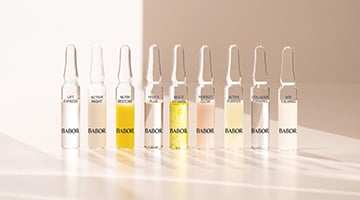
BABOR's DOCTOR BABOR 10D Hyaluronic Acid Ampoule Serum Concentrate provides a concrete example of a multi-dimensional hydration concept. The product page describes a seven-day program in 14 ml ampoules and identifies 10 molecular weights of hyaluronic acid, polyglutamic acid, and HY3 peptide as part of its composition. These are product-specific details, not general properties of every hyaluronic acid formula.
That product-specific framing matters. The term 10D belongs to BABOR's named approach, while hyaluronic acid itself is a broad ingredient category used across many formats. Readers should distinguish a branded technology description from a general claim about what all products containing the ingredient can do.
The important educational point is the formulation strategy. The 10D designation refers to the use of 10 molecular-weight dimensions within the product's hydration concept. It does not establish that one molecular weight is universally superior, and it does not promise the same visible result for every person. The surrounding ingredients, vehicle, packaging, directions, and intended schedule are part of the product experience.
BABOR presents the ampoule as a focused hydration treatment with a defined seven-day format. That makes it distinct from a general daily-serum selection discussion and from an ampoule-application tutorial. Review the exact 10D Hyaluronic Acid Ampoule Serum Concentrate details before deciding how a concentrated treatment fits your routine.
Can Hyaluronic Acid Be Used Every Day?
Topical hyaluronic acid can fit into a daily cosmetic skincare routine when the product directions and individual tolerance support that frequency. Harvard Health describes topical use as generally safe for many people, while also noting that products and responses vary. Daily use is not a requirement for every format. A defined ampoule program may have a different schedule from a daily serum or moisturizer.
Start with the directions for the specific product. Apply the recommended amount, observe how the skin feels, and avoid assuming that more product will create a better result. If a product causes persistent discomfort or an unexpected reaction, stop using it and seek appropriate professional advice.
This article is educational. It does not diagnose or treat a skin condition. A qualified healthcare professional can help with persistent discomfort or questions about an individual concern.
Why moisturizer still matters
Hyaluronic acid supports water binding, while moisturizer serves a complementary role in maintaining a comfortable skin surface. A practical routine may therefore place a hydration treatment after cleansing and before moisturizer, followed by daytime sun protection in the morning. The correct order depends on the product's directions and texture, so those instructions take priority over a fixed universal sequence.
For a narrower application topic, read BABOR's article on how to use hyaluronic acid ampoules. That resource owns the step-by-step ampoule question, while this article remains the broad educational hub.
Frequently Asked Questions
What is hyaluronic acid used for in skincare?
Hyaluronic acid is used primarily as a humectant to support surface hydration and a supple-looking appearance. It works within the complete formula and routine, so the ingredient name alone does not predict the exact sensory experience or individual result.
Is a higher molecular weight better?
No single molecular weight should be treated as universally best. Different molecular weights can influence formulation behavior, and a product may use one or several profiles for a specific design goal. Evaluate the complete formula and the evidence supplied by the manufacturer.
Should hyaluronic acid be followed by moisturizer?
Often, a moisturizer is a useful complementary step after a hydration treatment, but product directions should guide the order. A moisturizer can help support a comfortable skin surface. Select the texture and schedule that fit the rest of your routine.
Is the BABOR 10D ampoule the same as a daily serum?
No. BABOR describes the 10D product as a defined seven-day ampoule program, while daily serums are selected and scheduled differently. Review the product directions and the dedicated product information before adding a concentrated treatment to an established routine.
Make Hydration a More Considered Routine Step
Hyaluronic acid is most useful when understood in context. It can support hydration, but the formula, molecular-weight strategy, application directions, moisturizer, and daily habits all matter. A professional skincare routine respects those details rather than reducing the decision to one ingredient or one number.
Use the broader guide as your foundation, then follow the narrower BABOR resources when you need help comparing serum formulas or applying an ampoule treatment. That hub-and-spoke structure keeps each resource focused and gives you a clearer path from ingredient education to routine planning.


