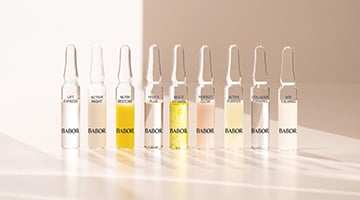
Choosing an anti-aging serum is less about finding a universal winner than understanding what your skin needs from a formula. Fine lines, uneven tone, loss of firmness, dehydration, and texture can call for different active profiles, while stability, delivery, finish, and routine compatibility influence whether a product is practical to use consistently.
Explore the BABOR Longevity Serum.
The best anti aging serum is the one that aligns its active profile with your primary skin goal, presents those ingredients in a thoughtfully designed formula, feels comfortable on your skin, and fits your existing routine. Compare evidence, tolerance, texture, and daily use rather than relying on a universal ranking.
A closer comparison starts by separating what each active is designed to contribute, then examining how the complete formula supports your priorities and habits.
How to Identify the Best Anti Aging Serum for Your Skin Goals
The best anti aging serum is not a universal winner. It is the formula whose active profile addresses your primary concern, whose delivery system supports the formula, whose texture encourages consistent use, and whose ingredients fit comfortably with the rest of your routine. Compare those four factors before comparing product names.
Start with the result you want to evaluate
Skin aging can appear as fine lines and wrinkles, uneven tone, spots, reduced firmness or elasticity, changes in texture, loss of radiance, and altered clarity or complexion. This broad range of visible characteristics makes a precise goal essential. Someone prioritizing dehydration may need a different serum profile from someone focused on texture or the appearance of discoloration. Define one primary goal and one secondary goal, then assess whether the formula speaks to both. Research on facial serum comparison reflects this multidimensional view rather than treating aging as a single outcome.
Evaluate the active profile and formula design
Next, look beyond a prominent ingredient name. Retinoids such as retinol, retinaldehyde, and retinyl esters differ in efficacy, tolerance, and stability. Topical vitamin C is used in formulas intended to support photoaged skin, but stability and permeability remain important design challenges. Hyaluronic acid, by contrast, acts as a humectant that helps retain water in the skin. The relevant question is not simply whether an ingredient appears on the label, but whether its form, concentration, stability, packaging, and supporting ingredients suit your objective.
Check sensory and routine fit
A technically interesting serum is a poor choice if its finish, fragrance, or layering behavior makes regular application unlikely. Consider whether it sits comfortably beneath moisturizer or makeup, whether the texture suits your preference, and whether its directions fit your existing products. Research-driven skincare consumers often weigh fine lines, firmness, hydration, and barrier support together, so the most useful comparison is personal and practical, not a ranking. Choose the formula you can understand, tolerate, and use consistently.
Compare Active Profiles by Skin Concern
The right profile depends on the result you want to prioritize and the formula your routine can accommodate. Fine lines, uneven tone, texture, firmness, dehydration, and barrier comfort are distinct selection signals. So compare the active, its delivery system, and the surrounding formula rather than looking for a universal winner. For more context, explore these concentrated skincare formulas.
Active profiles and questions to ask when comparing serums| Active profile | Primary selection signal | Formula questions | Routine fit |
|---|---|---|---|
| Retinoids | Visible texture, fine lines, and photoaging concerns | Which retinoid is used, and how are stability and tolerance addressed? Retinol, retinaldehyde, and retinyl esters have different efficacy, tolerance, and stability profiles, so the ingredient name alone does not predict the best fit. Review evidence on cosmetic retinoids. | Choose a formula and frequency you can use consistently. Consider the rest of the routine, especially other potentially demanding actives, and follow the product directions. |
| Vitamin C | Radiance and uneven tone, with antioxidant support as a formula goal | What form of vitamin C is present, how is the product packaged, and is the formula designed for stability and skin permeability? Reviews describe topical vitamin C as an antioxidant used in photoaging formulas, while also noting that clinical evidence remains limited and formula stability is challenging. Read the formula review. | Look for a texture that layers comfortably beneath moisturizer and daytime photoprotection. Do not treat vitamin C as a substitute for sunscreen. |
| Hyaluronic acid | Dehydration, tightness, and a preference for a water-binding hydration step | Does the formula identify its humectant system and explain the intended finish? Hyaluronic acid acts as a humectant that retains water in skin, making it useful as a topical moisturizing ingredient. Review the hydration evidence. | Often suits routines that need a lightweight hydration layer. Assess how it feels under the products that follow and whether your skin remains comfortable throughout the day. |
| Peptides and barrier support | Firmness-focused care or a priority on comfort and resilience | Which peptides or supporting ingredients are named, and what evidence applies to this exact combination? Avoid judging a complex by a single headline ingredient. Assess the full INCI list, fragrance considerations, packaging, and the brand's substantiation. | Useful when a serum must integrate smoothly with a comfort-focused routine. Start with the product's directions and judge fit by sustained tolerance, not by a claim of universal superiority. |
Evidence should guide comparison, not replace it. Study design, ingredient form, concentration, vehicle, packaging, and use conditions all affect how relevant a finding is to a particular serum. Compare like with like, then choose the profile that matches your concern and that you can apply consistently.
Why Formula Design Matters as Much as the Active
The ingredient name is only one part of a serum's performance profile. A formula also determines how an active is delivered, how stable it remains during storage, how it feels during application, and whether it fits alongside the rest of a skincare routine. Vehicle design, packaging, and ingredient compatibility therefore deserve the same attention as the headline active.
Vehicle and delivery can change the evaluation
A vehicle is the system that carries ingredients through the formula and onto the skin. Liposomes and other delivery technologies are designed to influence how ingredients are dispersed and delivered, although their value depends on the complete formula and its testing. In a peer-reviewed, 24-week double-blind controlled study, 130 participants were randomized to use facial serums with or without a liposomal blend. The group using the blend serum showed greater measured improvements in several skin-aging characteristics than the comparison group. The authors proposed that the liposomal vehicle may have helped facilitate delivery of ingredients into underlying skin layers.
This is useful formula-design evidence, not a universal product verdict. It does not establish that every liposomal serum is superior, or that one delivery system will suit every skin concern. When comparing products, look for evidence on the finished formula, not just a delivery-technology claim on the label. Read the 24-week controlled study for its methods and limitations.
Stability, packaging, and compatibility belong together
Some actives are particularly dependent on protection from oxygen, light, heat, or unsuitable pH conditions. Vitamin C illustrates the point: reviews describe potential anti-aging and pigmentary applications, while also noting that stability and skin permeability remain design challenges. A well-designed product may address those challenges through the chosen vitamin C form, supporting ingredients, pH, and packaging. An opaque, well-sealed container can be more meaningful than an impressive concentration presented without context.
Finally, assess how the serum interacts with your existing products. Consider whether the texture layers comfortably, whether the formula contains ingredients you know your skin does not tolerate, and whether its storage instructions are practical for your routine. The strongest choice is not simply the serum with the most recognizable active. It is the formula whose delivery system, stability strategy, packaging, and compatibility make consistent use realistic.
How Texture and Sensory Fit Affect Routine Consistency
A serum can be well designed on paper and still be a poor fit if its texture makes application unpleasant or difficult. Consider how quickly it spreads, whether it leaves a tacky or oily finish, and how it layers beneath moisturizer and sunscreen. A fluid formula may suit someone who prefers weightless layers, while a richer serum may feel more comfortable when the skin tends to feel dry. The relevant question is not which finish is universally superior, but which one you will apply consistently.
Finish, fragrance, and layering
Fragrance sensitivity is also a legitimate selection criterion. Review the ingredient list and consider whether the sensory profile is likely to distract from regular use. If a formula pills under other products, feels tight after application, or competes with a preferred moisturizer, test it within the routine rather than judging it in isolation. Applying a small amount and allowing each layer to settle can help you assess compatibility before committing to daily use.
Tolerability evidence can inform this decision, but it should be interpreted in context. A six-week pilot evaluated a postbiotic and botanical serum in 19 patients. The study reported no adverse events, and all participants indicated that the serum was gentle enough for everyday use. That is encouraging for the formula studied, but the small sample does not establish a universal result for every skin type or product. Read the study details at the published pilot report, and introduce any new serum gradually if your skin is easily unsettled.
Ingredient education can also clarify why a formula feels and performs the way it does. BABOR's overview of Biogen Plant Extract benefits provides context without replacing your own assessment of texture, fragrance, and layering. The best anti aging serum is ultimately one whose active profile and sensory experience support a routine you can maintain.
Compare the BABOR Longevity Serum with your skin goals.
Match the Serum to Hydration, Firmness, and Tone Needs
The most useful way to compare anti-aging serums is to begin with the change you want to support, then inspect whether the formula is designed for that concern. Hydration, firmness, tone, and texture can overlap, but they do not automatically call for the same active profile. Ask what the product is intended to address, which ingredients carry that purpose, and whether the texture suits your existing routine.
For dehydration and visible texture
If skin feels tight or looks less supple, examine the formula's humectants and water-binding ingredients. Hyaluronic acid is a biologic humectant that helps retain water in the skin, making it a relevant ingredient when hydration is the primary concern. In one study, 40 adults with photoaging used a hyaluronic acid serum twice daily alongside sunscreen. The researchers reported increased measured hydration immediately after application and above-baseline hydration at week six, but those findings describe that studied formula and routine, not every hyaluronic acid product.
As a clearly labeled BABOR example, the 10D Hyaluronic Acid Ampoule Serum Concentrate is described as combining multiple molecular weights of hyaluronic acid with polyglutamic acid and HY3 peptide for hydration. Use the product description to assess whether that profile fits your needs rather than treating it as a universal choice.
For firmness and a more supported-looking complexion
When firmness is the priority, look beyond a single headline ingredient. Review whether the formula uses peptides or other ingredients positioned for a firming-focused routine, then consider how it layers with your moisturizer. BABOR's Collagen-Peptide Booster Cream is one clearly labeled example. BABOR's product portfolio states that it contains a 9.6% Peptide Plant Complex. That percentage is a product-specific, brand-stated detail, not evidence that every peptide formula will produce the same outcome.
For uneven tone or lack of radiance
For tone and radiance concerns, ask which ingredients are intended to support a more even-looking complexion, how stable they are in the formula, and whether the product includes clear usage guidance. Texture matters as well: a serum you can apply consistently is often a more practical fit than a theoretically appealing formula that does not suit your skin or routine. The best anti aging serum is therefore the one whose active profile, supporting formula, and sensory experience align with your specific priority, not a product selected by a universal ranking.
How to Check Routine Compatibility and Daily Photoprotection
A well-designed serum still needs to fit the rest of your routine. Before choosing the best anti aging serum for your skin, consider when you will apply it, how it layers with other products, and whether its texture supports consistent use. A formula that pills beneath moisturizer or feels uncomfortable around the eyes may be difficult to use regularly, even when its active profile looks suitable on paper.
Check the product directions for compatible steps and avoid introducing several new active formulas at once. This makes it easier to assess how your skin responds and to identify which product may be responsible if discomfort develops. If sensitivity or visible redness is part of your concern, review BABOR's guidance on serum selection for sensitive skin and prioritize a measured approach rather than choosing by concentration alone.
Why daily photoprotection belongs in the comparison
Photoprotection is relevant context for any discussion of visible skin aging because environmental exposure can influence the appearance of tone, texture, and lines. A review in the Journal of Cosmetic Dermatology describes broad protection across UVB, UVA, UVA1, visible light, and short infrared radiation as relevant to limiting extrinsic aging. The authors also identify air pollution and smoking as additional exposome factors.
This does not make sunscreen a substitute for a serum, or a serum a substitute for sunscreen. It means the two choices serve different roles within a considered routine. In the morning, select a broad-spectrum sunscreen that feels comfortable enough for daily application, then assess whether your serum layers smoothly beneath it. In the evening, evaluate whether the serum works with your moisturizer and other planned steps. The most useful compatibility test is practical: the formula should suit your skin goals, application order, sensory preferences, and ability to use it consistently.
A Practical Best Anti Aging Serum Decision Framework
- Define one primary goal. Start with the change you most want to evaluate, such as the appearance of fine lines, uneven tone, loss of firmness, dryness, or rough texture. Skin aging has several visible dimensions, so a clear priority makes two formulas easier to compare. A serum designed around hydration should not be judged by the same criteria as one focused on tone or texture.
- Identify the active profile. Read the ingredient list and group the formula by its principal functions. Retinoids differ in efficacy, tolerance, and stability, while topical vitamin C is valued for antioxidant use but presents formula and permeability challenges. Hyaluronic acid is a humectant that helps retain water in skin. These distinctions are more useful than choosing a product because one ingredient is currently popular. Review the evidence on cosmetic retinoids when that profile is under consideration.
- Assess formula design and stability. Look beyond the headline active. Consider the vehicle, delivery approach, packaging, and whether the ingredients are protected from conditions that can reduce stability. In a 24-week controlled study of 130 participants, a serum with a liposomal blend produced greater measured improvements than a version without it. This supports examining delivery design, not declaring one vehicle universally superior. Read the full serum comparison study for its methods and limits.
- Judge sensory fit. Compare texture, finish, fragrance, and how the serum feels after application. A technically interesting formula is a poor match if its finish discourages consistent use or its sensory profile conflicts with your preferences.
- Check routine compatibility. Consider what you already apply, how the serum layers with moisturizer, and whether introducing it would create unnecessary complexity. Daily broad-spectrum photoprotection remains important context for managing extrinsic aging; a serum does not replace it.
- Inspect the evidence. Prefer transparent information about the formula, study design, population, duration, and measured outcomes. Separate evidence for an ingredient or delivery system from evidence for the exact product in your hands.
- Set a review point. Record the formula, start date, primary goal, and any tolerance observations. Reassess after a reasonable, consistent trial rather than changing several products at once. Keep the option that best fits your goal, skin response, and daily routine.
The best anti aging serum is therefore a best-fit decision, not a permanent ranking. A structured comparison keeps the focus on relevant evidence and real-world consistency.
Explore BABOR Longevity Serum.
Frequently Asked Questions
What is the best anti-aging serum for the face?
The best choice depends on your primary concern, tolerance, and routine. Compare the active profile, delivery system, texture, packaging, and compatibility with the products you already use. A formula you can apply consistently is often a better fit than one selected by a universal ranking.
Which active profile is suitable for ageing skin?
Retinoid-based formulas may suit concerns such as visible lines and uneven texture, while vitamin C is commonly used in antioxidant-focused routines. Hyaluronic acid supports hydration, and peptides or barrier-supportive ingredients can complement firmness and comfort goals. Choose based on your skin's needs and tolerance rather than the ingredient name alone.
How should I check whether a serum fits my routine?
Review the full ingredient list, recommended frequency, texture, and layering instructions. Introduce one active-focused product at a time, especially if your skin is sensitive or your routine already contains potent ingredients. Daily broad-spectrum sunscreen remains essential because a serum does not replace photoprotection.
What serum is closest to Botox?
No topical serum is equivalent to Botox or any medical treatment. Serums work at the skin surface and may support hydration, texture, radiance, or the appearance of fine lines, depending on their formula. Botox is a medical procedure with a different mechanism, use, and risk profile, so the two should not be presented as interchangeable.


