Sustainable skincare is a set of choices across a product's life, not a single leaf icon or a vague promise on the carton. A useful evaluation asks what the brand measured, which part of the product the claim covers, and whether the formula still fits your skin. This guide is a checklist for reading those practices before you buy.
Get guidance for your skincare routine
Shoppers comparing professional formulas often meet the same broad language: eco, conscious, responsible, or climate neutral. Those words only help when the brand names the subject, the boundary, and the evidence. Use the steps below to separate a specific disclosure from a slogan, then weigh it against texture, tolerance, and the result you want.
What sustainable skincare means in practice
The phrase can point at several different parts of a footprint. A brand might discuss packaging, ingredient sourcing, factory energy, or programs meant to cut waste. Those efforts are not interchangeable. A recyclable jar does not explain how a botanical was grown, and a factory energy figure does not describe every supplier.
Start by naming the subject of each claim. Ask whether the statement covers:
- Ingredients. Origin, sourcing standards, and any limit the brand places on materials it will not use.
- Packaging. The material, whether parts separate for recycling, and what your local system actually accepts.
- Manufacturing. Energy, emissions, water, and the boundary of any reported number.
- Use. Whether guidance helps you finish what you buy instead of collecting products you will not use.
- Accountability. Goals, progress, and limits written so a reader can check them.
A specific line such as "this outer carton is FSC-certified paper" describes one component. A line that calls the whole brand sustainable needs a wider explanation. If the page never says which part it means, treat the claim as incomplete rather than as proof.
Performance still belongs in the same conversation. A formula that irritates your skin, or one you stop using, does not become a better choice because the carton looks responsible. Read environmental statements beside purpose, texture, and tolerance.
Which evidence should back a sustainability claim
Look for a statement that names what was measured, the time period, and whether the number covers one product, one site, or the company. A current result and a future target are different things. A goal for 2030 is not the same as a result already achieved.
U.S. advertisers also have a public standard for this kind of language. The FTC's Green Guides on environmental marketing claims say a claim should be truthful, not misleading, and supported by a reasonable basis before it is made. For environmental claims, that basis often means competent and reliable scientific evidence: tests or analyses run objectively by qualified people and accepted in the field.
You do not need to audit a lab report at the shelf. You can still ask four plain questions:
- What exactly is the claim about: one formula, one package, a facility, or the whole company?
- Is it tied to a number, a named standard, or a described process?
- Does the brand say what is included and what is left out?
- Is a future goal labeled as a goal, not as a finished result?
Independent explainers can add context, then you return to the brand's own pages for product-level detail. If a page uses a broad environmental word and never defines it, that gap is the finding. Do not fill it in yourself.
The same habit applies to efficacy language that sits beside a sustainability story. A percentage from a study only means something when you can see who was tested, for how long, and against what comparison. For that method, use the separate guide on how to tell if skincare is science-backed. This article stays on brand practices, not study design.
How to read packaging claims without overreaching
Packaging is the claim shoppers can see, so it attracts the loosest language. "Recyclable," "made with recycled material," and "refillable" answer different questions. The first is about whether a recovery system exists. The second is about what the package was made from. The third is about whether you can buy the formula again without a new primary container.
The FTC's guidance on recyclable claims treats an unqualified recyclable claim as appropriate only when programs reach a substantial majority of communities where the item is sold. The guide defines that majority as at least 60 percent. If access is lower, the claim should be qualified. A package is not "recyclable" in a useful sense when only a minor part can be recovered, or when size, pumps, or mixed materials keep it out of real programs.
Use this reading order on the carton and the product page:
- Name the component: bottle, cap, pump, carton, or leaflet.
- Note the material: glass, a named plastic, aluminum, or paper.
- Check whether the claim says recyclable, recycled-content, refillable, or lighter-weight.
- Look for a qualifier about local access, or a percentage that says how much of the pack is covered.
- Ask what you must do: separate a pump, rinse the jar, or return a refill.
A high recycled-content number on an outer carton does not describe the bottle. A refill offer only helps if you will actually buy the refill and if the refill uses less material than another full unit. Local rules still decide the last step. A material your city does not collect is not recycled just because a symbol is molded into the plastic.
This section is a way to read a claim, not a materials guide. Comparing glass, plastic, and refill systems in depth is a different question, and it depends on weight, transport, and how often the pack is reused.
How to compare brand practices fairly
Fair comparison uses the same question on every brand. A heritage story, a forest photo, or a single impressive factory does not answer a shopper who wants to know what is measured today. Put each brand in the same rows, then notice which cells are blank.
| Question to ask | Specific and checkable | Too vague to use |
|---|---|---|
| What does the claim cover? | One component, one site, or a named product line | "Our brand is sustainable" |
| Is it a result or a goal? | A dated result, with the baseline year stated | A future year presented as if it already happened |
| Can the package be recovered? | Material plus a note on recycling access or a refill path | A leaf icon or the word "eco" with no material named |
| What is excluded? | A list of materials the formula does not use, with the line it applies to | "Free from everything harmful" |
| Who reports it? | The brand's own page, a report, or a named method such as the GHG Protocol | A slogan with no source a reader can open |
Read the rows across, not as a score. A brand can be specific on packaging and silent on manufacturing. Another can publish an emissions baseline and say little about refill access. Silence is information. It means you cannot credit that topic yet.
Also separate brand-level pages from product pages. A company sustainability page describes the business. It does not automatically describe the cleanser or cream in your hand. When you want the company story, read it as company story. When you are choosing a product, come back to the claims printed for that product.
BABOR publishes its own company account on the sustainability and responsibility page, with related notes on conscious formulations, emissions, and the production cluster. Use those pages to see how one brand states scope and goals. Use this checklist to ask the same questions of any brand, including this one.
How to assess sourcing and ingredient standards
Ingredient claims need the same boundary test as packaging claims. "Naturally derived," "plant-based," and "free from" each need a denominator. A percentage is only meaningful when you know the method behind it and which formula it describes. A free-from list is only meaningful when you know whether it covers one line or the catalog.
Ask where the statement lives. A standard described for a single professional line is not a promise about every product the company sells. If the page names a share of formulas that meet an internal standard, read that share as progress, not as a claim that every jar already qualifies.
Origin is a sourcing fact, not a moral grade. A botanical can be traced and still be a poor fit for your skin. A synthetic ingredient can be tightly specified and still sit inside a responsible manufacturing story. Do not treat "natural" as a synonym for sustainable, and do not treat a short free-from list as proof of a smaller footprint. The list tells you what is absent. It does not tell you how the rest was grown, processed, or shipped.
When a brand ties a formula family to a defined standard, note three items: the share of the range it covers, the ingredients it excludes, and where the products are developed. Then judge the formula on skin goals separately. The guide to clinical skincare ingredients and evidence is the right place for strength of proof. Keep sourcing questions here.
Traceability language should be dull and specific. Prefer "sourced from named suppliers under a stated standard" over "pure" or "green." If the brand will not say which products the standard covers, do not extend it yourself.
What manufacturing disclosures can and cannot tell you
Factory claims are easy to over-read. A site can be efficient, electrified, or certified and still leave suppliers, packaging, and shipping outside that boundary. Credible pages say which scopes they count. Many companies use the Greenhouse Gas Protocol and label Scope 1, Scope 2, and parts of Scope 3. If a page says "carbon neutral" without saying whether that means a factory, the company, or each product, you do not yet know what was neutralized or how.
Prefer this order when you read a manufacturing claim:
- The baseline year and the latest reported change.
- Whether the figure is a reduction, an offset, or both.
- The boundary: one building, production overall, or products plus logistics.
- A method name a reader can look up, rather than a coined slogan.
- A next target written as a target.
Offsets and reductions are not the same action. A brand can lower emissions and also purchase offsets for what remains. Both can be described honestly. Neither one, alone, proves that every product in the catalog has a small footprint. Water use, waste, and biodiversity are separate topics. A carbon number does not cover them unless the page says it does.
Manufacturing location can support a quality and oversight story. Making research and production in one place can shorten some trips and make process control easier to describe. It is not, by itself, a sustainability certificate. For how German development culture shows up in formula standards, see why precision skincare is tied to German beauty science. That piece is about formulation culture, not about emissions math.
How to balance sustainability with routine fit
The most responsible product you will not use is still waste. After the claim passes the checklist, ask whether the formula matches the concern you are treating, the texture you will apply, and the frequency you can keep. A shorter routine you finish beats a shelf of virtuous samples.
Match the product to a job. A professional ampoule, a cream, and a cleanser do different work. Choosing fewer, better-matched steps can lower what you discard. If you are still deciding which brands deserve a place in that routine, start with a science-led framework for choosing skincare brands, then bring this environmental checklist back as a second filter.
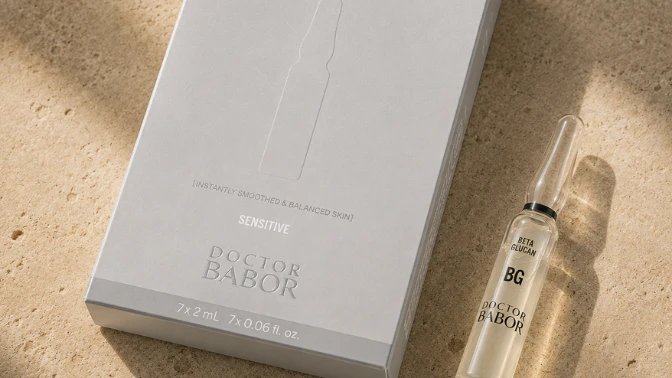
Tolerance matters as much as intent. Fragrance, texture, and active strength decide whether a product stays in use. A line built for a defined professional brief, such as the DOCTOR BABOR collection, should still be judged on your skin, not only on the standard printed beside it. Read the standard. Then read the ingredient list and the texture notes.
Two practical habits do more than another logo:
- Buy the size you will finish, and use a refill when the brand offers one you will actually reorder.
- Stop adding steps that duplicate a product you already tolerate.
Sustainability claims do not change how an active behaves on skin. They change what you know about the system around that active. Keep both judgments, and do not let one replace the other.
Questions to ask before you choose
Use a short list when a page is polished but thin. You are not trying to catch a brand out. You are trying to see whether a reader can tell what is true today.
- Which product or site does this statement cover?
- Is the number a result, a share of the range, or a future goal?
- What part of the pack is recyclable, recycled, or refillable, and where?
- Which formulas follow the stated ingredient standard, and which do not yet?
- Does "carbon neutral" or a similar phrase name the boundary and the method?
- Can I open a report or a brand page that repeats the same figures?
- Will I use this formula often enough that the format is not wasted?
If the answers are missing, say so in your own notes and leave that topic unscored. A careful brand can still be a good skin choice while one disclosure is weak. An impressive disclosure can still sit on a formula that is wrong for you. The point of the list is to stop a single slogan from doing all the work.
Review BABOR's conscious beauty standards
Frequently asked questions
Is recyclable packaging enough to call a product sustainable?
No. Recyclable packaging is one claim about one part of the pack, and it still depends on whether collection exists where you live. Sourcing, manufacturing, and whether you will finish the product are separate questions.
Are naturally derived ingredients always the lower-impact choice?
Not by default. A naturally derived percentage can be specific and still say nothing about farming, processing, or transport. Judge the stated scope, then judge how the formula suits your skin.
What makes a sustainability claim specific enough to trust?
It names the subject, the boundary, and whether the statement is a current result or a goal. A figure tied to a method you can look up is more useful than a broad environmental adjective.
Does a carbon-neutral claim cover the whole product?
Only if the brand says so. The phrase can refer to a factory, a company inventory, or a product footprint, and it may mix reductions with offsets. Read the boundary before you treat it as a product fact.
Should I skip a formula I like because a brand page is vague?
Not automatically. Use the formula if it fits your skin and your routine, and treat the missing disclosure as unanswered. Vague language is a reason to withhold credit for that claim, not a reason to invent a worse one.