Luxury skincare can signal thoughtful design and a considered brand experience, but premium presentation alone cannot tell you how a product was developed or whether it fits your routine. To assess luxury skincare with more confidence, examine the evidence behind the formula, the company's manufacturing and professional experience, the sensory qualities of the product, and the clarity of its claims. The goal is not to assume prestige guarantees a result; it is to understand what the brand can substantiate and what matters to you.
Explore BABOR skincare products
What should luxury skincare mean beyond presentation?
Luxury can be expressed through texture, packaging, service, and a consistent experience. Those qualities can matter: a product that feels pleasant and works smoothly within a routine may be easier to use consistently. Yet a polished jar or elevated price is not evidence of a particular formulation standard, manufacturing process, or skin outcome.
A more useful definition combines experience and substance. Ask what the brand says it has invested in, whether it gives specific information, and whether its claims are appropriately limited. Separate features you can observe, such as package design or texture, from claims that need support, such as a formula's performance or a production benefit.
For BABOR, the company's history and manufacturing information provide concrete starting points. The brand says it has worked in professional beauty since 1956 and describes production based in Aachen, Germany. These details help explain its heritage and operations; they do not establish that every product is right for every person.
A useful first pass can be made with three columns in a notebook: what the company states, where that information appears, and what remains unanswered. For example, "production based in Aachen" is a company-reported operational detail. It is not, by itself, evidence that a particular product suits your skin. This simple separation helps keep the evaluation grounded.
How can you assess scientific development?
Science-led language should invite better questions, not end the conversation. Look for an understandable explanation of what a product is designed to do, how it fits into a routine, and what information supports the claim. Specifics are more useful than broad promises. If a brand refers to testing or research, check whether it explains the type and scope of that work rather than treating a scientific-sounding phrase as a guarantee.
Also distinguish a cosmetic product's intended role from a medical treatment. A skincare product may be designed for appearance or routine care, but that does not mean it diagnoses, prevents, or treats disease. The U.S. Food and Drug Administration provides information about cosmetics on its official website. For a particular claim or concern, consult the relevant product labeling and a qualified health professional as appropriate.
When comparing products, read the full ingredient list and directions rather than relying only on a featured ingredient or a percentage in a headline. Consider whether instructions are clear, whether the product is intended for the area you plan to use it on, and whether it can be introduced without complicating your existing routine. If you have a known sensitivity, seek professional advice before trying a new product.
It can help to translate a broad claim into a testable question. If a page says a product supports a smoother-looking appearance, ask what the product is intended to do, how it should be used, and what timeframe or limits the brand describes. If those details are missing, record the uncertainty instead of supplying an answer yourself.
Why does manufacturing heritage matter?
Heritage is meaningful when it points to a continuing practice or a traceable capability. A founding date can tell you how long a company has operated, but age alone does not prove that a particular formula is effective or suitable. Pair history with questions about where products are made, how quality is managed, and what information the company makes available about its processes.
BABOR identifies itself as a German company founded in 1956 and describes an integrated manufacturing and research facility in Aachen. Its company information states that the Beauty Cluster opened in 2022 and brings research, manufacturing, and logistics together. Those details offer context about the company's infrastructure. They should not be turned into claims about an individual product unless that product's evidence supports the claim.
Manufacturing location is one factor, not a shortcut for evaluating quality. Read the package and the brand's own product information, and look for clear directions and responsible claim language. If you want to explore the company's stated environmental information, review BABOR cares information and distinguish what is specified, what is a goal, and what applies to the item you are considering.
When reviewing an operational statement, note its scope. Does it describe a facility, a company-wide practice, or a particular item? Does the page give a date or explain whether the statement is current? These questions do not diminish the value of the information. They help you understand precisely what it tells you.
What does professional expertise add?
Professional experience can shape how a brand thinks about products, protocols, and the client experience. Consultation can also be useful when you have several concerns or are unsure how to sequence products. Professional heritage is not a substitute for a personal assessment, however, and should not be read as a promise that a product will deliver a particular outcome.
BABOR serves individual shoppers and professional spa partners, and company materials describe a professional product line and spa treatment protocols. This dual perspective may be relevant if you value a brand with experience in both home routines and treatment settings. Check which products are intended for home use and which are reserved for trained professionals.
When choosing a product, begin with your own needs and routine rather than with a broad label. If you would like help narrowing options, BABOR provides a digital skincare advisor. You can also use the retailer locator to look for a nearby BABOR retailer. A consultation can help clarify product fit, but it should leave room for questions and individual differences.
Before a conversation, prepare a short list: your current routine, what you hope to address, products that have caused discomfort, and any preferences that affect daily use. Ask which products are intended for home care, how they fit alongside what you already use, and where to find complete directions. A useful consultation should make the next step clearer without turning uncertainty into a promise.
How should you compare luxury skincare brands?
Use the same criteria for each brand, and separate verifiable information from impression. The table is a practical checklist rather than a ranking. "Strong information" means the company gives relevant, specific details; it does not mean a guaranteed skin result.
| Evaluation area | What to look for | Useful question | What not to assume |
|---|---|---|---|
| Scientific development | Clear product purpose, directions, and appropriately described support for claims | What does the product claim, and what information explains it? | Scientific language alone proves efficacy or suitability |
| Manufacturing heritage | Specific information about company history, production location, and processes | Which details apply to this brand or product? | A long history or country of origin guarantees quality |
| Professional expertise | Defined professional experience, protocols, or consultation options | Is this item for home use, professional use, or both? | Professional experience guarantees a personal outcome |
| Sensory design | Texture, fragrance information, packaging, and ease of use | Will the format suit my preferences and routine? | A luxurious feel means a formula is more effective |
| Transparency and responsibility | Specific, current statements with clear scope and limits | Is this a completed practice, a target, or a general aspiration? | A broad environmental statement describes every product equally |
Use the answers to identify what you know and what remains unclear. If a detail matters to your decision, such as fragrance, use around the eyes, or intended user, look for it on the product page or ask the brand or retailer. Do not fill gaps with assumptions based on price, packaging, or reputation.
For a fair comparison, assess one product at a time and use the same questions for each. A simple scorecard can record whether the intended use is clear, directions are available, relevant claims are explained, the format suits your preferences, and outstanding questions have answers. The score is for organizing your decision, not predicting results. A blank cell is useful: it shows exactly what you may want to verify.
How much should sensory design influence your choice?
Texture, application, fragrance, and packaging are not trivial extras. They shape how a product fits into daily life. A lightweight lotion, a rich cream, or a concentrated ampoule can each suit different preferences and routines. The right choice depends on product directions and what you find comfortable, not on the idea that one texture is inherently more luxurious or more effective.
Consider practical details before committing. Does the package make dispensing simple? Can you follow the instructions consistently? Does the brand state whether the formula is fragranced? If you prefer to avoid fragrance or have a sensitivity, verify the specific product rather than relying on a general brand description. For a new formula, follow its directions and introduce it thoughtfully.
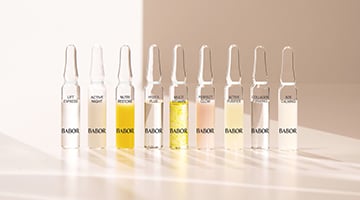
BABOR's portfolio includes Ampoule Concentrates as a distinct product format. The product range page can help you review current product information and choose what to investigate further. Use the label and directions as the final guide; a format name does not tell you how a formula will feel or perform for your skin.
Imagine two options that both appear relevant to your routine. One has a texture you enjoy but leaves key usage details unclear; the other explains its intended use and directions but has a format you are unsure about. Rather than choosing from one impression alone, verify the missing information and decide which product you are more likely to use as directed. Sensory comfort matters, but it belongs alongside clarity and fit.
What does responsible brand transparency look like?
Good transparency is specific, relevant, and easy to distinguish from aspiration. A company may describe current operations, targets, packaging attributes, or broader commitments. These are different kinds of statements. When a claim matters to you, check its scope and date and see whether it relates to the company as a whole or to a particular product.
For example, a manufacturing statement should not automatically be read as a formulation claim. A packaging statement should not be assumed to apply to every component or market. A sustainability goal should not be described as already achieved unless the brand says it has been achieved. This careful reading keeps your decision grounded in available information rather than broad impressions.
BABOR describes climate-related production goals and packaging initiatives in its company materials. Treat those as company-reported information, and consult the brand's current pages for exact scope and status. If a detail is absent or unclear, that is a reason to ask, not a reason to infer.
A practical transparency check asks four things: who is making the statement, what exactly it covers, when it was updated, and whether it describes a current practice or future intention. If the answer to one of these is not available, keep the claim in perspective. Precise language is more informative than a sweeping label.
How can you choose a product that fits your routine?
Start with a simple inventory. Write down the products you already use, the concern you want to address, and any preferences or sensitivities that affect your choices. Then compare a small number of options using the same questions: What is the product for? What are its directions? Where does it fit in the routine? What is clearly stated, and what would you need to verify?
- Define your priority. Focus on one routine need rather than trying to solve several at once.
- Check the intended use. Read the full product description, label, and directions.
- Review fit and feel. Consider the format, application, and any stated fragrance information.
- Look at the evidence and limits. Separate a specific, supported statement from general promotional language.
- Introduce thoughtfully. Follow directions, avoid adding several unfamiliar products at once, and stop use if irritation occurs. Seek qualified advice for persistent or concerning symptoms.
For example, suppose your priority is finding a moisturizer that is comfortable in the morning. First confirm that a candidate product is intended for that use, then read its directions and available product details. Consider the texture and package in the context of your routine. If fragrance information or an instruction is important but missing, ask before deciding. This process produces a better-informed choice without claiming that a particular product is universally right.
This approach can make a premium purchase more considered. It also gives you a way to reassess: after using a product as directed for an appropriate period, ask whether it fits your routine and preferences. Do not interpret a lack of dramatic change as a reason to use more than directed.
Get personalized product guidance
Frequently asked questions
Does a higher price mean a skincare product is better?
No. Price may reflect factors such as packaging, brand positioning, or the overall experience, but it cannot establish whether a formula suits your skin or supports a particular claim. Compare product information, directions, and the evidence available.
Is professional skincare only for spa treatments?
Not necessarily. Brands may offer products for home routines as well as professional lines or treatment protocols. Check the individual product's intended use and directions, and ask a qualified professional if the distinction is unclear.
Does a long company history prove product performance?
No. History gives context about a company's experience and continuity. It does not by itself prove that a specific product will work for a particular person. Evaluate the product's own information and your needs.
What should I do if a claim is vague?
Look for a more precise explanation on the product page or label, and ask the brand or retailer for clarification. If the claim remains unclear, do not treat it as established evidence when deciding whether the product fits your routine.
What is a practical way to evaluate luxury skincare?
Look beyond presentation and apply the same thoughtful questions to every option: what is known about its development, who it is intended for, how it is made, what the experience is like, and how clearly the company explains its claims. BABOR's stated history since 1956, Aachen manufacturing and research operations, and professional spa experience provide concrete context for considering the brand. Your own product choice should still rest on specific product information, clear directions, and a fit with your personal routine.


