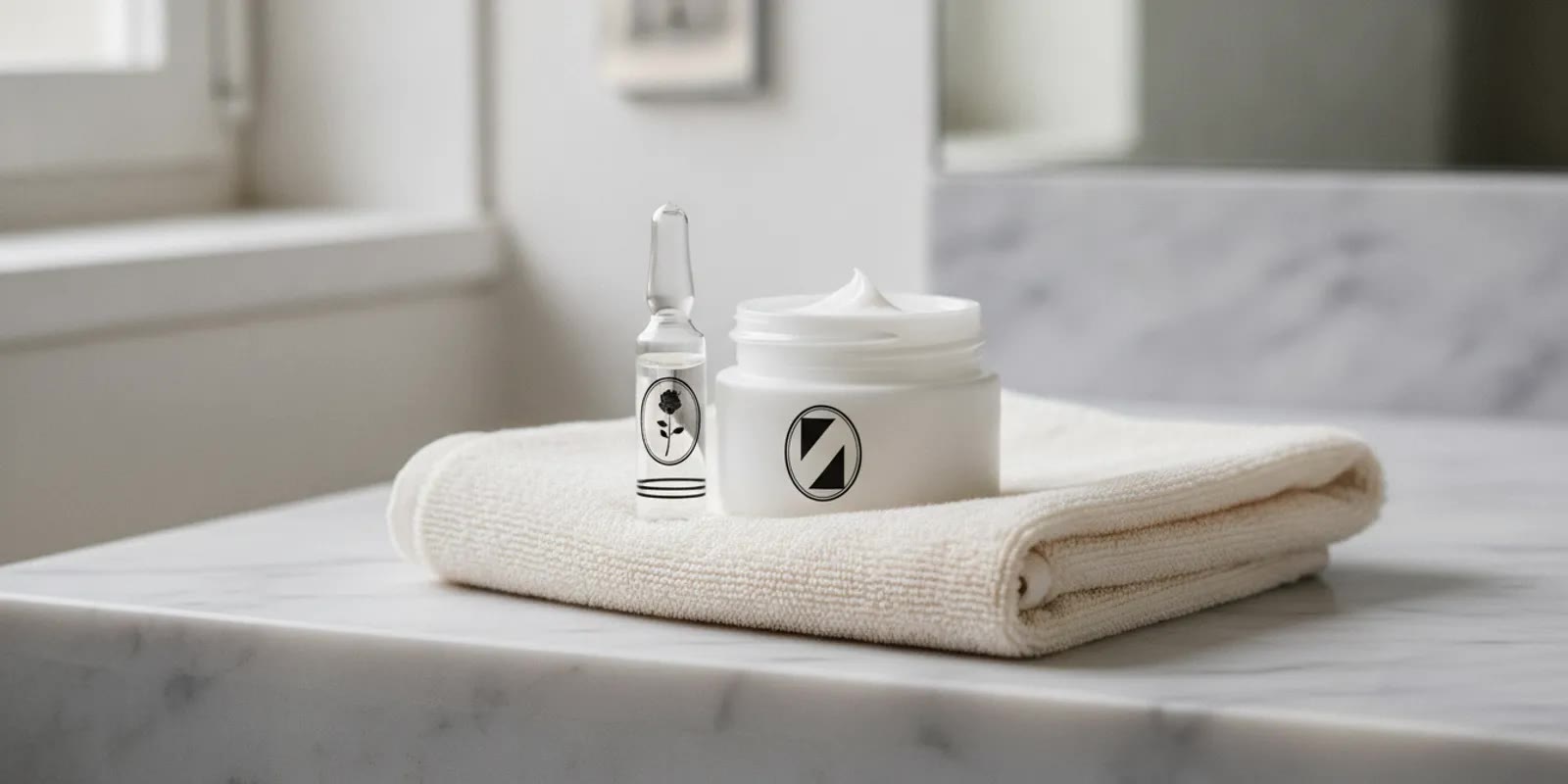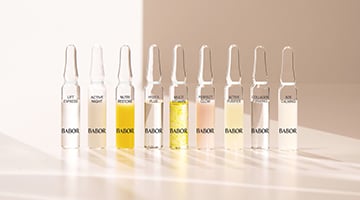
Barrier support skincare is best approached as a steady routine, not a search for one product that promises an instant fix. If you are wondering how to use a hyaluronic acid ampoule, treat it as a focused hydration step: read the specific directions, apply the stated amount, and follow with the next product in your routine. The formula and its instructions matter more than the word "concentrate" on the package.
Explore BABOR skincare products
What does barrier support mean in a skincare routine?
The skin barrier is the outermost part of the skin. In everyday skincare, supporting it means making thoughtful choices that help the skin feel comfortable: use products suited to you, avoid needless changes, and maintain a routine you can follow. This is a routine principle, not a diagnosis or treatment for a skin condition.
People may describe their skin as feeling tight, rough, dry, or easily unsettled. Those sensations can have different causes and do not identify a specific condition on their own. A product that does not suit you, frequent exfoliation, weather changes, or a routine with too many new steps may all be reasons to reassess what you use. If discomfort is persistent, severe, or worsening, seek advice from a qualified healthcare professional instead of trying to solve it by adding more products.
A useful starting point is to keep the routine purposeful. Consider a face wash that leaves your skin comfortable, a hydrating layer if you want one, and a moisturizer that suits your preferences. In the daytime, use sun protection according to its directions. Introduce a new product on its own so that you can observe how your skin responds. "Support" does not mean that every person needs an ampoule or a multi-step routine.
How does a hyaluronic acid ampoule fit?
Hyaluronic acid is used in skincare formulations as a humectant, an ingredient that helps attract and hold water. An ampoule is a concentrated product format used as a focused step. The term describes the format; it does not mean that every ampoule is suitable for every person or that using more product will improve the result.
You might consider an ampoule when you want a lightweight layer in a routine focused on hydration. The formula, texture, intended use, and directions vary by product. Read the label rather than assuming that all ampoules share the same application method or schedule. Review the complete ingredient list, particularly if you already know that certain ingredients do not suit you or you currently use several active products.
An ampoule and a moisturizer can play different roles. A hydrating product is generally one layer, while a moisturizer may follow it to provide a comfortable finish. Some formulas may have overlapping roles, so the label and your own routine matter. An ampoule does not automatically replace moisturizer, sun protection, or any other step your routine calls for.
For product language, BABOR's ingredient glossary and ingredient information are useful starting points. Use them to understand terms, then check the exact product page and packaging for that formula's purpose and directions.
What should you check before choosing an ampoule?
Start with one clear routine question. For example: "I would like a lightweight hydrating layer before moisturizer." A specific goal helps you compare products without being distracted by a long list of claims. BABOR's Skincare Advisor can be a starting point for exploring options, while the final choice should still be based on the individual product details.
- Identify the role you want the product to play. Are you looking for a hydrating layer, a particular texture, or a focused step at a certain time of day? Keep the goal modest and practical. "I want an easy layer after washing" is clearer than trying to address several concerns at once.
- Read the directions before comparing claims. Look for the amount to apply, the recommended frequency, where the product belongs in a routine, and any cautions. Follow the directions for that formula; do not transfer a schedule from another ampoule simply because the packaging looks alike.
- Review the full ingredient list. A highlighted ingredient does not describe the entire formula. Check the list for ingredients you know you do not tolerate, and consider what else you already apply. A product name alone cannot tell you how an individual will respond.
- Assess texture and layering. Think about whether the formula feels light or rich and whether it fits comfortably before moisturizer and daytime products. Texture is a personal preference, but it can affect whether a step feels practical enough to use as directed.
- Consider the packaging and use instructions. If the product is in a glass ampoule, check how it should be opened, how much is intended for one use, and whether the label provides storage guidance after opening. Do not assume that an opened container should be kept for later.
- Make one change at a time. Keep other routine steps steady when introducing the ampoule. This makes it easier to identify which product may be associated with a change in how your skin feels. Stop using a new product if irritation or discomfort develops.
These checks can prevent a common shopping mistake: choosing on the basis of one ingredient name and only later asking whether the formula fits the routine. If you are comparing BABOR ranges, the DOCTOR BABOR collection offers a product-family overview. Review individual product pages for current formula details and directions rather than assuming every item in a collection serves the same purpose.
How should you apply a hyaluronic acid ampoule?
Follow the label first. Product directions take precedence over general guidance because formulas, packaging, and applicators differ. The sequence below is a way to think through the step; adjust it to match the specific instructions on the product you own.
- Prepare your routine. Wash your face using a method and product that already feel suitable, then pat your skin dry unless the ampoule directions specify another application surface or timing. Keep the rest of the routine familiar while you assess a new step.
- Open the container as directed. If your ampoule is glass, use any opening aid supplied and follow the packaging instructions. Do not force or snap the container in an unfamiliar way. Keep broken glass away from skin and dispose of it safely.
- Apply the stated amount. Use the amount the label recommends and apply it to the areas specified. Avoid the eye area unless the product directions expressly permit use there. Do not assume that an entire ampoule must be used at once; amount, use, and storage instructions are product-specific.
- Spread gently. Smooth the product over the intended areas without vigorous rubbing. Give it time to settle as directed before applying another layer. If the packaging gives a specific method, use that method rather than relying on a general routine tip.
- Continue with your next step. Apply moisturizer if it is part of your routine. In the morning, use sun protection according to its label. At night, keep the remaining steps simple while you learn how the new product feels.
Do not pour the product into another container or keep an opened ampoule longer than its instructions allow. If the package does not explain how to use or store the contents, contact the retailer or manufacturer before proceeding. Careful handling is part of using the product as intended; it is not a reason to improvise a different application method.
How can you build a measured routine around it?
A routine is easier to assess when each step has a reason to be there. Begin with the products you already use comfortably. Add the ampoule as one new layer, and keep other products and their frequency steady while you evaluate it. There is no need to add several concentrates at once simply because they have different names.
Example morning sequence: wash if needed, apply the ampoule as directed, use moisturizer if it suits your routine, and finish with sun protection according to its directions. Example evening sequence: wash, apply the ampoule as directed, then moisturize. These are general examples rather than directions for a particular BABOR formula; follow the packaging for the exact product.
When your routine already includes exfoliating or other active products, check each label before deciding how to layer them. Think about whether two steps have overlapping purposes, whether their instructions can be followed together, and whether you can tell which product is affecting your skin. If you are unsure about a combination, ask a qualified professional instead of adding steps by guesswork.
A simple written routine can make the trial more useful. Note the order of products, the amount of the new ampoule, and when you applied it. Keep the routine consistent enough to notice patterns, but do not continue using a product through an unwanted reaction. BABOR's skincare routines guide offers a brand overview of routine sequencing; the directions on your own products remain the deciding reference.
How do ampoules compare with other routine steps?
Product categories describe common roles, not universal rules. A serum may hydrate, a moisturizer may contain ingredients that support hydration, and an ampoule may have more than one formulation goal. Use the comparison to organize questions while shopping, then verify the product-specific details on its label.
| Product type | Typical routine role | What to compare | Question to ask |
|---|---|---|---|
| Hyaluronic acid ampoule | A focused leave-on layer, often selected for a hydration-oriented routine | Full formula, texture, directions, amount, and handling | Does it fit comfortably before my moisturizer, and can I follow its directions? |
| Serum | A leave-on step with a role that depends on its formula | Intended use, active ingredients, frequency, and overlap with existing products | Does this add a clear purpose or duplicate a step I already use? |
| Moisturizer | A leave-on layer chosen for its finish and role in the routine | Texture, skin feel, directions, and daytime or evening fit | Does my skin feel comfortable after applying it? |
| Face wash | A wash-off step for routine face washing | Use instructions and how the skin feels after rinsing | Does it leave my skin feeling comfortable rather than tight? |
There is no universal winner in this table. The right comparison depends on the job you want a product to do, the formula in question, and how it fits with the rest of your routine. If a product feels pleasant but its use instructions do not fit your schedule, that may be a reason to consider a different format. If two products seem to serve the same purpose, decide whether both are useful before layering them.
What details matter when comparing products?
Packaging and product descriptions can make several options seem equally suitable. Slow the decision down by comparing the information that affects actual use. A short checklist is often more useful than trying to judge a product by a single headline ingredient.
- Intended use: Does the product describe a hydration-focused role or something else? Is that role relevant to the routine goal you identified?
- Frequency and amount: Does the label specify how often and how much to apply? Avoid increasing use beyond the stated directions.
- Application order: Does the maker explain where the product fits, or whether it should be used at a particular time?
- Container handling: Are there opening, storage, or after-opening instructions? Is the intended amount clear?
- Existing steps: Are you already using a serum or treatment with a similar purpose, overlapping ingredients, or directions that need attention?
- Personal comfort: Does the texture suit your preferences? Can you use it in a way that lets you notice how your skin responds?
- Product support: Can the brand or retailer answer a question about the label, formula, or product range?
For instance, imagine that your evening routine already includes a serum and moisturizer, and you are considering an ampoule because your skin feels dry after washing. First check whether the face wash itself leaves your skin comfortable. Then read the ampoule's intended use and directions, and decide whether it adds a distinct step or merely adds another layer. If you try it, change only that one part of the routine and keep notes on when you use it and how it feels.
A second example: perhaps you want a lightweight morning product but dislike several layers under sun protection. Compare the texture and directions of the options, then consider how they sit with your existing moisturizer and daytime products. A product that fits your actual routine may be a more useful choice than one selected only for a prominent ingredient name. These examples are ways to structure a decision, not promises about how a formula will perform for an individual.
What should you do if a product feels unsuitable?
Do not treat stinging, persistent redness, or worsening discomfort as a sign that a product is working. Stop using a newly introduced product if you experience an unwanted reaction, and avoid adding more active products to counter it. If symptoms are severe, continue, or concern you, speak with a healthcare professional.
For a product that does not feel suitable, check its directions and ingredient list, then consider whether another routine step changed at the same time. Keep a factual note of the product, when you used it, and what you noticed. This can give a qualified professional useful context if you seek advice. A patch test may be suggested on some product labels, but it does not guarantee that a reaction will not occur during regular use; follow the product instructions.
If the concern is recurring or persistent, personalized guidance is more appropriate than a general routine tip. The American Academy of Dermatology is a professional dermatology association and a starting point for consumer skin-health information. Seek care from a qualified healthcare professional for symptoms that are severe, persistent, or worsening.
Frequently asked questions
Should a hyaluronic acid ampoule go on damp or dry skin?
Use the surface and timing stated on the product label. Directions vary by formula, so there is no single application rule for every ampoule. If the packaging is unclear, ask the retailer or manufacturer rather than guessing.
Can I use a hyaluronic acid ampoule every day?
That depends on the specific product. Follow its stated frequency and amount; do not increase use because a formula is described as concentrated. If you are new to it, introduce it as one change and observe how your skin responds.
Do I still need moisturizer after an ampoule?
An ampoule and a moisturizer can have different roles. Many routines use a hydrating ampoule as one layer and then apply moisturizer, but product instructions and personal preference should guide the sequence. An ampoule does not automatically replace the other steps you choose to use.
Can I layer an ampoule with other serums?
Check the directions for each product and consider whether you need both steps. Several layers can make it harder to identify what suits your skin. When product combinations or active ingredients raise questions, seek guidance from a qualified professional.
How should I choose between an ampoule and a serum?
Compare the intended role, complete formula, texture, directions, and how each product fits your current routine. Names alone do not establish how a particular formula should be used. Choose a format that serves a clear purpose and whose directions you can comfortably follow.
Explore the BABOR Skincare Advisor
A thoughtful choice is a measured one: select an ampoule for a specific routine purpose, follow its directions, and keep the rest of your skincare simple enough to assess how it feels.