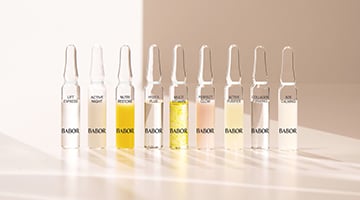
A percentage on a skincare label can look like a simple measure of strength. It is only one piece of information: it may identify the amount of a named ingredient in a formula, but it does not tell you by itself how the ingredient is delivered, how the whole product performs, or whether it suits your skin. If you searched for babor hydra plus while comparing products, start by treating every percentage as a clue to investigate, not a complete verdict.
What can a skincare percentage tell you?
A percentage describes a proportion. When a label states that a formula contains a particular ingredient at a stated percentage, the figure can help you understand the declared amount in that product. It does not automatically show how much reaches the skin, how the ingredient behaves alongside the rest of the formula, or what result a person will experience.
Those distinctions matter because skincare is a finished formula, not a single ingredient in isolation. The product's other components, texture, intended use, directions, and the person's skin all shape the experience. A higher number is therefore not a universal score for quality, potency, or suitability.
For shoppers looking up babor hydra plus, the useful question is not simply "Which product has the largest number?" Instead, ask what the percentage refers to, what role that component plays, what else the label and product information tell you, and whether the formula fits the way you plan to use it.
For a first comparison, open the BABOR skincare collection and read the product details beside the item name, rather than relying on a search phrase or a cropped label image. The page is a starting point for product discovery; each individual listing should supply the relevant purpose and usage context. When the named percentage is not explained, do not infer its meaning from the number alone.
Why does the number need context?
Check what the percentage refers to
First, identify the named substance or complex connected to the figure. Is the percentage assigned to one ingredient, a blend, or a broader system? Product pages and packaging may present information differently, so do not assume two percentages describe the same thing merely because both appear prominently.
Also distinguish a percentage from other label details. An ingredient list, a claim about a product's intended use, and directions for application answer different questions. A percentage does not replace those details. Look at the words directly around the figure: does the description name a specific ingredient, a complex, or an entire product category? That wording sets the scope of what you can reasonably take from the number.
Consider the complete formula
Ingredients work within a formula that has been designed for a particular product format and use. A serum, cream, and cleanser have different textures and routines. A percentage alone cannot tell you whether two products have the same delivery, feel, or role. Nor can it establish that the product with the larger number is the better choice for you.
When comparing options, read the product description and directions rather than extracting one figure from its setting. If a claim is unclear, seek information from the brand or a qualified skincare professional instead of guessing what a number means. The BABOR ingredient glossary can help you look up ingredient names; it does not replace product-specific instructions or explain every branded complex.
Separate amount from evidence
A stated concentration is not the same as evidence of a particular outcome. Claims about performance depend on what was assessed, how it was assessed, and the product and population involved. A number on a package does not independently establish clinical benefit or predict an individual result.
For U.S. cosmetic labeling, the Food and Drug Administration explains that cosmetic product labels must include ingredient declarations, with ingredients generally listed in descending order of predominance. That ingredient list is useful context, but it is not a stand-alone guide to product performance. See the FDA's Cosmetics Labeling Guide for its overview of labeling requirements. A listed order and a marketing percentage answer distinct questions, so read each in its intended context.
How can you compare products thoughtfully?
Use the same questions for each option. This keeps the comparison practical and helps prevent a single prominent number from dominating your decision. Record the details in a simple comparison before choosing; even a few notes can reveal when a pair of products is not a like-for-like comparison.
| What to compare | What to look for | What the detail can help explain | What it cannot establish alone |
|---|---|---|---|
| Percentage and named component | Which ingredient or blend the figure describes | The declared proportion of that named component | Overall product quality or a guaranteed result |
| Product format | Serum, moisturizer, cleanser, or another format | How the product may fit into a routine | That two formats will feel or function identically |
| Directions | How often and where the product is intended to be used | Practical use and sequencing considerations | That more frequent use is right for every person |
| Full product information | Purpose, ingredients, warnings, and instructions | Context for an informed choice | Personal suitability without considering your skin |
| Your routine and preferences | Existing products, texture preferences, and tolerance | Whether the product appears workable in your routine | A personalized professional assessment |
For a broader view of formats, browse BABOR's serums and moisturizers. These links help you browse by format, not rank products by concentration. You can also review cleansers if your goal is to understand where a wash-off product differs from a leave-on step.
Does a higher percentage mean a stronger product?
Not necessarily. The number may refer to a different component or type of blend, and the complete formula and intended use matter. Even where two labels name the same ingredient, the figures alone do not give a full basis for predicting the products' effects or deciding which one will suit a particular person.
Think of a percentage as one comparison point, not a ranking. A higher value is not automatically more effective, more appropriate, or more comfortable to use. Follow the directions for the specific product, and introduce products with care, especially if your routine already includes active ingredients or your skin is easily unsettled.
For example, imagine two leave-on products. One reports a percentage for a named ingredient, while the other highlights a percentage for a blend. The figures might look directly comparable at a glance, but they do not identify the same thing. First write down the exact claim, then check whether the same ingredient or mixture is being measured. If not, the numerical comparison stops there; compare purpose, format, instructions, and the product information instead.
What should you do if a label is unclear?
- Record the exact claim. Note the ingredient or blend named beside the percentage, along with the product name. This avoids accidentally comparing a percentage from one item with an ingredient list from another.
- Read the product's full description. Check its stated purpose, directions, and any cautions. A short headline may omit details that appear in the complete listing or on the package.
- Compare like with like. Make sure the figures refer to the same type of component before drawing a comparison. If one describes a blend and the other an individual ingredient, treat them as different kinds of information.
- Consider the routine. Think about the product's format and how it would fit with what you already use. Note whether it is a leave-on step or rinse-off step, and use it only as directed.
- Ask when you need clarity. Contact the brand or consult a qualified skincare professional if the label leaves an important question unanswered. Be specific: ask what the figure describes and where to find the product's complete use instructions.
For shoppers exploring babor hydra plus, this approach is more useful than trying to infer a product's identity or performance from a search phrase alone. Check the current product information directly, since names, descriptions, and available items can change over time. Keep a note of the exact product title and the wording of its percentage claim if you contact customer support, so the question can be answered against the right item.
How should you use a percentage in a real comparison?
Imagine you are choosing between a serum and a moisturizer. The serum page presents an ingredient percentage, while the moisturizer page emphasizes its texture and intended role. It would be tempting to decide that the serum is automatically more potent because its number is visible. Instead, treat the products as two different routine options. Decide what step you need, then examine the details each product actually provides.
A second scenario involves two products that both feature a percentage. Before comparing, ask four questions: Is the same ingredient named? Does the percentage refer to the same kind of quantity? Are both products intended to be used in the same way? Do their directions and purposes align with the goal you have? If any answer is no or unknown, the figures do not establish a winner. You can still compare the products, but use the verified details that are available rather than filling gaps with assumptions.
This method also helps when a product page uses a branded term. A brand may explain a complex or technology separately from the standard ingredient list. Do not assume the percentage of that complex equals the percentage of each constituent ingredient. Ask for clarification if that distinction matters to your decision.
A useful way to keep the comparison disciplined is to build a small evidence record for each product. Write the product name at the top, then copy the exact percentage wording rather than paraphrasing it. Add the linked ingredient or complex, format, stated purpose, directions, and any cautions. Leave a field blank when the page does not answer it. A blank is valuable: it marks an open question instead of inviting a guess.
Next, separate what you know from what you are interpreting. "The page states a percentage for a named complex" is an observation. "This means the formula contains that amount of every ingredient in the complex" is an interpretation, and it may not follow from the wording. This distinction is especially useful when product descriptions use a short headline alongside a longer explanation. Read the full context, and retain the brand's exact terms when asking for more information.
Then compare the products against your actual use case. If you want a leave-on step for a particular part of your routine, a rinse-off cleanser may not serve the same role, even if its label features a percentage. If two products have the same format, check their directions and purpose before treating the label figures as the deciding factor. A comparison is most meaningful when the items answer the same need and the numbers refer to the same kind of information.
For instance, suppose one listing clearly names an individual ingredient, while another describes a proprietary blend but does not state the proportion of each constituent. You can record both claims accurately, but you cannot calculate an ingredient-to-ingredient comparison from those descriptions alone. The sensible next step is to compare the information that is available, such as format and instructions, and ask the brand whether it can clarify the blend's meaning. Do not translate an unexplained percentage into a promise about visible effects.
Finally, revisit the record after you have read the label and product page together. Check that the product name matches on both, that you have not carried a claim over from another item, and that the directions you noted apply to the product being considered. This simple audit is useful when shopping across a collection, where product names and formats can be easy to mix up. It turns an impression based on one prominent number into a careful, traceable choice.
How should a percentage influence your choice?
Let the number narrow your questions, not make the decision for you. Begin with your goal and the product format you prefer. Then consider the stated ingredients, directions, and the role of the product in your routine. If the percentage is clearly explained, it can help you understand one aspect of the formula. If its meaning is not clear, do not fill the gap with assumptions.
Keep the comparison grounded in information you can verify. A product page can provide details about use and formulation; a skincare professional can help you consider personal needs. If you are choosing among several options, compare their intended roles rather than pursuing the largest displayed number.
It may help to make a short checklist before shopping: what step do I want to add; which product formats am I considering; what does each percentage explicitly describe; what are the directions; and what additional information do I need? This keeps the decision focused. A percentage can be valuable when it is specific and explained, but missing information is a reason to ask, not a reason to assume.
Frequently asked questions
Does a percentage tell me exactly how a product will perform?
No. It may describe the proportion of a named ingredient or blend, but it cannot predict an individual result. The complete formula, directions, and personal factors all matter.
Can I compare percentages across different product types?
Be cautious. The products may use different formats, ingredients, or ways of presenting a blend. Confirm what each figure describes before treating the values as directly comparable.
Is the product with the highest number always the best choice?
No. A higher figure is not a universal measure of suitability or quality. Consider the product's intended role, directions, full information, and how it fits your routine.
What if I cannot find what a percentage means?
Review the product information and ask the brand or a qualified skincare professional for clarification. Avoid inferring a claim or benefit from a number that is not clearly explained.
Choose with the whole label in view
A skincare percentage can be a useful detail when its meaning is clear, but it is only one part of a careful comparison. Read it alongside the product's purpose, format, directions, and your own routine, then choose based on the complete picture rather than a single figure.


